The "Economic Strategies" journal


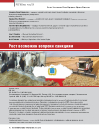
Growth is Possible Despite Sanctions

DOI: 10.33917/es-1.205.2026.84-93

The author discusses the priority areas for development of the agro-industrial complex of the Saratov region in the context of foreign economic restrictions at the example of the Volga Federal District (VFD). Based on the analysis of statistical data and assessment methods, the possibility to provide equal conditions for agricultural production in the Volga Federal District is substantiated. The paper presents an assessment of the effectiveness of the region’s participation in government program activities. Particular attention is paid to the role of state support and co-financing mechanisms as ways to increase sustainability of the regional agro-industrial complex (AIC). It is noted that even under the pressure of sanctions, it is possible to increase exports, introduce innovative technologies and strengthen the region’s food security.

References:

1. Agropromyshlennyy kompleks Saratovskoy oblasti [Agro-industrial Complex of the Saratov Region]. Sel’khozproizvoditeli, available at: https://selhozproizvoditeli.ru/news/selskoe-hozyaystvo-saratovskoy-oblasti

2. Marushchak I.I. Innovatsionnaya aktivnost’ rossiyskikh predpriyatiy: problemy, puti resheniya [Innovative Activity of Russian Enterprises: Problems and Solutions]. Ekonomicheskie strategii, 2023, vol. 25, no 2(188), pp. 56–63, DOI: https://doi.org/10.33917/es-2.188.2023.56-63

3. FGBU “Tsentr Agroanalitiki” [Website], available at: https://www.rusprofile.ru/id/7792082

4. Zelenkina E.V., Pavlenko I.V. Otsenka ob”emov sel’khozproizvodstva i sredstv gosudarstvennoy podderzhki na razvitie sel’skogo khozyaystva po regionam Privolzhskogo federal’nogo okruga v 2022 g.: Problemy i perspektivy razvitiya ekonomiki i upravleniya v sovremennykh usloviyakh: Sb. nauch. statey [Assessment of Agricultural Production Volumes and State Support Funds for Agricultural Development in the Regions of the Volga Federal District in 2022: Problems and Prospects for Economic and Management Development in Modern Conditions: Collection of Scientific Articles]. Moscow, Nauchnye tekhnologii, 2024, pp. 371–380.

5. Saratovstat [Website], available at: https://www.rusprofile.ru/id/523815

6. Ministerstvo sel’skogo khozyaystva Saratovskoy oblasti [Website], available at: https://www.minagro.saratov.gov.ru

7. Zelenkina E.V., Pavlenko I.V., Lukashevichus G.A. Metod obespecheniya innovatsionnogo razvitiya infrastruktury agroproizvodstvennogo rynka [Method for Ensuring Innovative Development of the Infrastructure of the Agricultural Market]. Nauchnoe obozrenie. Seriya 1: Ekonomika i pravo, 2018, no 3–4, pp. 84–95.
Electricity versus oil

DOI: 10.33917/mic-2.127.2026.89-97

This article examines the conflict between transport electrification and the traditional oil market. It analyzes global trends in the growth of electric vehicle use and production, reviews the experience of China, which currently leads the way in electric transport use, and considers the prospects for electric vehicle development in Russia. The article provides current data on the reduction in demand for hydrocarbon fuels, due to the increasing share of electric vehicles, and forecasts changes up to 2040. Based on a review of international studies and forecasts, conclusions are drawn about a possible decline in global oil demand as a result of the electrification of transport, and the risks and opportunities for the Russian oil industry in the context of the global energy transition are noted.

References:

1. Malik F.R. et al. Energy transition towards electric vehicle technology: Recent advancements. Energy Reports. 2025;13:2958-2996. URL: https://www.sciencedirect.com/science/article/pii/S2352484725001118

2. AUTOSTAT Analytic Agency. URL: https://www.autostat.ru

3. The Ministry of Economic Development presented a forecast for socio-economic development until 2028. Vedomosti. 2025. 26 September. URL: https://www.vedomosti.ru/economics/news/2025/09/26/1142429-minek-predstavil-prognoz

Subjects and Objects of Universal Evolution

DOI: 10.33917/es-2.206.2026.108-115

The article continues a series of works dedicated to transition from a zoopopulation to a psychosocial formation. The concept of universal evolution suggests that the local universe is the *object* of development and its *subjects* constitute individuals, who have achieved a certain level of mental development. Formation of psychosocial subjects of evolution occurs in horizontal networks that have the unique property of anticipating reflection of reality. Transition to psychosocial formation may occur in the next decade if the vertical structures of the state power ensure interaction with horizontal network structures.

References:

1. Sudakov K.V. Izbrannye trudy. T. 1. Razvitie teorii funktsional’nykh system [Selected Works. Vol. 1. Development of the Theory of Functional Systems]. Moscow, GU NII normal’noy fiziologii imeni P.K. Anokhina RAMN, 2007, pp. 233, 234.

2. Panov A.D. Universal’naya evolyutsiya i problema poiska vnezemnogo razuma (SETI) [Universal Evolution and the Search for Extraterrestrial Intelligence (SETI)]. Posleslovie L.M. Gindilisa. Moscow, Izd-vo LKI, 2008, 208 p.

3. Arkhipov B.A. Sposob diagnostiki prostranstvennykh funktsiy u detey i vzroslykh s uchetom osobennostey ontogeneza metodom issledovaniya optomotornykh reaktsiy (rossiyskiy patent 2019 g. po MPK A61B5/00) [A Method for Diagnosing Spatial Functions in Children and Adults, Taking into Account the Characteristics of Ontogenesis, Using the Method of Studying Optomotor Reactions (Russian Patent 2019 under IPC A61B5/00)]. Kod dokumenta v NEB: 000224_000128_0002687173_20190507_C1_RU

4. Averin G.V. O fenomenologicheskoy teorii vremeni [On the Phenomenological Theory of Time]. *Sistemnyy analiz i informatsionnye tekhnologii v naukakh o prirode i obshchestve*, 2019, no 1(16) – 2(17).

5. Semenovich A.V. Otstan’te ot detey! Neyropsikholog o vrede rannego razvitiya [Leave the Kids Alone! A Neuropsychologist Discusses the Dangers of Early Development]. Vestnik psikhologii, available at: https://dzen.ru/a/XBthymJ6vACqf096.

6. Stenogrammy “vstrech po vtornikam” [Transcripts of the “Tuesday Meetings”]. Ofis “Novye gumanitarnye tekhnologii” (NGT). Moscow, 1999.

7. Kolesova L.A. Zolotaya utopiya [Golden Utopia]. Sayt S.P. Kurdyumova “Sinergetika”, available at: https://spkurdyumov.ru/uploads/2019/01/zolotaya-utopiya.pdf

8. Sudakov K.V. Sistemnye mekhanizmy psikhicheskoy deyatel’nosti [Systemic Mechanisms of Mental Activity]. *Zhurnal nevrologii i psikhiatrii*, 2010, no 2, pp. 4–14.

9. Kapitsa S.P. Istoriya desyati milliardov [The Story of Ten Billion]. Sayt S.P. Kurdyumova “Sinergetika”, available at: http://spkurdyumov.ru/biology/istoriya-desyati-milliardov/

10. Solomatin A.N. Chto posle? Doklad Sretenskomu klubu. Materialy Vtoroy Sretenskoy konferentsii. 10–11 iyunya 2024 g. [What’s Next? Report to the Sretensky Club. Proceedings of the Second Sretensky Conference. June 10–11, 2024]. Sayt S.P. Kurdyumova “Sinergetika”, available at: https://spkurdyumov.ru/uploads/2023/12/SolomatinAN.pdf

The impact of the new Maritime Doctrine on the ESG–concept of sustainable development of the national economy and monitoring of regional environmental management in the Russian Federation

DOI: 10.33917/mic-1.126.2026.71-88

The priorities mentioned in the new Maritime Doctrine of the Russian Federation of 2022 (NMD–2022) were considered. Some aspects of the impact of the new Maritime Doctrine (NMD–2022) on the sustainable development of the national economy of the Russian Federation and monitoring of regional environmental management in the Russian Federation are also considered, namely: the development of principles for the strategic development of coastal systems and coastal infrastructure; scientific justification for the management of coastal territorial systems and the infrastructure located on them; the development of cruise and yacht tourism, the preservation of marine cultural and historical heritage; providing subjects of marine activity with regime reference materials, factual and predictive information on the state of the environment and its pollution, including emergency information; increasing the level of environmental protection due to the transition of domestic marine vessels to environmentally friendly fuels; monitoring regional environmental management.

A set of organizational and economic measures aimed at: responsible attitude to ecology and the environment; implementation of the concept of transparency, law enforcement, anti-corruption and ethical decision-making; implementation of the concept of social responsibility within the framework of the implementation of the NMD–2022. The paper shows that the implementation of the provisions of the NMD–2022 will contribute to the sustainable socio-economic development of the country, ensuring its national security and strengthening its authority in the international arena.

References:

1. Alyabyeva M.V., Alyabyeva T.M. Selected aspects of the greening of the economy in the context of the implementation of the concept of sustainable development of the European Union. In the collection: Sustainable development of society: new scientific approaches and research. Moscow, 2025. pp. 85-90.

2. Baklanov P.Ya. Monitoring of regional environmental management. Geography and natural resources. 2021;42(3):5-12.

3. Gogoberidze G.G., Rumyantseva E.A., Malakhova Yu.A. Comprehensive assessment of the stability and development of coastal systems in the Arctic zone of the Russian Federation. In the collection: Arctic shores: the path to sustainability. 2018. pp. 181-184.

4. Godovanik E.V. The maritime doctrine of the Russian Federation: a legal view on the content and prospects of implementation. Bulletin of the Russian Law Academy. 2023;2:84-94.

5. Dargis E.A., Kuznetsova E.Yu., Latukhov S.V., Polyakov A.V. Geoecological management of marine complexes in the waters of the Northern Sea Route. Marine intelligent technologies. 2024;1-1 (63):223-233.

6. Derenok A.A. The Northern Sea Route in modern geopolitical conditions. In the collection: New Economy, Business and Society. Vladivostok, 2023. pp. 270-274.

7. Izmailov M.K. ESG-competition in Russia – innovations, trends, problems. Bulletin of the Moscow University of Finance and Law, MFUA. 2024;4:234-246.

Development of the City of Sevastopol in 2014-2021: Historical and Economic Aspects

DOI: 10.33917/es-1.205.2026.94-99

All the key military and political events in Russian history, that occurred in the 18th–20th centuries, changed the development trajectory and opened new phases in the economic development of Sevastopol. In the city’s recent economic history annexation of Crimea to the Russian Federation in 2014 stands out as such significant historical event. The purpose of the present article is to study the stages of economic development of the city of Sevastopol in 2014–2021 in the context of reintegration of Crimea into the Russian Federation. The paper proposes to subdivide the recent period of economic history of the city of Sevastopol into two stages: Stage I — reintegration and the period of active infrastructure construction (2014–2018); Stage II — the period of economic growth (2018–2021). Moreover, year 2018 marked a significant milestone in the economic development of the Republic of Crimea and the city of Sevastopol, as several key infrastructure projects were completed this year: the Balaklava and Tavricheskaya Thermal Power Plants, the Crimean Bridge, as well as reconstruction completion of the Simferopol Airport Complex.

References:

1. Baranov A.G., Garmashova E.P., Lopatina T.A., Punga D.V. Khozyaystvennaya zhizn’ goroda Sevastopolya na rubezhe XVIII–XIX vekov [Economic Life of the City of Sevastopol at the Turn of the XVIII–XIX Centuries]. Ekonomicheskaya politika, 2024, vol. 19, no 5, pp. 186–211, DOI: 10.18288/1994-5124-2024-5-186-211

2. Baranov A.G., Garmashova E.P., Lopatina T.A., Punga D.V. Regional’nye osobennosti, zakonomernosti i opyt khozyaystvennoy zhizni goroda Sevastopolya vo vtoroy polovine XIX — nachale XX veka [Regional Features, Patterns and Experience of the Economic Life of the City of Sevastopol in the Second Half of the Nineteenth and Early Twentieth Centuries]. Gumanitarnye nauki. Vestnik Finansovogo universiteta, 2024, vol. 14. № 5. S. 134–162. DOI: 10.26794/2226-7867-2024-14-5-134-162

3. Baranov A.G., Garmashova E.P., Lopatina T.A., Punga D.V. Ekonomika Sevastopolya v 1920-e gody: ot politiki “voennogo kommunizma” k NEPu [Economy of Sevastopol in the 1920s: from the Policy of “War Communism” to the New Economic Policy]. Voprosy teoreticheskoy ekonomiki, 2025, no 1(26), pp. 167–184, DOI: 10.52342/2587-7666VTE-2025-1-167-184

4. Baranov A.G., Garmashova E.P., Dmitrieva V.V., et al. Organizatsionno-ekonomicheskiy mekhanizm poslevoennogo vosstanovleniya goroda Sevastopol’ (1944–1954 gg.) [The Organizational and Economic Mechanism of the Post-war Reconstruction of the City of Sevastopol (1944–1954)]. Moskovskiy ekonomicheskiy zhurnal, 2022, vol. 7, no 5, DOI: 10.55186/2413046X-2022-7-5-2815.

5. Danil’chenko S.L. Krymskiy poluostrov v 1918–1991 godakh: istoricheskie predposylki reintegratsii Kryma i Sevastopolya v Rossiyskuyu Federatsiyu [The Crimean Peninsula in 1918–1991: Historical Prerequisites for the Reintegration of Crimea and Sevastopol into the Russian Federation]. Nauchnyy al’manakh, 2023, no 10-3(108), pp. 64–94, EDN: NFRHFN

Non-transitivity of institutional preferences of macroeconomic policy as a specific source of threats to Russia’s economic security

DOI: 10.33917/mic-2.127.2026.98-111

The mechanism of cyclical interaction of institutions of budgetary, tax and monetary policy is revealed, as a result of which there is an initially unpredictable misalignment between formally logical decisions of individual regulators obtained within the framework of the traditional axiom of transitivity as a key criterion of rationality of actions. The emergence of these cycles, known as «institutional traps», is due to the objective non-transitivity of external and internal preference or superiority relationships between the institutions and their elements. The essence of «institutional traps» is that improving the performance of one institution can lead to a negative impact on the performance of another institution, and vice versa. Such «institutional traps» can create initially unpredictable threats to a country’s economic security, reducing the effectiveness of public administration. The article presents a theoretical model of the non-transitivity of preference relations between institutions of macroeconomic regulation, and identifies ways to reduce the level of risks associated with the negative manifestation of the non-transitivity of these relations.

References:

1. Anishchenko E.V. Theory and methodology of sustainability of ensuring economic security of the subjects of the Russian Federation, dissertation for the degree of Doctor of Economics: specialty 08.00.05. — Moscow: Kikot Moscow University of the Ministry of Internal Affairs of the Russian Federation, 2020. 469 p.

2. Poddyakov A.N. The non-transitivity of superiority and its use for deception and training of thinking. Psychological and economic research. 2016;3(9):43-50.

3. Muntiyan V.I. Challenges and threats to Russia’s economic security in conditions of uncertainty / Economic security of the country, regions, organizations of various types of activity: proceedings of the V All-Russian Forum. Tyumen: TSU-Press, 2024. pp. 108-122.

4. Milovidov V.D. The trap of narratives: the influence of scientific hypotheses on the effectiveness of economic policy. Economic issues. 2025;9:126-141.

5. Chebotarev S.S., Anishchenko A.V. Institutional problems of the implementation of the strategy of economic security of Russia. On guard of the economy. 2021;1:85-97.

6. Yanushkina Yu.I. The correlation of the concepts of economic security and financial security in the modern scientific concept in ensuring the state security of the Russian Federation. Problems of economics and legal practice. 2025;21(3):239-245.

7. Polterovich V.M. Institutional traps and economic reforms. Economics and mathematical methods. 1999;35(2):3-40.

8. Proskurnova K.Y. Issues of spatial development of Russian regions. Public administration. Electronic bulletin. 2022;92:116-128.

9. Bragin V. Expert named the “three paradoxes” of the Russian economy. RBK. 2025. February 18. URL: https://www.rbc.ru/economics/18/02/2025/67b46bac9a7947d7bac8d27b

10. Balatskiy E.V. «Institutional trap»: a scientific term and a beautiful metaphor. Journal of Institutional Research. 2020;12(3):24-41.

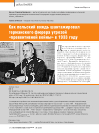
How the Polish Leader Blackmailed the German Fuhrer with the Threat of a «Preventive War» in 1933

DOI: 10.33917/es-2.206.2026.116-123

The article dwells on the problem of the so-called “preventive war”. Polish leader Marshal J. Pilsudski used the threat of this war to blackmail Chancellor A. Hitler in the spring and autumn of 1933. Behind-the-scenes Polish dictator needed this in order to avoid the looming possibility of changing Polish borders in favour of Germany on the basis of the Polish-German arbitration treaty of 1925, the instrument of which could have become the “Pact of Four” published in the spring of 1933. At the same time the “commandant” needed such a harsh measure as blackmail to include Warsaw in the Fuhrer’s “eastern” plans within the framework of the “legal mechanism for ‘pushing’ Germany to the East” in order to recreate the Greater Poland through division of the USSR, carried out jointly with Berlin and Tokyo.

References:

1. Arkhiv vneshney politiki RF [Archive of the Foreign Policy of the Russian Federation]. F. 138, Op. 14, P. 30, D. 12.

2. Dziennik Ustaw. 1926. # 114. Poz. 662. Internetowy system aktów prawnych, available at: http://isap.sejm.gov.pl/DetailsServlet?id=WDU19261140662

3. Sbornik dokumentov po mezhdunarodnoy politike i mezhdunarodnomu pravu. Vyp. V [Collection of Documents on International Politics and International Law. Vol. V.]. Moscow, 1933, 182 p.

4. Tabui Zh. 20 let diplomaticheskoy bor’by [20 Years of Diplomatic Struggle]. Moscow, 1960, 464 p.

5. Kamiński M.K., Zacharias M.J. Polityka zagraniczna Rzeczypospolitej Polskiej 1918–1939. W., 1998, 315 s.

6. Lipski J. Stosunki polsko-niemieckie w świetle aktów norymberskich. *Sprawy Międzynarodowe*, 1947, no 2–3, pp. 3–23.

7. Le Temps. 1933. 11 janvier.

8. Pułaski M. Stosunki dyplomatyczne polsko-czechosłowacko-niemieckie w latach 1933–1938. Poznań, 1967, 222 s.

9. Wojciechowski M. Stosunki polsko-niemieckie. 1933–1938. Poznań, 1965, 571 s.

10. Dokumenty vneshney politiki SSSR [USSR Foreign Policy Documents]. Vol. XVI. Moscow, 1970, 920 p.

11. Istoriya diplomatii [History of diplomacy]. Ed. V.P. Potemkin. Vol. 3. Moscow–Leningrad, 1945, 883 p.

12. Arkhiv vneshney politiki RF. F. “Referentura po Pol’she” [Archive of the Foreign Policy of the Russian Federation. “Reference for Poland”]. Op. 17, D. 28, P. 167-a.

13. Kozeński J. Czechosłowacja w polskiej polityce zagranicznej w latach 1932–1938 [Czechoslovakia in Polish Foreign Policy in the Years 1932–1938]. Poznań, 1964, 319 p.

14. Zgórniak M. Sytuacja międzynarodowa Polski na początku lat trzydziestych XX wieku [The International Situation of Poland in the Early 1930s]. *Przegląd Historyczny*, 1975, vol. LXVI, Zesz. 2, pp. 189–215.

15. Centralne Archiwum Wojskowe. Generalny Inspektorat Sił Zbrojnych [Central Military Archives. General Inspectorate of the Armed Forces]. Vol. 254.

16. Documents on German Foreign Policy,1918–1945. Ser. C, vol. III. Washington, 1959, 1157 p.

17. Diariusz i teki Jana Szembeka. Vol. I. Londyn, 1964, 590 p.

Specific taxation in subsoil use: results and development directions

DOI: 10.33917/mic-1.126.2026.89-95

In modern conditions of economic development of the country the main tax in subsoil use – tax on extraction of mineral resources, conditionally referred to rent, due to strengthening of its fiscal role loses its regulatory value for rational subsoil use. Thus the problem of rent formation in subsoil use has extremely important scientific, political and practical significance. The article considers the state of application of specific taxation in subsoil use, suggests measures to improve it. Gradual transition to the taxation of the use of hydrocarbon reserves of newly commissioned fields, based on the withdrawal of excess profits and the rate of repayment of reserves, should ensure rational subsoil use and form a stable source of budget revenues.

References:

1. Melekhin E.S., Kimelman S.A. Natural rent as a basis for transition to socially-oriented economy of Russia (on the example of mountain rent formed in the oil industry). Markshaider’s Bulletin. 2004;2:13-19.

2. Kimelman S.A. Mountain rent: to the question of another taxation system. Oil and Gas Vertical. 2010;7:26-33.

3. Melekhin E.S. Development of the rent approach to taxation of hydrocarbon production. Microeconomics. 2024;2:75-80.

4. Pelmeneva A.A., Melekhin E.S. Mining rent as a factor determining the development of the Russian economy. Problems of Economics and Management of Oil and Gas Complex. 2020;4 (184):37-41.

5. Ezhov S.S. Rent relations in oil production. Moscow: Nedra-Business Center LLC, 2006. 168 p.

6. Tax Code of the Russian Federation. Part 2. URL: https://www.consultant.ru/document/cons_doc_LAW_28165/

7. Federal Law No. 416-FZ dated November 29, 2024, «On Amendments to Part Two of the Tax Code of the Russian Federation and Certain Legislative Acts of the Russian Federation». URL: https://www.consultant.ru/document/cons_doc_LAW_491748/

8. Melekhin E.S. Development of rent taxation in the production of solid minerals. Marksheidery and Subsoil Use. 2021;3:3-8.

9. Russian Statistical Yearbook, 2024: Stat. sb./Rosstat. M., 2024. 630 p. URL: http:/ rosstat.gov.ru›folder/210/document/12994