Evolution of Managerial Capital as a Cybernetic Category for the Purpose of Modeling Dynamic Information Systems on the Example of Corporate and Public-Law Entity Management


DOI: 10.33917/es-6.204.2025.42-49

The objective criterion of management are not ratings and assessments, but results. Since “any modeling is carried out by humans and for humans” [1], we are talking about increasing the quality of people’s life in the relevant public legal entity (hereinafter PLE), including their safety, and about profits of the relevant corporations. For this, an information model of power is important, and it is important for managers to move from thinking in words to thinking in equations [1]. “Less pompous phrases, more simple everyday work and concern for a pood of bread and a pood of coal” [2].

References:

1. Glushkov V.M. Kibernetika. Voprosy truda i praktika [Cybernetics: Issues of Work and Practice]. Moscow, Nauka, 1986. 488 s.

2. Lenin V.I. Polnoe sobranie sochineniy [Complete works]. Vol. 39. Moscow, Izd-vo politicheskoy literatury, 1972, p. 23.

3. Shumpeter Y. Teoriya ekonomicheskogo razvitiya: Issledovanie predprinimatel’skoy pribyli, kapitala, kredita, protsenta i tsikla kon”yunktury [Theory of Economic Development: An Investigation of Entrepreneurial Profit, Capital, Credit, Interest, and the Business Cycle]. Moscow, URSS, 2024, 400 p.

4. Lange O. Vvedenie v ekonomicheskuyu kibernetiku [Introduction to Economic Cybernetics]. Moscow, Progress, 1968, 207 p.

5. Vanchurin V., Wolf Yu.I., Katsnelson M.I., Kooni E.V. Toward a theory of evolution as multilevel learning. PNAS, February 4, 2022, DOI: https://doi.org/10.1073/pnas.2120037119

6. Bychkova N.Yu., Kiselev V.G. Ustoychivoe razvitie upravlyaemoy sistemy kak rezul’tat evolyutsii upravlencheskogo kapitala [Sustainable Development of a Managed System as a Result of the Evolution of Management Capital]. Innovatsii i investitsii, 2025, no 7, pp. 180–184, DOI: 10.24412/2307-180X-2025-7-180-184

7. Glaz’ev S.Yu. Za gorizontom kontsa istorii [Beyond the Horizon of the End of History]. Moscow, Prospekt, 2021, 416 p.

8. Gusakov V.G. Doklad na Mezhdunarodnoy nauchno-prakticheskoy konferentsii “Strategiya razvitiya ekonomiki Belarusi: vyzovy, instrumenty realizatsii i perspektivy”, 16 noyabrya 2023 g. [Presentation at the International Scientific and Practical Conference «Strategy for the Development of the Belarusian Economy: Challenges, Implementation Tools, and Prospects,» November 16, 2023], available at: https://youtu.be/tDQ5x6v1t-0

9. Bychkova N.Yu. Soznanie kak ekonomicheskaya kategoriya [Consciousness as an Economic Category]. Innovatsii i investitsii, 2022, no 12, pp. 22–29, DOI: 10.24412/2307-180X-2022-12-22-29

10. Zhukov N.I. Filosofskie osnovy kibernetiki [Philosophical Foundations of Cybernetics]. Minsk, Izd-vo BGU, 1976, 224 p.

11. Druker P.F. Effektivnyy rukovoditel’ [Effective Leader]. Moscow, Mann, Ivanov i Ferber (MIF), 2012, 240 p.

12. Bychkova N.Yu. Samodostatochnost’ cheloveka kak osnova samodostatochnosti sotsial’no-ekonomicheskikh sistem i mnogopolyarnogo mira [Human Self-Sufficiency as the Basis for Self-Sufficiency of Socio-Economic Systems and a Multipolar World]. Ekonomicheskie strategii, 2024, no 1(193), pp. 93–99, DOI: 10.33917/es-1.193.2024.93-99

Mental Sovereignty

DOI: 10.33917/es-1.199.2025.96-101

Over the past three centuries, economic liberalism has emerged as a global cultural norm that permeates international institutions and business practices. Global turbulence has coincided with degradation of the idea of liberalism; corporate leaders feel the need for change, but don’t associate the transformation goals with exhaustion of the liberal model.

References:

1. Vtulkina N., Firsov A. Khrupkaya, trevozhnaya, nelineynaya, nepostizhimaya [Fragile, Disturbing, Non-linear, Incomprehensible]. Forbes, 2022, 5 sentyabrya, available at: https://www.forbes.ru/forbeslife/476185-vse-v-bani-pocemu-tak-nazyvaetsa-novaa-trevoznaa-epoha-i-kak-v-nej-zit

2. Bashnin A.V., Ozols O.K. Kto upravlyaet IT krupnykh industrial’nykh kompaniy? [Who Manages the IT of Large Industrial Companies?]. Ekonomicheskie strategii, 2024, no 3(195), pp. 60–67, DOI: https://doi.org/10.33917/es-3.195.2024.60-67

3. Belousov L.V. Biologicheskiy morfogenez [Biological Morphogenesis]. Moscow, URSS, 2023, 256 p.

4. Wonga M.L., Cleland C.E., Arend D.J., Bartlettd S., Cleaves H.J., Demarestc H., Prabhua A., Lunineg J.I., Hazen R.M. On the roles of function and selection in evolving systems. PNAS, 2023, vol. 120, no 43, e2310223120.

5. Sharma A., Czégel D., Lachmann M., Kempes C.P., Walker S.I., Cronin L. Assembly theory explains and quantifies selection and evolution. Nature, vol. 622, October 12, 2023.

6. Budanov V.G. Metodologiya sinergetiki v postneklassicheskoy nauke i v obrazovanii [Synergetics Methodology in Post-nonclassical Science and Education]. Moscow, LKI, 2009, 240 p.

Digital Economy Infrastructure

#8. New Year’s Forces
Digital Economy Infrastructure

Building digital economy (DE) is a complex task. On this path, a number of directions require qualitative study, the absence of which (in any direction) can nullify all the positive results achieved in solving other issues, such as regulatory controls, staffing, organization and management, technological groundwork, etc. The author dwells only on one of such aspects — building the DE infrastructure.

On the Complexity Problem

#2. Mr Wanna-know-All's Questions
On the Complexity Problem

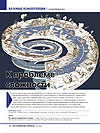
Article considers methodology of applying the complexity concept in modern scientific discourse. Noting impossibility of its further use in a wellestablished blurred and eclectic form, the author proposes to differentiate this concept for three reasons: syncretic and composite complexity, system complexity and complexity of specialization, complexity of structural elements and inter-elementary links. This differentiation sets a fundamentally new methodological optics in analyzing a wide range of phenomena relating both to the natural sciences and to the humanitarian area, as well as to the problem of evolutionary dynamics.

On the Problem of Complexity

#1. Choice of Identity
On the Problem of Complexity

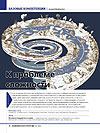
Article dwells on methodology of complexity concept application in modern scientific discourse. Noting impossibility of its use in a well-settled blurred and eclectic form, the author proposes to differentiate this concept by three arguments: syncretic and combined complexity, complexity of system and complexity of specialization, and finally complexity of structural elements and inter-elementary links. This differentiation sets a fundamentally new methodological optics in analyzing a wide range of phenomena relating to both the natural sciences and humanitarian areas, as well as to the problem of evolutionary dynamics.

Journey to the East. The Tree of Life Mystery

#1. Beyond Design Basis Evaluations

The Urantia Book contains surprising and sometimes shocking information about the origin and evolution of man, about the Universe organization and its spiritual commencement.

Locality and Globality. Self-Reproduction of Society

#5. Cultural Revolution

The society consumes what it was convinced to consider necessary, but to convince it are not those who are concerned about life and true needs of a man as he was conceived by the Creator, but consumer hunters, concerned only about his wallet.