Digital Trace in Exhausting the Liberal Model

DOI: 10.33917/es-1.205.2026.62-67

The liberal economic model, long considered the social norm, is losing its sustainability under the influence of digital technologies. Growing data connectivity and decentralization processes are creating nonlinear system dynamics that defy classical reductionist frameworks. Leaders face a dilemma: accept the exhaustion of the liberal economic model or forgo the conveniences of digitalization. This article is the first in a series devoted to the transition to a post-liberal economy.

References:

1. Deneen P.J. Why Liberalism Failed. New Haven and London: Yale University Press, 2018, 248 p.

2. Deneen P.J. Regime change. Toward a postliberal future. Sentinel, 2023. 288 p.

3. Ionin L.G. Sotsiologiya kul’tury [Sociology of Culture]. Ucheb. posobie dlya vuzov. Moscow, ID GU VShE, 2004.

4. Bashnin A.V., Ozols O.K. Kto upravlyaet IT krupnykh industrial’nykh kompaniy? [Who Manages the IT of Large Industrial Companies?]. Ekonomicheskie strategii, 2024, no 3(195), pp. 60–67, DOI: https://doi.org/10.33917/es-3.195.2024.60-67

Requiem for Cybernetics. The Genesis of Digital

DOI: 10.33917/es-6.204.2025.16-25

In the present work the authors practically present a requiem for cybernetics — a classical management science that has fulfilled its historical role, but is now giving way to new approaches emerging at the junction of the philosophy of knowledge, complexity theory, the cognitive and social sciences. The article gives a historical and philosophical overview of cybernetics — from Plato, Ampere and Wiener to the present day. It is demonstrated that classical cybernetic paradigm — a mechanistic control model with feedback loops and representation of the world as a set of “finite state machines” — has proven insufficient in the era of dynamically changing, weakly deterministic, self-organizing living systems. Analysis of the causes of the methodological crisis in cybernetics at the turn of the 20th and 21st centuries is provided and it is argued that its resources are exhausted — further progress requires transition to new conceptual ideas. The authors propose a new engineering approach to understanding the World (K3-Engineering) and an original concept for Genesis of the digital — “Digital Genesis” — as a promising replacement.

References:

1. Wiener N. Cybernetics: or Control and Communication in the Animal and the Machine. 1948.

2. Beer S. Brain of the Firm. London, Allen Lane, 1972. 320 p.

3. Sobolev S.L., Kitov A.I., Lyapunov A.A. Osnovnye cherty kibernetiki [The Main Features of Cybernetics]. Voprosy filosofii, 1955, no 4, pp. 136–148.

4. Thiel P., Douthat R. Peter Thiel and the Antichrist. The New York Times, June 26, 2025.

5. Karp A., Zamiska N. The technological republic: hard power, soft belief, and the future of the West. Crown Publishing Group, 2025.

6. Budanov V.G. Metodologiya sinergetiki v postneklassicheskoy nauke i v obrazovanii [Methodology of Synergetics in Post-Non-Classical Science and Education]. Izd. 4-e dop. Moscow, Lenand, 2017, 272 p.

7. Budanov V.G., Kutin V.N., Khokhlova M.N. Kognitivnyy kollektivnyy konvergentnyy inzhiniring. Chast’ I [Cognitive Collective Convergent Engineering. Part I]. Ekonomicheskie strategii, 2023, no 5, pp. 100–109, DOI: https://doi.org/10.33917/es-5.191.2023.100-109

8. Budanov V.G., Kutin V.N., Khokhlova M.N. Kognitivnyy kollektivnyy konvergentnyy inzhiniring. Chast’ II [Cognitive Collective Convergent Engineering. Part II]. Ekonomicheskie strategii, 2023, no 6, pp. 52–61, DOI: https://doi.org/10.33917/es-6.192.2023.52-61

9. Kutin V.N., Khokhlova M.N. Kak aytishniki “obuvayut” promyshlennikov. A u vas kakaya kollektsiya PPO? O problemakh tsifrovoy transformatsii na primere sistem upravleniya proizvodstvom i promyshlennogo programmnogo obespecheniya (PPO) [How IT Professionals “Shoe” Industrialists. What’s Your Software Collection Like? On the Challenges of Digital Transformation Using Production Management Systems and Industrial Software (IS) as Examples]. OOO “GiperGrafGrupp”, 2022, available at: https://www.gipergraf.ru/kak-ajtishniki-obuvayut-promyshlenniko

Mental Sovereignty

DOI: 10.33917/es-1.199.2025.96-101

Over the past three centuries, economic liberalism has emerged as a global cultural norm that permeates international institutions and business practices. Global turbulence has coincided with degradation of the idea of liberalism; corporate leaders feel the need for change, but don’t associate the transformation goals with exhaustion of the liberal model.

References:

1. Vtulkina N., Firsov A. Khrupkaya, trevozhnaya, nelineynaya, nepostizhimaya [Fragile, Disturbing, Non-linear, Incomprehensible]. Forbes, 2022, 5 sentyabrya, available at: https://www.forbes.ru/forbeslife/476185-vse-v-bani-pocemu-tak-nazyvaetsa-novaa-trevoznaa-epoha-i-kak-v-nej-zit

2. Bashnin A.V., Ozols O.K. Kto upravlyaet IT krupnykh industrial’nykh kompaniy? [Who Manages the IT of Large Industrial Companies?]. Ekonomicheskie strategii, 2024, no 3(195), pp. 60–67, DOI: https://doi.org/10.33917/es-3.195.2024.60-67

3. Belousov L.V. Biologicheskiy morfogenez [Biological Morphogenesis]. Moscow, URSS, 2023, 256 p.

4. Wonga M.L., Cleland C.E., Arend D.J., Bartlettd S., Cleaves H.J., Demarestc H., Prabhua A., Lunineg J.I., Hazen R.M. On the roles of function and selection in evolving systems. PNAS, 2023, vol. 120, no 43, e2310223120.

5. Sharma A., Czégel D., Lachmann M., Kempes C.P., Walker S.I., Cronin L. Assembly theory explains and quantifies selection and evolution. Nature, vol. 622, October 12, 2023.

6. Budanov V.G. Metodologiya sinergetiki v postneklassicheskoy nauke i v obrazovanii [Synergetics Methodology in Post-nonclassical Science and Education]. Moscow, LKI, 2009, 240 p.

Who Manages the IT of Large Industrial Companies?

DOI: 10.33917/es-3.195.2024.60-67

In any organization, regardless of its scale/dimension (from an enterprise to a state), two goals that are invariant with respect to activity are relevant: sustainability and development of the organization. Neither of these goals should be achieved at the expense of the other. Technological dependence of industrial and financial capital on information technology has made corporate IT an important element of an organization. However, corporate IT of large industrial companies has its  own peculiarities. They focus on sustainability of the IT infrastructure, and give the initiative in developing functionalit y of business systems to the so-called functional customers. In the current turbulent conditions it is necessary to abandon the stereotypes of corporate IT management. The article provides recommendations to general directors and shareholders of large industrial companies.

References:

1. Bashnin A.V., Ozols O.K. Importozameshchenie kul’tury izmerenii [Import Substitution of the Culture of Measurements]. Ekonomicheskie strategii, 2023, no 4(190), pp. 78–85. DOI: https://doi.org/10.33917/es-4.190.2023.78-85

2. Vlast’ v SShA zakhvatila “bol’shaya tsifra” [Power in the USA Was Seized by “Big Numbers”]. Rambler, 2021, 10 marta, available at: https://news.rambler.ru/conflicts/45977057/?utm_content=news_media&utm_medium=read_more&utm_source=copylink

3. Kvitko Yu. “Tsifra” pronikla vo vse sfery ekonomiki [“Digital” has Penetrated All Spheres of the Economy]. Rossiyskaya gazeta, 2020, 28 aprelya, no 8147, available at: https://rg.ru/2020/04/28/cifra-pronikla-vo-vse-sfery-ekonomiki.html

4. Everett C. Johnson. IT governance: More needs to be done. ZD-Net, available at: https://www.zdnet.com/article/it-governance-more-needs-to-bedone/

Import Substitution of the Culture of Measurements

DOI: 10.33917/es-4.190.2023.78-85

World turbulence has accelerated trends towards cultural changes that emerged at the end of the last century. Today transformation of traditional management forms, corresponding to changing cultural models, is adequate neither to the essence nor the pace of the new reality formation. It’s high time to start thinking about inevitability of losing the comfort of managing an enterprise as a profit-making machine. The well-known postulate “what cannot be measured cannot be controlled” raises a new question: what and how to measure? Possible way out could be the return to corporations of diversity and complexity on the basis of the theory of fractal sets, and allocation of natural processes outside the Euclid and Newton metrics could become the foundation of a self-organization.

References:

1. Deming E. Vykhod iz krizisa. Novaya paradigma upravleniya lyud’mi, sistemami i protsessami [Way out of the Crisis. New Paradigm for Managing People, Systems and Processes]. 5-e izd. Moscow, Al’pina Pablisher, 2018.

2. Anan’in V.I. Osobennosti natsional’nogo upravleniya [Peculiarities of National Governance]. Elektronnyi zhurnal “Upravlyaem predpriyatiem”, 2014, no 10(45), available at: https://upr.ru/article/osobennosti-nacional-nogo-upravleniya-chast-1-rossijskaya-dejstvitel-nost-i-zapadnye-praktikiupravl/

3. Bashnin A.V. Informatsionnaya podderzhka situativnogo upravleniya pri obespechenii nepreryvnosti biznesa [Information Support for Situational Management while Ensuring Business Continuity]. Information Management, 2013 (fevral’).

4. Nait F.Kh. Risk, neopredelennost’ i pribyl’ [Risk, Uncertainty and Profit]. Per. s angl. M.Ya. Kazhdana. Moscow, Delo, 2003, 359 p. (Sovremennaya institutsional’no-ekonomicheskaya teoriya).

5. Taleb N. Antikhrupkost’. Kak izvlech’ vygodu iz khaosa [Antifragility. How to Capitalize on Chaos]. Moscow, KoLibri, Azbuka-Attikus, 2014.

6. Varneke Kh.-Yu. Revolyutsiya v predprinimatel’skoi kul’ture [Revolution in Entrepreneurial Culture]. Moscow, Nauka/Interperiodika, 1999.

7. Kwangyeol R., Mooyoung J. Fractal Approach to Managing Intelligent Enterprises. In: Creating Knowledge Based Organizations (Eds. J. N. D. Gupta, S.K. Sharma). Idea Group, pp. 312–348.

8. Malik P. An Introduction to Fractal Dynamics. Journal of Human Values, 2004, vol. 10, pp. 99–109.

9. Montreuil B., Venkatadri U., Rardin R.L. Fractal Layout Organization for Jop Shop Environment. International Journal of Production Research, 1999, vol. 37, N 3, pp. 501–521.

10. Shoham S., Hasgall A. Knowledge Workers as Fractals in a Complex Adaptive Organization. Knowledge and Process Management, 2005, vol. 12, N 3, pp. 225–236.

11. Mandel’brot B. Fraktal’naya geometriya prirody [Fractal Geometry of Nature]. Moscow, Institut komp’yuternykh issledovanii, 2002.

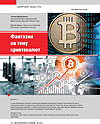
Fantasies on the Cryptocurrency Topic

#5. Digital Agitation
Fantasies on the Cryptocurrency Topic

The article suggests a scenario hypothesis of using geofinans in the format of crypto currency as one of the mechanisms for restructuring the economic space. The paper considers the process of transition from network self-organization to hierarchies with direct inclusion of professional and microterritorial economies, localized through crypto-currencies, into super-large international structures.

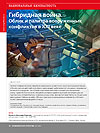
Hybrid Warfare. The Armed Conflicts Shape and Palette in the XXI Century

#8. Logic and ethic of fake
Hybrid Warfare. The Armed Conflicts Shape and Palette in the XXI Century

The concept of the “hybrid warfare” has become relevant and quite popular after the Crimea joining to Russia, military operations in the Donbass and growing turbulence associated with the Islamic state phenomenon. These events have substantially influenced the concept of modern warfare, security strategy, combining tools from the conventional, guerrilla, cyber and information warfare arsenals. The report was presented at the special event “Hybrid warfare. The armed conflicts shape and palette in the XXI century” within the XXV Economic Forum in Poland.

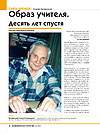
The Image of the Teacher. Ten Years Later

#8. Logic and ethic of fake
The Image of the Teacher. Ten Years Later

An outstanding specialist in applied mathematics, interdisciplinary research, philosophy and methodology of science, corresponding member of the Russian Academy of Sciences Sergei Pavlovich Kurdyumov used to say: “The future tenses the present and clarifies the past”. In addition, the next generations arrive and there is a desire to communicate them the results, hopes, dreams of the previous generations and, if possible, to protect them from already made mistakes. Just from this perspective now we would like to look at the scientific work of Sergei P. Kurdyumov, at the ideas put forward by him and being developed now by his scientific school.

Complexity, net-centrism and self-organization management

#9. Execution Excess
Complexity, net-centrism and self-organization management

The paper proposes an approach that gives a scientific character to the concept of network-centric management, and considered systemic paradigms allow to consider it as an engineering construction. It proposes the concept and management contour models of the first and the second kind, revealing communities’ management mechanisms and processes of their self-organization. They represent not only new opportunities, but also unfamiliar threats. Only basic knowledge of socio-engineering will help to build a security system, to ensure the survival and development of society. However, given any methodological complexity the human factor plays a decisive role. Management of complex systems requires self-dependence, intelligence coordination and real time actions, the synergy of knowledge, intuition and participants’ sagacity as well as harmonious interaction with the environment, including society.

Limited Opportunities of Network Technologies in Providing Modern Complexity Management

#2. Mr Wanna-know-All's Questions
Limited Opportunities of Network Technologies in Providing Modern Complexity Management

It is shown that the current economic crisis, since its beginning in 2008, demonstrated a powerful influence on the economy both of a poorly regulated technologies of resource allocation (monopolistic, financial) and strong market operators (big capital). This influence resulted in draining out resources from the real economy into big capital and causing barriers for development of the real sector business. This impact of unregulated market technologies and strong operators, which became evident about half a century ago and became considerable today, the more influences the economy, the greater is the complexity (the less is the possibility) of forecasting and economic management. Downfall of predictability, effectiveness of used “formal” tools, decrease of market controllability by normsinstitutions and of control of the most big social (economic) systems; facts of accumulation of significant economic problems — disbalances, debt problems, crime and corruption; high and increasing social inequality, impoverishment of the main part of the population, increasing number of billionaires; decline in resource and credit opportunities of small and medium-sized businesses particularly in Europe. These and many other circumstances listed in the article, the aggravation of which is largely due to the above cited complexity of management and forecasting, make deep analysis of this complexity extremely relevant today.