Improving the Processes of Classification and Declassification
DOI: 10.33917/es-6.204.2025.134-143

The article proposes to examine a preliminary version of a program for improving methodological tools for increasing the level of objectivity when making decisions on classifying or declassifying information. The program consists of several stages, which include: conducting preliminary work, including collecting information and solving specially formulated problems, solution of which would facilitate the implementation of these stages; collecting additional information and solving the assigned problems; analyzing the information received and solving the problems that arise; ensuring ongoing monitoring of the implementation effectiveness of the proposed program. A total of 32 such problems are formulated. Furthermore, the authors discuss ways to improve methodological principles and methodological tools in this area. In conclusion, the authors present a plan for future research in the above area.

References:

1. Sagan C. The Demon-Haunted World: Science as a Candle in the Dark. Ballantine Book. New York, 1996, 457 p.

2. Zakon Rossiyskoy Federatsii ot 21.07.93 N 5485-1 “O gosudarstvennoy tayne” (v red. federal’nykh zakonov ot 06.10.97 N 131-FZ, ot 30.06.2003 N 86-FZ, ot 11.11.2003 N 153-FZ, ot 29.06.2004 N 58-FZ, ot 22.08.2004 N 122-FZ, ot 01.12.2007 N 294-FZ, ot 01.12.2007 N 318-FZ, ot 18.07.2009 N 180-FZ, ot 15.11.2010 N 299-FZ, ot 18.07.2011 N 242-FZ, ot 19.07.2011 N 248-FZ, ot 08.11.2011 N 309-FZ, ot 21.12.2013 N 377-FZ, ot 08.03.2015 N 23-FZ, ot 26.07.2017 N 193-FZ, ot 29.07.2018 N 256-FZ, ot 30.12.2020 N 481-FZ, ot 09.03.2021 N 39-FZ, ot 11.06.2021 N 170-FZ, ot 14.07.2022 N 292-FZ, ot 04.08.2022 N 359-FZ, ot 05.12.2022 N 498-FZ, ot 04.08.2023 N 432-FZ, ot 08.08.2024 N 249-FZ) [Law of the Russian Federation of 21.07.93 No. 5485-1 “On State Secrets” (as amended by federal laws of 06.10.97 No. 131-FZ, of 30.06.2003 No. 86-FZ, of 11.11.2003 No. 153-FZ, of 29.06.2004 No. 58-FZ, of 22.08.2004 No. 122-FZ, of 01.12.2007 No. 294-FZ, of 01.12.2007 No. 318-FZ, of 18.07.2009 No. 180-FZ, of 15.11.2010 No. 299-FZ, dated 18.07.2011 No. 242-FZ, dated 19.07.2011 No. 248-FZ, of 08.11.2011 No. 309-FZ, of 21.12.2013 No. 377-FZ, of 08.03.2015 No. 23-FZ, of 26.07.2017 No. 193-FZ, of 29.07.2018 No. 256-FZ, of 30.12.2020 No. 481-FZ, of 09.03.2021 No. 39-FZ, of 11.06.2021 No. 170-FZ, of 14.07.2022 No. 292-FZ, of 04.08.2022 No. 359-FZ, of 05.12.2022 No. 498-FZ, dated 04.08.2023 No. 432-FZ, dated 08.08.2024 No. 249-FZ)]. Konsul’tantPlyus, available at: https://www.consultant.ru/document/cons_doc_LAW_2481/

3. Veryutin V.N. Otdel’nye aspekty zashchity gosudarstvennoy tayny v Rossiyskoy Federatsii [Certain Aspects of the Protection of State Secrets in the Russian Federation]. Vestnik Voronezhskogo instituta MVD Rossii, 2009, no 2, pp. 17–22.

4. Kotov M.A., Kravchenko A.Yu., Chervonenko V.Yu. Ob opredelenii ekonomicheskogo ushcherba bezopasnosti gosudarstva vsledstvie nesanktsionirovannogo raskrytiya svedeniy, sostavlyayushchikh gosudarstvennuyu taynu v VS RF [On the Determination of Economic Damage to State Security Due to the Unauthorized Disclosure of Information Constituting a State Secret in the RF Armed Forces]. Voennaya mysl’, 2009, no 6, pp. 21–26.

Historical features of ideological development in Rus’ and in modern Russia as a factor influencing the level of national security

DOI: 10.33917/mic-5.124.2025.86-93

The article examines the historical stages of the development of ideology in Russia, starting with the Christianization of Ancient Rus’ and ending with the formation of the modern state ideological model. Attention is paid to the role of religion, political concepts, foreign policy and economic factors in the formation of national identity. The work analyzes ideological concepts of different eras, reveals their continuity and transformations.

References:

1. Klyuchevsky V.O. Course in Russian History. Moscow: Mysl’, 2020. – 1153 p.

2. Kuznetsov V.N. Ideology of Russia’s Development. Moscow: Kniga i biznes, 2010. – 498 p.

3. Soloviev S.M. History of Russia from Ancient Times. St. Petersburg: Nauka, 2018. – 786 p.

4. Ilyin I.A. Essence and Uniqueness of Russian Culture. Moscow: Russkaya kniga – 21st Century, 2007. – 462 p.

5. Zhukotskaya A.V. Problemy Ideologii (Socio-Philosophical Analysis). Abstract of Cand. Sci. (Philosophy) Dissertation – 09.00.11. Moscow: Moscow State Pedagogical University, 2018. – 42 p. URL: http://irbis.gnpbu.ru/Aref_1998/Jukotskaya_A_V_1998.pdf

6. Chernikov M.V. About ideology Lessons of Marxism. Free thought. 2021. No. 1. pp. 21-27. URL: http://www.svom.info/entry/967-ob-ideoloii-uroki-marksizma/

7. National ideology of Russia. Project. M.: Pero Publishing House, 2023. – 64 p. URL: https://storage.strategy24.ru/files/project/202305/13575df9a6c33a69d94a1a558be135c9.pdf

8. Gulyga A.V. Russian idea and its creators. Moscow: EKSMO, 2003. – 448 p.

9. Kuznetsov V.N. Russian Ideology 21: An Experience of Sociological Research into the Formation of Russian Ideology of the 21st Century. Moscow: 2004. – 551 p.

10. Gobozov I.A. State and National Identity: Globalization or Internationalization? Moscow: Lenand, 2019. – 200 p.

11. Kuznetsov V.N. Sociology of Ideology: A Textbook. Moscow: University Book House, 2009. – 380 p.

Potential for Economic Sanctions Effectiveness

DOI: 10.33917/es-3.195.2024.34-43

The article analyzes mechanisms of sanctions action and the problems that are faced by countries that use this political instrument. Particular attention is paid to cases of applying sanctions against the Russian Federation and Iran without expressing any subjective opinion on the legality of these countries’ actions. It is proved that economic sanctions in most cases are fraught with economic costs for all participants in sanctions episodes, including countries that initiate these sanctions. The country, against which the sanctions are imposed, is likely to develop trade relations with the third parties that do not participate in the sanctions coalition.

References:

1. Alekseeva T.A. Sovremennaya politicheskaya mysl’ (XX–XXI vv.): politicheskaya teoriya i mezhdunarodnye otnosheniya [Modern Political Thought (XX–XXI centuries): Political Theory and International Relations]. Moscow, Aspekt Press, 2015.

2. Timofeev I.N. Ekonomicheskie sanktsii kak politicheskoe ponyatie [Economic Sanctions as a Political Concept]. Vestnik MGIMO-Universiteta, 2018, no 2(59), pp. 26–42, DOI: 10.24833/2071-8160-2018-2-59-26-42

3. ES i SShA otsenivayut vliyanie sobstvennykh sanktsiy v otnoshenii Rossii [The EU and the US Assess the Impact of their own Sanctions Against Russia]. Otkrytyy zhurnal, 2022, 5 marta, available at: https://journal.open-broker.ru/results/itogi-nedeli-ot-5-marta-2022/

4. Khaffbauer G., Shott D., Elliot K., Egg B. Peresmotr ekonomicheskikh sanktsiy [Revision of Economic Sanctions]. Elsevier. Zhurnal mezhdunarodnoy ekonomiki, 2007, vol. 76(1), pp. 135–137.

5. Rezolyutsiya 1929, prinyataya Sovetom Bezopasnosti na ego 6335-m zasedanii 9 iyunya 2010 g. [Resolution 1929, Adopted by the Security Council at its 6335th Meeting on 9 June 2010]. Sovet Bezopasnosti OON, available at: https://www.un.org/securitycouncil/ru/s/res/1929-%282010%29

Historical overview of the holding of special events in the context of ensuring the national security of the state

DOI: 10.33917/mic-4.111.2023.94-102

Presents a theoretical overview of the domestic experience of countering threats, replete with various forms of implementation in the form of military operations, counter-terrorism and other special operations that are aimed at strengthening the national security of the country and protecting national, geopolitical, strategic and economic interests from terrorist and other unfriendly threats potential enemy states of our country. The relationship between the conduct of special operations and the introduction of emergency regimes, a state of emergency and a counter-terrorist operation on the territory of Russia is noted. A definition of the concept of «special military operation» is proposed. The role of ensuring economic security as a priority of the national security of the state and the formation of patriotic principles of educating new generations to strengthen the country are determined.

References: 

1. The Constitution of the Russian Federation: approved dated December 12, 1993 No. 343-FKZ; ed. dated 01.07.2020 No. 11-FKZ. SPS ConsultantPlus. Legislation. URL: http://www.consultant.ru/

2. On martial law: Federal constitutional law of 30.01.2002 No. 1-FKZ; ed. dated May 29, 2023. SPS ConsultantPlus. Legislation. URL: http://www.consultant.ru/

3. On the state of emergency: Federal constitutional law of May 30, 2001 No. 3-FKZ; ed. dated March 07, 2016. SPS ConsultantPlus. Legislation. URL: http://www.consultant.ru/

4. On the protection of the population and territories from natural and man-made emergencies: Federal Law of December 21, 1994 No. 68-FZ; ed. dated April 14, 2023. SPS ConsultantPlus. Legislation. URL: http://www.consultant.ru/

5. On countering terrorism: Federal Law No. 35-FZ of March 6, 2006 (as amended on May 26, 2021). SPS ConsultantPlus. Legislation. URL: http://www.consultant.ru/

6. Polyakov Yu. A. The end of Basmachism / Yu. A. Polyakov, A. I. Chugunov. M .: Nauka. 1976. 184 p. (In Russ.).

7. Gorobets K. Russian «Special Military Operation» and the Language of Empire. Opinio Juris (May 24, 2022). URL: http://opiniojuris.org/2022/05/24/russian-special-military-operation-and-the-language-of-empire

8. Kalmykova M. Study of the Influence of the War in Ukraine on the Russian Language. International Scientific Conference (March 13, 2023; Bratislava). Bratislava: Language and politics. Between linguistics and political science, 2023. URL: https://dspace.library.uvic.ca/bitstream/handle/1828/14840/Maria%20Kalmykova-JCURAposter-2023.pdf

9. Spišiaková M.  Political Euphemisms and Neologisms in Online Media Content: Amid the War in Ukraine / M. Spišiaková, N. Shumeiko. Language and politics. Between linguistics and political science: University of Economics Bratislava, 2022. pp. 372–388. URL: https://conferences.euba.sk/jazykapolitika/www_write/files/2022/spisiakova_shumeiko.pdf

10. The Daily Journal of the United States Government / Executive Order 13405 of June 16, 2006. Blocking Property of Certain Persons Undermining Democratic Processes or Institutions in Belarus. URL: https://www.federalregister.gov/documents/2006/06/20/06-5592/blocking-property-of-certain-persons-undermining-democratic-processes-or-institutions-in-belarus

Modern features and contradictions of economic security development in Russia

DOI: 110.33917/mic-2.103.2022.98-103

The article deals with the conceptual provisions of Russia’s economic security. The authors analyzed the existing approaches to the definition of the concept of «economic security». It is concluded that social, technogenic, informational and other processes directly affect the provision of economic security of the state. On the example of the situation in Russia, the main areas are identified, the impact on which with the help of economic instruments can cause significant damage to security in the context of the problems of «economic stability» at the national and regional levels. An assessment of the key threats to the economic security of the Russian Federation is given.

References:

1. On the Strategy for the Economic Security of the Russian Federation for the period up to 2030: Decree of the President of the Russian Federation of May 13, 2017 No. 208 // Collection of Legislation of the Russian Federation. 2017. No. 20, art. 2902.

2. Afontsev S.A. National economic security: on the way to a theoretical consensus //World Economy and International Relations. 2002;10:30-39. (In Russ.).

3. Kuznetsov D.A., Rudenko D.A. System of indicators for evaluating economic security // National interests: priorities and security. 2015;23:59-68. (In Russ.).

4. Neu C.R. and Wolf Ch. The Economic Dimensions of National Security. Santa Monica: RAND, 2014. 269 p.

The Digital Twin (Artificial Society) of the Socio-Economic System of Russia is a Platform for Experiments in the Field of Managing Demographic Processes

DOI: https://doi.org/10.33917/es-2.182.2022.6-19

One of the most promising tools for monitoring and predicting social processes are agent-based models, which are widely used abroad. Their advantage lies in the consideration of the system under study at the level of its individual individuals, which increases the realism of these computer-based assessment methods. In Russia, this direction is also developing, although not so actively. The article discusses the dynamics of the population of Russia, as well as the factors of increasing the birth rate, successful examples of the practical implementation of agent models for studying social processes, a brief description of the model we developed, which includes 146 million agents, is given. With the help of this tool, a forecast of the population of Russia and an assessment of the impact on this indicator of some measures aimed at improving the demographic situation were obtained.

Источники:

1. Makarov V.L., Bakhtizin A.R., Il’in N.I. Modelirovanie i otsenka natsional’noi sily Rossii [Modeling and Assessing the National Strength of Russia]. Ekonomicheskie strategii, 2020, no 2, pp. 6–19, available at: DOI: https://doi.org/10.33917/es-2.168.2020.6-19.

2. Makarov V.L., Bakhtizin A.R., Il’in N.I., Sushko E.D. Natsional’naya bezopasnost’ Rossii [National Security of Russia]. Ekonomicheskie strategii, 2020, no 5, pp. 6–23, available at: DOI: https://doi.org/10.33917/es-5.171.2020.6-23.

3. Andreev E.M., Darskii L.E., Khar’kova T.L. Naselenie Sovetskogo Soyuza: 1922–1991 [Population of the Soviet Union: 1922–1991]. Moscow, Nauka, 1993, 143 p.

4. Federal’naya sluzhba gosudarstvennoi statistiki [Federal State Statistics Service], available at: https://rosstat.gov.ru.

5. Zdravookhranenie [Healthcare]. Federal’naya sluzhba gosudarstvennoi statistiki, available at:  https://rosstat.gov.ru/folder/13721.

6. Sobotka T., Matysiak A., Brzozowska Z. Policy responses to low fertility: How effective are they? Working Paper, May, 2019, N 1, available at: https://www.unfpa.org/sites/default/files/pub-pdf/Policy_responses_low_fertility_UNFPA_WP_Final_corrections_7Feb2020_CLEAN.pdf.

7. The World Bank, available at: https://data.worldbank.org.

8. Aganbegyan A.G. O katastroficheskom uvelichenii smertnosti i merakh po sberezheniyu naroda v Rossii [On Catastrophic Increase in Mortality and Measures to Save the People in Russia]. Ekonomicheskie strategii, 2021, no 4, pp. 6–13, available at: DOI: https://doi.org/10.33917/es-4.178.2021.6-13.

9. Country Comparisons — Death Rate. The World Factbook, available at: https://www.cia.gov/the-world-factbook/field/death-rate/country-comparison.

10. Goldstein J.R., Koulovatianos C., Li J., Schr der C. Evaluating how child allowances and daycare subsidies affect fertility. Goethe University Frankfurt am Main, available at: http://nbn-resolving.de/urn:nbn:de:hebis:30:3-430067.

11. Kalwij A. The impact of family policy expenditure on fertility in western Europe. Demography, 2010, N 47(2), pp. 503–519, available at: DOI: https://doi.org/10.1353/dem.0.0104.

Digital Transformation of National Security in the Context of Global Hybrid Threats

DOI: https://doi.org/10.33917/es-4.178.2021.60-69

In this article, the authors raise the issues of compliance (adequacy) of the ideology, approaches and infrastructure of the national security system in the light of global changes in the economy, de facto hybrid wars and ongoing natural and environmental emergencies. As a central element of preparation for such events and reaction to them, the authors considers mobilization in the classical sense, enshrined in the legislation, analyzes it for compliance with current hybrid threats, and also suggests new approaches to the digital transformation of the complex system of national security and mobilization, in particular

National Security of Russia

DOI: 10.33917/es-5.171.2020.6-23

The article is continuing the research “Modelling and Assessment of Russia’s National Power”, dedicated to calculating the index of national power, which is currently the most informative and popular indicator in the world that integrally characterizes the aggregate potential of a particular country and allows at the same time to compare the level of its power and socio-economic development with the other countries’ level. The research results were published in the “Economic Strategies” magazine No. 2 for 2020. [1].

If the national power of the state, in fact, determines its potential capabilities and mainly gross indicators are used for the

calculation, then the national security indicators are calculated on the basis of normalized values (as a rule, per capita) and witness the development level of one or another component of the country’s socio-ecologic and economic system, as well as efficiency of using the existing potential. It should be reminded that in terms of the National Integral Strength Index, which includes many components, Russia ranks fourth in the world, slightly behind India. In this article, using the methods of multivariate statistical analysis, we’ll calculate the national security indicators of the UN member states, also defining the position of Russia, but in addition, we’ll also estimate the threshold values for all the factors of national security considered in the work. In the last part of the paper, we’ll give a medium-term forecast of national security

Non-Military Threats to Russia’s National Security in the Military Sphere: Essence, Content, Countermeasures

DOI: 10.33917/es-6.164.2019.30-43

The matter of countering a new type of threats to national security was discussed by participants in the round table held
in the Public Chamber of the Russian Federation on February 15, 2019. Representatives of the AAC “Analytica”, the Public Chamber of the Russian Federation, Academy of Military Sciences, the RF Ministry of Defense, Ministry of Foreign Affairs of the Russian Federation, the Institute of Contemporary History of the Moscow State Pedagogical University, Moscow Region State University, the Victory Museum, Lomonosov Moscow State University, RUDN University, the Russian Academy of Sciences and the Russian Military Historical Society assessed the extent of a new type of threats to Russian society, outlined the directions and methods of organizing countermeasures at all management levels in science, education, economy and discussed problematic issues of information policy

“Space” Strategic Matrix: Concentration of the Russian Competitiveness Key Factors in the Struggle for Dominance in Strategic Business Areas of the Global Economy

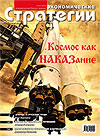
#5. Space Like a Punishment
“Space” Strategic Matrix: Concentration of the Russian Competitiveness Key Factors in the Struggle for Dominance in Strategic Business Areas of the Global Economy

Efficient use of space technologies and systems enables us to construct a model of techno-mediated social-economic progress, which will determine the format of states’ and corporations’ dominance in strategic business areas. Space is becoming a bifurcation point of conservation — of real-national sovereignty of those countries that are interested in it and can afford it. It is necessary to form a comprehensive space activity strategy for concentration of the Russian competitiveness key factors in the struggle for dominance in the world economy.