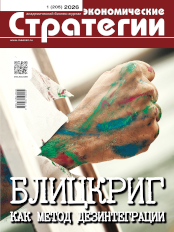
The "Economic Strategies" journal

#1. 2026. Blitzkrieg as Disintegration Method


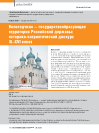
Vologda region — the state-forming territory of the Russian empire: historical and patriotic discourse of the IX-XVI centuries

DOI: 10.33917/es-1.205.2026.130-139

The issues of the history of the Vologda Region are considered in the context of the development of Russian statehood during the 9th –16th centuries. Attention is focused on the political, legal, historical and cultural contribution of the region to the formation and strengthening of the unified Russian state, historical factors of the development of the region as a sovereign, state-forming territory are identified.

References:

1. Zakharov S.D. Beloozero na nachal’nykh etapakh stanovleniya Drevnerusskogo gosudarstva: Severnaya Rus’ i problemy formirovaniya Drevnerusskogo gosudarstva: Sb. materialov Mezhdunarodnoy nauchnoy konferentsii (Vologda — Kirillov — Belozersk, 6–8 iyunya 2012 g.) [Beloozero in the Early Stages of the Formation of the Old Russian State: Northern Rus’ and the Problems of the Formation of the Old Russian State: Collection of Materials from the International Scientific Conference (Vologda — Kirillov — Belozersk, June 6–8, 2012)]. Vologda, Drevnosti Severa, 2012, 209 c.

2. Zakharov S.D. Beloozero: Rus’ v IX–XI vekakh: Arkheologicheskaya panorama [Beloozero: Rus’ in the 9th–11th Centuries]. In-t arkheologii RAN; Otv. red. N.A. Makarov. Moscow, Vologda, Drevnosti Severa, 2012, 496 p.

3. Zimin A.A. Vityaz’ na rasput’e: feodal’naya voyna v Rossii XV v. [Knight at the Crossroads: Feudal Warfare in 15th-Century Russia]. Moscow, Mysl’, 1991, 288 p.

4. Zimin A.A. Namestnicheskoe upravlenie v Russkom gosudarstve vtoroy poloviny XV — pervoy treti XVI v. [Viceroyalty in the Russian State in the Second Half of the 15th — First Third of the 16th Century]. Istoricheskie zapiski, Moscow, Nauka, 1974, vol. 94, pp. 271–301.

5. Belov N.V. Byla li opala knyazya S.I. Mikulinskogo v 1554–1558 godakh? K voprosu o sluzhebnom statuse dvinskogo namestnichestva i kazanskogo voevodstva v seredine XVI veka [Was Prince S.I. Mikulinsky in Disgrace in 1554–1558? On the Official Status of the Dvina Viceroyalty and Kazan Voivodeship in the Mid-16th Century]. Vestnik Vologodskogo gosudarstvennogo universiteta, Seriya: Istoricheskie i filologicheskie nauki, 2023, no 2(29), pp. 9–16.

6. Nosov N.E. Gubnaya reforma i tsentral’noe pravitel’stvo kontsa 30-kh — nachala 50-kh godov XVI v. [The Disastrous Reform and the Central Government of the Late 1530s — Early 1550s.]. Istoricheskie zapiski, 1956, vol. 56, pp. 206–234.

7. Nosov N.E. Zemskaya reforma na Russkom Severe XVI v. (Ob otmene kormleniy i vvedenii zemskikh uchrezhdeniy): Krest’yanstvo i klassovaya bor’ba v feodal’noy Rossii: Sb. statey pamyati Ivana Ivanovicha Smirnova [Zemstvo Reform in the Russian North in the 16th Century (On the Abolition of Feeding and the Introduction of Zemstvo Institutions): The Peasantry and Class Struggle in Feudal Russia: A Collection of Articles in Memory of Ivan Ivanovich Smirnov]. Leningrad, Nauka, 1967, pp. 131–156.

8. Volodikhin D.M. Polkovodtsy Moskovskogo tsarstva [Commanders of the Muscovite Kingdom]. Moscow, Molodaya gvardiya, 2020, 343 p.
Countering Coups D’etat and Attempts to Forcefully Seize the Power in the Russian Federation

DOI: 10.33917/es-1.205.2026.14-23

Attempts to violently seize the power in post-Soviet states can be reduced to operation of complex organizational systems, which means that adaptive application of general principles and tools for managing such systems is possible. It is necessary to analyze such processes from scientific point of view and proactively plan measures or better yet, systemic mechanisms, to counter these processes, which will ensure the stability of public administration at various levels of hierarchy and administrative infrastructure of the Russian Federation.

References:

1. Ageev A.I. Rol’ sanktsiy, konfliktov i spetsoperatsiy: razmyshleniya o budushchem. Chast’ 2 [The Role of Sanctions, Conflicts, and Special Operations: Reflections on the Future. Part 2]. Nauchnyy vestnik oboronno-promyshlennogo kompleksa Rossii, 2024, no 1, pp. 33–42.

2. Ageev A.I., Grigor’ev V.V., Loginov E.L. Kvantovye simulyatory kak instrument nablyudaemosti tsifrovoy supersistemy s sushchestvennoy komponentoy nepredskazuemogo povedeniya ee elementov [Quantum Simulators as a Tool for Observability of a Digital Supersystem with a Significant Component of Unpredictable Behavior of its Elements]. Mikroekonomika, 2024, no 5, pp. 5–13.

3. Lyuttvak E. Gosudarstvennyy perevorot: Prakticheskoe posobie [Coup d’État: A Practical Handbook]. Moscow, Russkiy fond sodeystviya obrazovaniyu i nauke, 2015, 326 p.

4. Abramov V.I., Loginov E.L. Agentno-orientirovannye podkhody k analizu i prognozu politicheskikh nastroeniy v obshchestve i postroeniyu mekhanizmov korrektirovki polozhitel’nykh i otritsatel’nykh reaktsiy na sotsial’no-politicheskie situatsii: Rossiya v XXI veke: global’nye vyzovy i perspektivy razvitiya: Materialy Sed’mogo Mezhdunarodnogo foruma [Agent-based Approaches to the Analysis and Forecasting of Political Sentiment in Society and the Development of Mechanisms for Adjusting Positive and Negative Reactions to Socio-political Situations: Russia in the 21st Century: Global Challenges and Development Prospects: Proceedings of the Seventh International Forum]. Moscow, IPR RAN, 2018, pp. 373–376.

5. Ageev A.I., Loginov E.L. Modelirovanie protsessov obespecheniya ustoychivosti gosudarstvennykh organizatsionnykh sistem k popytkam zakhvata vlasti identifitsirovannym i neidentifitsirovannym protivnikom [Modeling the Processes of Ensuring the Resilience of State Organizational Systems to Attempts to Seize Power by an Identified and Unidentified Enemy]. Mikroekonomika, 2025, no 3, pp. 5–14.

6. Loginov E.L. Perekhvat upravleniya slozhnymi organizatsionnymi sistemami v usloviyakh razmyvaniya granits mezhdu fizicheskimi, kognitivnymi i tsifrovymi prostranstvami deyatel’nosti i sredami upravleniya [Taking Control of Complex Organizational Systems in the Context of Blurring Boundaries between Physical, Cognitive, and Digital Activity Spaces and Management Environments]. Ekonomika: teoriya i praktika, 2024, no 1(73), pp. 3–10.

7. Loginov E.L., Matveev A.G., Shkuta A.A. Opredelenie parametrov lokalizovannykh sostoyaniy neyavnykh grupp s sobstvennoy komponentoy aktivnogo povedeniya, ne sovpadayushchego s vektorom deystviy gosudarstvennoy supersistemy [Determination of the Parameters of Localized States of Implicit Groups with Their own Component of Active Behavior That does not Coincide with the Vector of Actions of the State Supersystem]. Iskusstvennye obshchestva, 2019, vol. 14, no 1, p. 5.

Complementarity of Research Approaches to Studying Chinese Schools in Human Resources Management

DOI: 10.33917/es-1.205.2026.24-31

The aim of the present study is to form the value foundations for methodology of the paradigms compatibility of society and its subsystems. Complementary types of value theories and dual understanding of values are analyzed. The article explores the common values of social paradigms, including sustainable development, social justice, inclusiveness, equality and the human rights protection. The influence of various values on functioning of the society development paradigms is studied. Necessary set of aspects of the value foundations for a methodology of the social paradigms compatibility is developed and structural framework for compatibility of paradigms across social spheres is constructed.

References:

1. Fuko M. Arkheologiya znaniya [Archeology of Knowledge]. Saint Petersburg, Gumanitarnaya akademiya, 2024, 416 p.

2. Perelomov L.S. Konfutsiy “Lun’ Yuy” [Confucius’s Analects]. Moscow, Vostochnaya literatura, 2001, 180 p.

3. Guan’-tszy. Drevnekitayskaya filosofiya [Ancient Chinese Philosophy]. Sobr. tekstov: V 2 t., vol. 2, Moscow, Mysl’, 1973, 384 p.

4. Ma Czin’czjun’. Trudovye resursy v sovremennom Kitae: razvitie i racional’noe upravlenie: dis. … kand. sociol. nauk [Labor Resources in Modern China: Development and Rational Management: diss. … Cand. of Sociological Sciences]. VAK RF 22.00.08, 2004. 169 s.

5. Laotszy. Obresti sebya v Dao [Finding Yourself in Dao]. Sost., avt. predisl., perevod, komment. I.I. Semenenko. Moscow, Respublika, 1999, 445 p.

6. Khan’ Fey-tszy. Kniga zakona i poryadka. Sovety razumnomu pravitelyu [The Book of Law and Order: Advice to a Wise Ruler]. Per. A.I. Ivanov; Red. D.O. Khvostova. Moscow, Tsentrpoligraf, 2019, 287 p.

7. Khegi D. Iskusstvo voyny v illyustratsiyakh. Klassicheskiy traktat Sun’-tszy v diagrammakh i grafikakh [The Art of War Illustrated: Sun Tzu’s Classic Treatise in Diagrams and Graphs]. Moscow, Mann, Ivanov i Ferber, 2015, 264 p.

8. Gusserl’ E. Idei k chistoy fenomenologii i fenomenologicheskoy filosofii. Kniga tret’ya. Fenomenologiya i osnovy nauk [Ideas Toward a Pure Phenomenology and Phenomenological Philosophy. Book Three. Phenomenology and the Foundations of Science]. Kaliningrad, BFU imeni I. Kanta, 2024, 231 p.

9. Khaydeger M. Osnovnye problemy fenomenologii [The Main Problems of Phenomenology]. Saint Petersburg, Vysshaya religiozno-filosofskaya shkola, 2001, 456 p.

10. Polan’i K. Velikaya transformatsiya: proshloe, nastoyashchee i budushchee [The Great Transformation: Past, Present, and Future]. Moscow, GU VShE, 2006, 321 p.

11. Merlo-Ponti M. Fenomenologiya vospriyatiya [Phenomenology of Perception]. Moscow, Bukinist, 1996, 606 p.

12. Vinogradov A.V. Kitayskaya model’ modernizatsii. Poiski novoy identichnosti [The Chinese Model of Modernization: The Search for a New Identity]. Moscow, Pamyatniki istoricheskoy lichnosti, 2005, 334 p.

Ways of Improving Russia’s Competitiveness in the Global Economy

DOI: 10.33917/es-1.205.2026.32-37

The article dwells on the problem of increasing competitiveness of the Russian economy against the backdrop of deteriorating relations between Russia and Western countries. The author analyzes the share of domestic production in various economic sectors. Proposals for increasing competitiveness of Russian goods through innovation are also provided.

References:

1. Afanas’eva O.G. Povyshenie konkurentosposobnosti — vazhneyshiy faktor obespecheniya ustoychivogo razvitiya molochnogo skotovodstva v sel’skokhozyaystvennykh organizatsiyakh: Monografiya [Improving Competitiveness is the Most Important Factor in Ensuring Sustainable Development of Dairy Farming in Agricultural Organizations: Monograph]. Moscow, INFRA, 2019, p. 118.

2. Top-menedzhery nazvali glavnye prepyatstviya dlya biznesa v Rossii [Top Managers Named the Main Obstacles to Business in Russia]. RBK, 2023, 7 dekabrya, available at: https://www.rbc.ru/economics/07/12/2023/6570223a9a7947cb95b143b5?ysclid=mdhsb47o73526509239

3. Mezhdunarodnyy institut upravlencheskogo razvitiya IMD [Website]. IMD, available at: https://www.imd.org/centers/wcc/world-competitiveness

4. Skobeleva O.A., Kutyashova E.V., Chirkova N.A. Konkurentosposobnost’ Rossii v mezhdunarodnom biznese [Russia’s Competitiveness in International Business]. Vestnik Udmurtskogo universiteta. Seriya: Ekonomika i pravo, 2022, no 2, available at: https://cyberleninka.ru/article/n/konkurentosposobnost-rossiiv-mezhdunarodnom-biznese

5. RBK [Website], available at: https://www.rbc.ru/economics/07/12/2023/6570223a9a7947cb95b143b5?ysclid=mdhsb47o73526509239

6. Vsemirnaya organizatsiya intellektual’noy sobstvennosti [Website], available at: https://www.wipo.int/web-publications/global-innovation-index-2024/en/

7. The Global Economy.com [Website], available at: https://www.theglobaleconomy.com/russia/gii_index/

8. PAO “Gazprom” [Website], available at: https://www.gazprom.ru/about/production/reserves/?ysclid=m4vogoulz1217508270

9. Tsentral’nyy bank Rossiyskoy Federatsii [Website], available at: https://cbr.ru/statistics/macro_itm/external_sector/pb/p_balance/

10. Zhurnal Tin’koff [Website], available at: https://journal.tinkoff.ru/list/7-glavnykh-stran-partnerov-rossii/?ysclid=m4vq179k6q641770003

Strategization of the Currency Policy and the Ruble’s Ultra-Short-Term Volatility

DOI: 10.33917/es-1.205.2026.38-45

The paradigm shift in international relations has caused significant changes in financial markets. The proposed author’s methodology for economic-mathematical modeling of the ruble exchange rate based on international flows makes it possible to include capital flows in the modeling orbit at a formal-logical level in an explicit form, taking into account their short-term volatility. Conducted during various crisis periods — formally based on results of mathematical modeling — analysis and assessment of short-term effects of the ruble exchange rate dynamics show the presence of preconditions for producing shortterm volatility in the national currency exchange rate under conditions of unfavorable geo-economic environment and a freefloating exchange rate regime. Based on the above, it is concluded that the Bank of Russia needs to make more serious efforts to implement a stabilization exchange rate policy, which is one of the key components of macroeconomic management.

References:

1. Glaz’ev S.Yu. Problemy i perspektivy rossiyskogo finansovogo rynka v usloviyakh strukturnykh izmeneniy mirovoy ekonomiki [Problems and Prospects of the Russian Financial Market in the Context of Structural Changes in the World Economy]. Finansy: teoriya i praktika, 2020, no 24(3), pp. 6–29, available at: https://cyberleninka.ru/article/n/problemy-i-perspektivy-rossiyskogo finansovogo-rynka-v-usloviyah-strukturnyh-izmeneniy-mirovoy-ekonomiki

2. Ishkhanov A., Linkevich E.F. Mezhdunarodnye valyutno-kreditnye i finansovye otnosheniya [International Monetary, Credit and Financial Relations]. Krasnodar, 2022, 149 p.

3. Ageev A.I., Loginov E.L. Izmenenie strategii operirovaniya dollarom: zapusk SShA novogo kreditno-investitsionnogo tsikla vo vzaimosvyazi s valyutnymi voynami [Changing the Strategy of Dollar Handling: US Launch of New Credit-Investment Cycle in Association with the Currency Wars]. Ekonomicheskie strategii, 2015, no 3(129), pp. 20–35.

4. Pechalova M.Yu. Transformatsiya rossiyskoy valyutnoy politiki na fone obostreniya geopoliticheskoy napryazhennosti [Transformation of the Russian Monetary Policy Against the Background of Aggravation of Geopolitical Tensions]. Ekonomika. Nalogi. Pravo, 2023, no 16(1), pp. 48–57.

5. Chernov V.A. Uregulirovanie krizisa mezhdunarodnykh finansov instrumentami monetarnoy politiki [Settlement of the Crisis of International Finance by Monetary Policy Instruments]. Innovatsionnaya ekonomika i obshchestvo, 2023, no 3(41), pp. 48–64.

6. Kulikov N.I., Kulikova M.A., Parkhomenko V.L. Slabyy rubl’ kak odno iz glavnykh prepyatstviy dlya razvitiya i rosta rossiyskoy ekonomiki [Weak Ruble as a Main Obstacle to the Russian Economy’s Development and Growth]. Finansy i kredit, 2024, no 30(5), pp. 988–1016, DOI: https://doi.org/10.24891/fc.30.5.988

7. Eremin V.V. Obespechennost’ denezhnoy massy zolotovalyutnymi rezervami kak operezhayushchiy indikator kursa rublya [Provision of the Money Supply with Gold and Foreign Exchange Reserves as a Leading Indicator of the Ruble Exchange Rate]. Finansy: teoriya i praktika, 2023, no 27(3), pp. 43–55.

Monetary Policy of Russia and the Republic of Belarus: Current Trends and Challenges

DOI: 10.33917/es-1.205.2026.46-53

The author examines peculiarities of the monetary policy of the Bank of Russia and the National Bank of the Republic of Belarus in the context of modern challenges.

References:

1. Konstitutsiya Rossiyskoy Federatsii (prinyata vsenarodnym golosovaniem 12 dekabrya 1993 g. s izmeneniyami, odobrennymi v khode obshcherossiyskogo golosovaniya 1 iyulya 2020 g.) [Constitution of the Russian Federation (adopted by popular vote on December 12, 1993, with amendments approved during the all-Russian vote on July 1, 2020)]. Dostup iz SPS “Konsul’tant Plyus”.

2. Federal’nyy zakon ot 10 iyulya 2002 g. N 86-FZ “O Tsentral’nom banke Rossiyskoy Federatsii (Banke Rossii)” [Federal Law of July 10, 2002 No. 86-FZ “On the Central Bank of the Russian Federation (Bank of Russia)”]. Rossiyskaya gazeta, 2002, no 127.

3. Postanovlenie Konstitutsionnogo suda RF ot 3 iyulya 2001 g. N 10-P [Resolution of the Constitutional Court of the Russian Federation of July 3, 2001 No. 10-P]. Vestnik Konstitutsionnogo suda RF, 2001, no 6.

4. Postanovlenie Prezidiuma VAS RF ot 19 aprelya 2002 g. N 5697/01 [Resolution of the Presidium of the Supreme Arbitration Court of the Russian Federation of April 19, 2002 No. 5697/01]. Vestnik VAS RF, 2002, no 8.

5. Postanovlenie Prezidiuma Verkhovnogo suda RF ot 7 avgusta 2002 g. N 100pv-02 [Resolution of the Presidium of the Supreme Court of the Russian Federation of August 7, 2002 No. 100пв-02]. Byulleten’ Verkhovnogo suda RF, 2003, no 2.

6. Osnovnye napravleniya edinoy gosudarstvennoy denezhno-kreditnoy politiki na 2025 god i period 2026 i 2027 godov (utv. Bankom Rossii) [Main Directions of the Unified State Monetary Policy for 2025 and the Period 2026 and 2027 (approved by the Bank of Russia)]. Dostup iz SPS “Konsul’tant Plyus”.

7. Dzhonson S., Kvak D. 13 Bankov, kotorye pravyat mirom [13 Banks That Rule the World]. Moscow, Kar’era Press, 2013, 384 p.

8. MVF nazval targetirovanie inflyatsii i gibkiy obmennyy kurs odnimi iz klyuchevykh predposylok dlya povysheniya potentsiala rosta rossiyskoy ekonomiki: Informatsiya Banka Rossii ot 24 maya 2019 g. [IMF Identified Inflation Targeting and a Flexible Exchange Rate as Key Prerequisites for Increasing the Growth Potential of the Russian Economy: Information from the Bank of Russia Dated May 24, 2019]. Dostup iz SPS “Konsul’tant Plyus”.

9. Missiya MVF zayavila o vazhnosti sokhraneniya v Rossii prochnoy makroekonomicheskoy osnovy: Informatsionnoe soobshchenie Banka Rossii ot 21 noyabrya 2019 g. [IMF Mission Stated the Importance of Maintaining a Strong Macroeconomic Framework in Russia: Information Statement of the Bank of Russia Dated November 21, 2019]. Dostup iz SPS “Konsul’tant Plyus”.

10. Mery Banka Rossii sposobstvuyut vosstanovleniyu rossiyskoy ekonomiki — MVF: Informatsionnoe soobshchenie Banka Rossii ot 24 noyabrya 2020 g. [Bank of Russia’s Measures Contribute to the Recovery of the Russian Economy — IMF: Information Statement of the Bank of Russia Dated November 24, 2020]. Dostup iz SPS “Konsul’tant Plyus”.

Current Look at the Creation of AIIB and NDB in the Context of the Modern Economy

DOI: 10.33917/es-1.205.2026.54-61

The article examines key factors that led to the creation in the mid-2010s of two major international financial institutions as alternatives to the Bretton Woods institutions – the Asian Infrastructure Investment Bank and the New Development Bank. Based on analysis of macroeconomic indicators (gross domestic product growth, share of world trade, gold and foreign exchange reserves), imbalance between the growing economic role of the BRICS countries (especially China) and their limited influence in traditional international financial institutions is demonstrated. It is emphasized that AIIB and NDB have become a response to inability of the existing global governance system to reflect new economic realities.

References:

1. Ageev A.I. Sdvigaya kontinenty: Slovo glavnogo redaktora [Shifting Continents: The Editor-in-Chief’s Word]. Ekonomicheskie strategii, 2024, no 5, p. 5.

2. Khellener E. Krizis statusa-kvo: global’noe finansovoe upravleniya posle krizisa 2008 g. [The Status Quo Crisis: Global Financial Governance After the 2008 Meltdown]. N.Y., Oksford Yuniversiti Press, 2014.

3. Stubbs R., Ueyd R. Global’noe ekonomicheskoe upravlenie: vyzovy i perspektivy [Global Economic Governance: Challenges and Prospects]. Global Policy, 2021, vol. 12, no 3.

4. Aziatskiy bank razvitiya. Strategiya-2020 [Asian Development Bank. Strategy’2020], available at: https://www.adb.org/sites/default/files/institutionaldocument/32121/strategy2020-print.pdf

5. Aziatskiy bank razvitiya. Strategiya-2030 [Asian Development Bank. Strategy’2030], available at: https://www.adb.org/sites/default/files/institutionaldocument/435391/strategy-2030-main-document.pdf

Digital Trace in Exhausting the Liberal Model

DOI: 10.33917/es-1.205.2026.62-67

The liberal economic model, long considered the social norm, is losing its sustainability under the influence of digital technologies. Growing data connectivity and decentralization processes are creating nonlinear system dynamics that defy classical reductionist frameworks. Leaders face a dilemma: accept the exhaustion of the liberal economic model or forgo the conveniences of digitalization. This article is the first in a series devoted to the transition to a post-liberal economy.

References:

1. Deneen P.J. Why Liberalism Failed. New Haven and London: Yale University Press, 2018, 248 p.

2. Deneen P.J. Regime change. Toward a postliberal future. Sentinel, 2023. 288 p.

3. Ionin L.G. Sotsiologiya kul’tury [Sociology of Culture]. Ucheb. posobie dlya vuzov. Moscow, ID GU VShE, 2004.

4. Bashnin A.V., Ozols O.K. Kto upravlyaet IT krupnykh industrial’nykh kompaniy? [Who Manages the IT of Large Industrial Companies?]. Ekonomicheskie strategii, 2024, no 3(195), pp. 60–67, DOI: https://doi.org/10.33917/es-3.195.2024.60-67