The "Economic Strategies" journal

#6. 2025. AI Genealogy


Impact of Inflation Expectations of Different Generations of Consumers on Saving Patterns and Strategies when Purchasing Everyday Goods

DOI: 10.33917/es-6.204.2025.84-89

The article identifies the peculiarities of forming inflation expectations and corresponding savings strategies when purchasing everyday goods among different generations of Russians. Generational differences in economic behaviour are studied through methods of comparative, correlation and cluster analysis, as well as by content analysis of qualitative data on the motivation of consumer choice. A clear differentiation of consumer adaptation strategies to inflation and transformation of retail channels under their influence are established. The author recommends segmenting price policies and strengthening personalization of marketing communications, taking into account generational differences in the perception of economic risks, and using adaptive mechanisms for managing inflation expectations based on the intergenerational transmission of consumer preferences to develop effective anti-inflation and marketing strategies.

References:

1. Inflyatsionnye ozhidaniya Banka Rossii [Inflation expectations of the Bank of Russia]. Bank Rossii, available at: https://cbr.ru/analytics/dkp/inflationary_ expectations/

2. Demograficheskaya statistika Rosstata [Demographic Statistics of Rosstat]. Federal’naya sluzhba gosudarstvennoy statistiki, available at: https://www. rosstat.gov.ru/folder/12781?print=1

3. Iogolevich N.I. Potrebitel’skie predpochteniya rossiyan raznykh pokoleniy [Consumer Preferences of Russians of Different Generations]. Izvestiya vysshikh uchebnykh zavedeniy. Sotsiologiya. Ekonomika. Politika, 2025, no 2, pp. 21–37, DOI 10.31660/1993-1824-2025-2-21-37, EDN: VGSNNU

4. Teoriya pokoleniy (X, Y, Z) v internet-marketinge [Generation Theory (X, Y, Z) in Internet Marketing]. VC.RU, available at: https://vc.ru/marketing/266386- teoriya-pokoleniy-x-y-z-v-internet-marketinge

5. Zavyalova E.B., Safronchuk M.V., Burzhinkaya A.E. The 4th industrial revolution and digital transformation: changes and challenges. International Journal of Economic Policy in Emerging Economies, 2022, vol. 16, no 2/3/4, p. 417, DOI 10.1504/ijepee.2022.126619. EDN XSHDRS

6. Fomina S.N., Khaymey G. Potrebitel’skoe povedenie rossiyskoy i kitayskoy molodezhi: sravnitel’nyy analiz [Consumer Behavior of Russian and Chinese Youth: a Comparative Analysis]. Sotsfilosofskie issledovaniya, 2025, Iyul’, available at: https://socph.ru/ru/2025/07/потребительское-поведение-российско/

7. Itogi-2024 dlya FMCG: sochetanie nesochetaemogo: Materialy kompanii Nil’sen [Results of 2024 for FMCG: a Combination of the Incompatible: Materials of the Nielsen Company]. Nil’sen, available at: https://n-df.ru/trendy-rynka/tpost/ik4x8yol31-itogi-2024-dlya-fmcg-sochetanie-nesochet?ysclid=mejxg1mc6y210504107

8. TsB: inflyatsionnye ozhidaniya rossiyan vyrosli do 13,1% [Central Bank: Russians’ inflation expectations have risen to 13.1%]. RBK, 2025, 17 aprelya, available at: https://rbc.ru/quote/news/article/680114e99a7947cef304e231

Management Factor of Scientific Resources in Providing Sustainable Economic Development of High-Tech Industrial Enterprises

DOI: 10.33917/es-6.204.2025.90-99

Development of domestic enterprises producing high-tech products today is a key element in strengthening the country’s defence capability and the innovation potential of its economy. In the face of modern challenges high-tech technologies, scientific potential and highly qualified management resources of high-tech industrial enterprises are becoming the most important factors in Russia’s economic stability and security. The article examines management factor of the scientific resource of high-tech enterprises as one of the progressive potential foundations of sustainable economic development of Russia in modern conditions.

References:

1. Lopatnikov A.I. Ekonomiko-matematicheskiy slovar’: Slovar’ sovremennoy ekonomicheskoy nauki [Economic and Mathematical Dictionary: Dictionary of Modern Economics]. Moscow, Delo, 2003, 680 p.

2. Shkut’ko A. Teoriya pokoleniy po godam: A, Z, Y, X i bebi-bumery [Generational Theory by Year: A, Z, Y, X, and Baby Boomers]. Khalva-Media, 2024, 27 iyunya, available at: https://media.halvacard.ru/life/teoriya-pokolenii-po-godam#h_35721781529931719502001962

3. Astashova Yu.V. Teoriya pokoleniy v marketing [Theory of Generations in Marketing]. Vestnik YuUrGU. Seriya: Ekonomika i menedzhment, 2014, no 1, p. 108.

4. Mironova O.A. Teoriya pokoleniy kak fundament novoy paradigmy upravleniya chelovecheskimi resursami v usloviyakh postindustrializatsii ekonomiki [Theory of Generations as the Foundation of a New Paradigm of Human Resource Management in the Context of Post-Industrialization of the Economy]. Uchenye zapiski Sankt-Peterburgskogo imeni V.B. Bobkova filiala Rossiyskoy tamozhennoy akademii, 2020, no 1(73), p. 73.

5. Potekhin N.A., Potekhin V.N. O teorii marketinga novogo pokoleniya [On the Theory of Marketing of the New Generation]. AVU, 2015, no 9(139), p. 87.

6. Mishin S.I. Metodika upravleniya povedeniem potrebitelya [Methodology of Consumer Behavior Management]. Kreativnaya ekonomika, 2012, no 9(69), pp. 89–95.

7. Glavatskikh O.B., Sokolova I.H. Problemy i tendentsii innovatsionnogo razvitiya vysokotekhnologichnykh predpriyatiy v usloviyakh tsifrovoy ekonomiki: Aktual’nye voprosy ekonomiki i finansov: Sb. statey II Mezhdunarodnoy nauchno-prakticheskoy konferentsii [Problems and Trends of Innovative Development of High-Tech Enterprises in the Digital Economy: In the Collection: Current Issues of Economics and Finance: Collection of Articles of the II International Scientific and Practical Conference]. Izhevsk, 2022, pp. 140–153.

8. Global’nyy dogovor OON [The UN Global Compact]. UN, available at: unglobalcompact.org

9. Blyum M.A. Tsifrovoe predpriyatie: novye tekhnologii — novaya organizatsiya biznesa [Digital Enterprise: New Technologies — a New Business Organization]. Vestnik nauchnykh konferentsiy, 2020, no 10-1(62), pp. 17–20.

10. Goncharova N.A., Makarova N.E., Sutulova Yu.O. Tsifrovye transformatsii v sfere upravleniya personalom [Digital Transformations in the Field of Personnel Management]. Nauka i biznes: puti razvitiya, 2023, no 6(144), pp. 109–111.

Role of Nuclear Industry in the Global Energy Transition under the Influence of Exogenous Shocks

DOI: 10.33917/es-6.204.2025.100-107

Over the past five years, significant fluctuations in global nuclear energy production have been observed. From 2015 to 2022 its production growth slowed down and in 2022 a decline in production volumes was even observed. As a result, the share of nuclear energy in the global energy balance has significantly decreased over the past 20 years. However, the record energy price increases in 2022, coupled with climate change pressures, have prompted a number of countries to recognize the need to revive and develop the nuclear industry. The article analyses the consequences of the 2022 price crisis for the energy sectors of leading European countries, as well as the reasons that caused the change in the European Parliament’s position in respect of the nuclear energy. The main factors influencing development of the global nuclear energy at the present moment and determining its possible future development are identified. In addition, the article discusses the main players in the global nuclear energy market, examines position of Russia and Rosatom State Corporation therein and identifies new market segments with potentially high levels of competition in the nearest future.

References:

1. European electricity prices and costs. Ember, available at: https://ember-energy.org/data/european-electricity-prices-and-costs/

2. Cracking Under Pressure: Inside the Race to Fix France’s Nuclear Plants. Bloomberg, available at: https://www.bloomberg.com/news/features/2023-01-28/ inside-edf-s-race-to-fix-france-s-nuclear-reactors

3. EDF Moves Back Into State Hands With a Multitude of Burdens. Bloomberg, available at: https://www.bloomberg.com/news/articles/2023-06-08/edf-moves-back-into-state-ownership-with-a-multitude-of-burdens

4. Nuclear Energy. Our World in Data, available at: https://ourworldindata.org/nuclear-energy

5. Electricity generation in Germany in 2023. Energy-charts, available at: https://www.energy-charts.info/downloads/electricity_generation_germany_ 2023.pdf

6. EU parliament backs labelling gas and nuclear investments as green. Reuters, available at: https://www.reuters.com/business/sustainable-business/eu-parliament-vote-green-gas-nuclear-rules-2022-07-06/

7. Technical assessment of nuclear energy with respect to the ‘do no significant harm’ criteria of Regulation (EU) 2020/852 (‘Taxonomy Regulation’). European Commission, available at: https://finance.ec.europa.eu/document/download/e8dce5a0-f1e3-4d5a-8566-0692d40a8d99_en?filename=210329-jrc-report-nuclear-energy-assessment_en.pdf

8. Nuclear Power and Secure Energy Transitions From today’s challenges to tomorrow’s clean energy systems. IEA, available at: https://iea.blob.core.windows.net/assets/016228e1-42bd-4ca7-bad9-a227c4a40b04/NuclearPowerandSecureEnergyTransitions.pdf

9. Inflation Reduction Act of 2022. Congress.gov, available at: https://www.congress.gov/bill/117th-congress/house-bill/5376/text

10. Atomu nuzhny den’gi [Atom Needs Money]. Rosatomnewsletter, available at: https://rosatomnewsletter.com/ru/2024/01/27/nuclear-needs-finance/

Civilizational Values as an Object of Interdisciplinary Analysis

DOI: 10.33917/es-6.204.2025.108-113

The article presents results of the Interdisciplinary Scientific Seminar «Mathematical Methods for Analyzing Complex Systems», which is held at the Faculty of Global Processes of M.V. Lomonosov Moscow State University and in the Sevastopol Branch of Moscow State University. The authors have managed to identify Russian civilization by constructing its value matrix through the method of paired comparisons (Saati method). The elements being compared were traditional Russian spiritual and moral values, listed in Decree № 809 of the President of the Russian Federation dated November 9, 2022.

References:

1. Sravnitel’noe izuchenie tsivilizatsiy: Khrestomatiya [Comparative Studies of Civilizations: A Reader]. Ucheb. posobie dlya studentov vuzov. Sost., red. i vstup. st. B.S. Erasov. M.: Aspekt Press, 1998. 556 p.

2. Bol’shakov V.I. Russkoy tsivilizatsii 4000 let. Ot Svyatoy zemli k Svyatoy Rusi [Russian Civilization is 4,000 Years Old. From the Holy Land to Holy Rus’]. Moscow OOO “Tertsiya”, 2024, 248 p.

3. Kochetkov V.V. Identichnost’ i kul’tura v sovremennykh mezhdunarodnykh otnosheniyakh [Identity and Culture in Contemporary International Relations]. Ucheb. Posobie. Moscow, MGU imeni M.V. Lomonosova, 2015, 320 p.; Lan’: elektronno-bibliotechnaya sistema, available at: https://e.lanbook.com/book/114605

4. Malkov S.Yu. Sotsial’naya samoorganizatsiya i istoricheskiy protsess: Vozmozhnosti matematicheskogo modelirovaniya [Social Self-Organization and Historical Process: Possibilities of Mathematical Modeling]. Moscow, LIBROKOM, 2009, 240 p.

5. Novikova L.I. Tsivilizatsiya kak ideya i kak ob”yasnitel’nyy printsip istoricheskogo protsessa [Civilization as an Idea and as an Explanatory Principle of the Historical Process]. Tsivilizatsiya, Vyp. 1. Moscow, Nauka, 1992, 231 p.

6. Kireevskiy I.V. Dukhovnye osnovy russkoy zhizni [Spiritual Foundations of Russian Life]. Moscow, Institut russkoy tsivilizatsii, 2007, 445 p.

7. Kirsanov K.A., Popova S.A. Istoriya i razvitie mirovykh tsivilizatsiy: V 4 ch. Ch. 1. Obshchie voprosy tsivilizatsionnogo razvitiya [History and Development of World Civilizations: In 4 Parts. Part 1. General Issues of Civilizational Development]. Moscow, Institut mirovykh tsivilizatsiy, 2024, 180 p.

8. Tolmacheva R.P. Tsivilizatsiya Rossii: zarozhdenie i razvitie [Russian Civilization: Origin and Development]. Moscow, Dashkov i K., 2018, 402 p.

9. Kornilov S.V. Russkie filosofy [Russian Philosophers]. Saint Petersburg, Lan’, 2001, 446 p.

10. Kravchenko P.P. Svyataya Rus’: istoricheskaya missiya, natsional’naya ideya, forma pravleniya [Holy Rus’: Historical Mission, National Idea, Form of Government]. Moscow, Filin”, 2019, 450 p.

11. Karamzin H.M. Zapiska o drevney i novoy Rossii v ee politicheskom i grazhdanskom otnosheniyakh [A Note on Ancient and New Russia in its Political and Civil Relations]. Moscow, Nauka. Glavnaya redaktsiya vostochnoy literatury, 1991, 127 p.

12. Il’in I.A. Rossiya est’ zhivoy organism: Russkaya ideya [Russia is a Living Organism: The Russian Idea]. Moscow, Respublika, 1992. 496 s.

Barriers to Management

DOI: 10.33917/es-6.204.2025.6-15

Despite the diversity of scientific disciplines dealing with management issues, practice very often shows examples of ineffective management. The article identifies and briefly discusses seventeen key barriers to successful management — from complexity issues to implications of the 1990s. These barriers are conditionally divided into three areas related to systemic, instrumental and social aspects of management. At the end of the article the author provides dependence graphs of the barriers to management and an expert assessment of the possibilities to eliminate these barriers.

References:

1. Eshbi U.R. Vvedenie v kibernetiku [Introduction to Cybernetics]. Per. s angl. 4-e izd. Moscow, URSS, 2009, 432 p.

2. Ansoff I. Novaya korporativnaya strategiya [New Corporate Strategy]. Per. s angl. Saint Petersburg, Piter Kom, 1999, 414 p.

3. Ekonomicheskaya strategiya firmy [Economic Strategy of the Firm]. Pod red. A.P. Gradova. 2-e izd. Saint Petersburg, Spets.Lit, 2000, 588 p.

4. Knyazeva E.N., Kurdyumov S.P. Osnovaniya sinergetiki [Foundations of Synergetics]. Moscow, URSS, 2005, 240 p.

5. Solomatin A.N. Entropic Approach to Sustainable Development Issues: Thirteenth International Conference “Management of Large-Scale System Development” (MLSD). Moscow (September 2020). IEEE Conference Publications, IEEE Xplore Digital Library, pp. 1–5, available at: https://doi.org/10.1109/ MLSD49919.2020.9247737

6. Viner N. Kibernetika i obshchestvo [Cybernetics and Society]. Per. s angl. Moscow, AST, 2019, 285 p.

7. Solomatin A.N. Postroenie dopustimykh krupnomasshtabnykh sistem kak uslovie ikh upravlyaemosti i samoorganizatsii: Upravlenie razvitiem krupnomasshtabnykh sistem (MLSD’2010): Trudy Chetvertoy mezhdunarodnoy konferentsii [Construction of Admissible Large-Scale Systems as a Condition of Their Controllability and Self-Organization: Management of Large-Scale Systems Development (MLSD’2010): Proceedings of the Fourth International Conference]. Vol. 1. Moscow, IPU RAN, 2010, pp. 18–26.

8. Prangishvili I.V. Sistemnyy podkhod i obshchesistemnye zakonomernosti [Systems Approach and General System Regularities]. Moscow, SINTEG, 2000, 528 p.

9. Rumyantsev V.Yu., Shokhov A.S. Konveyer platformizatsii ekonomiki Rossii [The Conveyor Belt of Platformization of the Russian Economy], pp. 1–12, available at: https://spkurdyumov.ru/uploads/2025/04/konvejer-platformizacii-ekonomiki-rossii.pdf.

10. Oleskin A.V. Detsentralizovannaya setevaya organizatsiya nauchnogo soobshchestva: perspektivy i problemy [Decentralized Network Organization of the Scientific Community: Prospects and Challenges]. Moscow, URSS, LENAND, 2021, 142 p.

11. Zub A.T. Strategicheskiy menedzhment: teoriya i praktika [Strategic Management: Theory and Practice]. 4-e izd., dop. Moscow, Yurayt, 2014, 375 p.

12. Federal’nyy zakon ot 28 iyunya 2014 g. N 172-FZ “O strategicheskom planirovanii v Rossiyskoy Federatsii” [Federal Law of June 28, 2014 No. 172-FZ “On Strategic Planning in the Russian Federation”]. Konsul’tantPlyus, available at: https://www.consultant.ru/document/cons_doc_LAW_164841

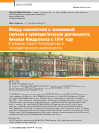
Between Sociology and Economics: Nikolai Kondratiev’s Scientific and Journalistic Work in 1914

DOI: 10.33917/es-6.204.2025.116-125

The article examines previously unknown journalistic and scientific works by Nikolai Kondratiev, a student at the Faculty of Law of St. Petersburg University, which he published soon after the beginning of the First World War in “Vechernee Zveno” newspaper and the “New Ideas in Economics” scientific journal. Already in 1914 in his student works he showed a clear interest in economic issues, and with his article “Basic Teachings on the Laws of Social Life Development,” concerning the laws of social life development, he declared himself as a serious scientist. Nikolai Kondratiev’s journalism is valuable in that namely in his articles he took the first steps toward developing his theory of large economic cycles, which later on became known as “Kondratiev cycles”. Over the years, this theory has gained recognition worldwide and became a significant contribution of the Russian scientist both to economic science and to understanding the laws of social development. His collaboration with “Vechernee Zveno” newspaper and his work in the editorial board of the “New Ideas in Economics” journal largely determined his choice in favour of economic science as a field of his future professional activity.

References:

1. Kondrat’ev N.D. Suzdal’skie pis’ma [Suzdal Letters]. Moscow, Ekonomika, 2004, 879 p.

2. Lomonosova M.V. Sotsiologicheskaya publitsistika v Rossii: stranitsy istorii i sovremennost’ [Sociological Journalism in Russia: Pages of History and Present]. Nasledie, 2015, no 1(6), pp. 104–119.

3. Lomonosova M.V. Neizvestnye stat’i Nikolaya Kondrat’eva 1914 goda na stranitsakh petrogradskoy gazety “Vechernee zveno” [Unknown Articles by Nikolai Kondratyev in 1914 on the Pages of the Petrograd Newspaper “Evening Link”]. Nasledie, 2024, no 1(24), pp. 150–154.

4. Kondrat’ev N.D. Voyna i vneshnyaya torgovlya Avstro-Germanii [War and Foreign Trade of Austria-Germany]. Vechernee zveno, 1914, no 24 (13 sentyabrya), p. 2.

5. Kondrat’ev N.D. Militarizm prezhde i teper’ [Militarism Then and Now]. Vechernee zveno, 1914, no 29 (18 sentyabrya), p. 3.

6. Kondrat’ev N.D. Rossiya i Yaponiya [Russia and Japan]. Vechernee zveno, 1914, no 32 (21 sentyabrya), p. 1.

7. Kondrat’ev N.D. Stat’i 1914 g. [Articles of 1914]. Nasledie, 2024, no 1(24), pp. 155–161.

8. Sombart W. Krieg und Kapitalismus. München und Leipzig: Duncker & Humblot, 1913.

9. Sorokin P.A. Dolgiy put’. Avtobiograficheskiy roman [A Long Way. Autobiographical Novel]. Syktyvkar, SZh Komi, MP “Shypas”, 1991, 304 p.

10. Kondrat’ev N.D. Razvitie khozyaystva Kineshemskogo zemstva Kostromskoy gubernii: sotsial’no-ekonomicheskiy i finansovyy ocherk [Development of the Economy of the Kineshemsky Zemstvo of the Kostroma Province: a Socio-Economic and Financial Essay]. Kineshma, Zemskaya tipografiya, 1915, 446 p.

11. Sukhikh V.V. Ekonomicheskie i politicheskie vzglyady N.D. Kondrat’eva v 1913–1915 gg. (po ego knige “Razvitie khozyaystva Kineshemskogo zemstva Kostromskoy gubernii”) [Kondratiev’s Economic and Political Views in 1913–1915 (According to His Book “The Development of the Economy of the Kineshma Zemstvo of the Kostroma Province”)]. AlterEconomics, 2022, vol. 19, no 1, pp. 40–50, DOI: https://doi.org/10.31063/AlterEconomics/2022.19-1.3
Requiem for Cybernetics. The Genesis of Digital

DOI: 10.33917/es-6.204.2025.16-25

In the present work the authors practically present a requiem for cybernetics — a classical management science that has fulfilled its historical role, but is now giving way to new approaches emerging at the junction of the philosophy of knowledge, complexity theory, the cognitive and social sciences. The article gives a historical and philosophical overview of cybernetics — from Plato, Ampere and Wiener to the present day. It is demonstrated that classical cybernetic paradigm — a mechanistic control model with feedback loops and representation of the world as a set of “finite state machines” — has proven insufficient in the era of dynamically changing, weakly deterministic, self-organizing living systems. Analysis of the causes of the methodological crisis in cybernetics at the turn of the 20th and 21st centuries is provided and it is argued that its resources are exhausted — further progress requires transition to new conceptual ideas. The authors propose a new engineering approach to understanding the World (K3-Engineering) and an original concept for Genesis of the digital — “Digital Genesis” — as a promising replacement.

References:

1. Wiener N. Cybernetics: or Control and Communication in the Animal and the Machine. 1948.

2. Beer S. Brain of the Firm. London, Allen Lane, 1972. 320 p.

3. Sobolev S.L., Kitov A.I., Lyapunov A.A. Osnovnye cherty kibernetiki [The Main Features of Cybernetics]. Voprosy filosofii, 1955, no 4, pp. 136–148.

4. Thiel P., Douthat R. Peter Thiel and the Antichrist. The New York Times, June 26, 2025.

5. Karp A., Zamiska N. The technological republic: hard power, soft belief, and the future of the West. Crown Publishing Group, 2025.

6. Budanov V.G. Metodologiya sinergetiki v postneklassicheskoy nauke i v obrazovanii [Methodology of Synergetics in Post-Non-Classical Science and Education]. Izd. 4-e dop. Moscow, Lenand, 2017, 272 p.

7. Budanov V.G., Kutin V.N., Khokhlova M.N. Kognitivnyy kollektivnyy konvergentnyy inzhiniring. Chast’ I [Cognitive Collective Convergent Engineering. Part I]. Ekonomicheskie strategii, 2023, no 5, pp. 100–109, DOI: https://doi.org/10.33917/es-5.191.2023.100-109

8. Budanov V.G., Kutin V.N., Khokhlova M.N. Kognitivnyy kollektivnyy konvergentnyy inzhiniring. Chast’ II [Cognitive Collective Convergent Engineering. Part II]. Ekonomicheskie strategii, 2023, no 6, pp. 52–61, DOI: https://doi.org/10.33917/es-6.192.2023.52-61

9. Kutin V.N., Khokhlova M.N. Kak aytishniki “obuvayut” promyshlennikov. A u vas kakaya kollektsiya PPO? O problemakh tsifrovoy transformatsii na primere sistem upravleniya proizvodstvom i promyshlennogo programmnogo obespecheniya (PPO) [How IT Professionals “Shoe” Industrialists. What’s Your Software Collection Like? On the Challenges of Digital Transformation Using Production Management Systems and Industrial Software (IS) as Examples]. OOO “GiperGrafGrupp”, 2022, available at: https://www.gipergraf.ru/kak-ajtishniki-obuvayut-promyshlenniko