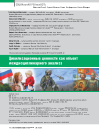
Civilizational Values as an Object of Interdisciplinary Analysis

DOI: 10.33917/es-6.204.2025.108-113

The article presents results of the Interdisciplinary Scientific Seminar «Mathematical Methods for Analyzing Complex Systems», which is held at the Faculty of Global Processes of M.V. Lomonosov Moscow State University and in the Sevastopol Branch of Moscow State University. The authors have managed to identify Russian civilization by constructing its value matrix through the method of paired comparisons (Saati method). The elements being compared were traditional Russian spiritual and moral values, listed in Decree № 809 of the President of the Russian Federation dated November 9, 2022.

References:

1. Sravnitel’noe izuchenie tsivilizatsiy: Khrestomatiya [Comparative Studies of Civilizations: A Reader]. Ucheb. posobie dlya studentov vuzov. Sost., red. i vstup. st. B.S. Erasov. M.: Aspekt Press, 1998. 556 p.

2. Bol’shakov V.I. Russkoy tsivilizatsii 4000 let. Ot Svyatoy zemli k Svyatoy Rusi [Russian Civilization is 4,000 Years Old. From the Holy Land to Holy Rus’]. Moscow OOO “Tertsiya”, 2024, 248 p.

3. Kochetkov V.V. Identichnost’ i kul’tura v sovremennykh mezhdunarodnykh otnosheniyakh [Identity and Culture in Contemporary International Relations]. Ucheb. Posobie. Moscow, MGU imeni M.V. Lomonosova, 2015, 320 p.; Lan’: elektronno-bibliotechnaya sistema, available at: https://e.lanbook.com/book/114605

4. Malkov S.Yu. Sotsial’naya samoorganizatsiya i istoricheskiy protsess: Vozmozhnosti matematicheskogo modelirovaniya [Social Self-Organization and Historical Process: Possibilities of Mathematical Modeling]. Moscow, LIBROKOM, 2009, 240 p.

5. Novikova L.I. Tsivilizatsiya kak ideya i kak ob”yasnitel’nyy printsip istoricheskogo protsessa [Civilization as an Idea and as an Explanatory Principle of the Historical Process]. Tsivilizatsiya, Vyp. 1. Moscow, Nauka, 1992, 231 p.

6. Kireevskiy I.V. Dukhovnye osnovy russkoy zhizni [Spiritual Foundations of Russian Life]. Moscow, Institut russkoy tsivilizatsii, 2007, 445 p.

7. Kirsanov K.A., Popova S.A. Istoriya i razvitie mirovykh tsivilizatsiy: V 4 ch. Ch. 1. Obshchie voprosy tsivilizatsionnogo razvitiya [History and Development of World Civilizations: In 4 Parts. Part 1. General Issues of Civilizational Development]. Moscow, Institut mirovykh tsivilizatsiy, 2024, 180 p.

8. Tolmacheva R.P. Tsivilizatsiya Rossii: zarozhdenie i razvitie [Russian Civilization: Origin and Development]. Moscow, Dashkov i K., 2018, 402 p.

9. Kornilov S.V. Russkie filosofy [Russian Philosophers]. Saint Petersburg, Lan’, 2001, 446 p.

10. Kravchenko P.P. Svyataya Rus’: istoricheskaya missiya, natsional’naya ideya, forma pravleniya [Holy Rus’: Historical Mission, National Idea, Form of Government]. Moscow, Filin”, 2019, 450 p.

11. Karamzin H.M. Zapiska o drevney i novoy Rossii v ee politicheskom i grazhdanskom otnosheniyakh [A Note on Ancient and New Russia in its Political and Civil Relations]. Moscow, Nauka. Glavnaya redaktsiya vostochnoy literatury, 1991, 127 p.

12. Il’in I.A. Rossiya est’ zhivoy organism: Russkaya ideya [Russia is a Living Organism: The Russian Idea]. Moscow, Respublika, 1992. 496 s.

Problems and Ways of Improving the Modern Russian Film Industry

DOI: 10.33917/es-5.203.2025.104-109

The article examines ideological and systemic issues of contemporary development of the film industry based on domestic and foreign experience. The main focus is on centralizing and streamlining the system-forming elements of the film industry.

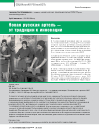
New Russian Artel: From Tradition to Innovation

DOI: 10.33917/es-5.203.2025.110-115

The present article examines a potential of the artel model of labour organization in modern Russia as a tool for enhancing entrepreneurial activity. It analyzes the historical experience of ar tels, their key features, operating principles and socioeconomic role. A comparative analysis of the ar tel model and modern forms of entrepreneurship is provided, identifying their advantages and disadvantages. The author proposes an innovative concept, “Ar tel 2.0”, adapted to economic, technological and social realities of the 21st century. Practical aspects of its implementation are examined, including changes in legislation, public policy and education system. Par ticular attention is paid to analysis of potential barriers and ways to overcome them. The author substantiates a thesis that the ar tel form of organization is more organic for a significant part of Russian society, taking into account its cultural characteristics and mentalit y. Potential social effects of introducing the cooperative model, such as increased employment and improved qualit y of life in small towns and rural areas, are explored.

References:

1. Gref nazval stydnoy dolyu malogo i srednego biznesa v VVP Rossii [Gref Called the Share of Small and Medium-Sized Businesses in Russia’s GDPShameful]. Mediakholding RBK, 2023, 26 maya, available at: https://www.rbc.ru/finances/26/05/2023/647076fa9a7947b349dae983

2. Gramlikh T. Kooperatsiya kak stil’ zhizni: opyt organizatsii kooperativnoy deyatel’nosti v Germanii [Cooperation As a Way of Life: Experience of Organizing Cooperative Activities in Germany]. Agroinvestor, 2017, 23 yanvarya, available at: https://www.agroinvestor.ru/regions/article/25637-kooperatsiya-kak-stilzhizni-opyt-organizatsii-kooperativnoy-deyatelnosti-v-germanii/

3. Astakhova A. Ekonomika bol’shoy arteli: Interv’yu s N. Sluchevskim [The Economy of a Large Artel: An Interview with N. Sluchevsky]. Pryamye investitsii, 2012, no 9(125), available at: https://cyberleninka.ru/article/n/aktualnaya-tema-ekonomika-bolshoy-arteli

4. Klyuchko V.N. Russkie arteli: zabytyy opyt ili mekhanizm razvitiya proizvodstvennoy demokratii? [Elektronnyy resurs]. Menedzhment v Rossii i zarubezhom, 2014, no 3, available at: https://dis.ru/library/690/36628/

5. Kakie problemy vliyayut na razvitie sel’khozkooperatsii v Rossii [What Issues Affect the Development of Agricultural Cooperation in Russia?]. Rambler, 2023, 17 iyulya, available at: https://news.rambler.ru/community/51108147-kakie-problemy-vliyayut-na-razvitie-selhozkooperatsii-v-rossii/

6. Set’ magazinov “KOOP” budet razvivat’sya po franshize “Okolo” [The COOP Chain of Stores Will Be Developed Under the Okolo Franchise]. Retail.ru, 2024, 18 noyabrya. Istochnik: X5 Group, available at: https://www.retail.ru/news/set-magazinov-koop-budet-razvivatsya-po-franshize-okolo-18-noyabrya-2024-247640/

7. Kompleksnye uslugi v oblasti informatsionnoy bezopasnosti [Comprehensive Information Security Services]. RAD KOP, available at: https://radcop.online/

Towards a Socio-Humanitarian State

DOI: 10.33917/es-2.200.2025.138-143

The article dwells on the concept of a socio-humanitarian state, it discusses the characteristics and criteria for its development.

The main differences between the concepts of “social state” and “socio-humanitarian state” are examined.

References: 

1. Golubev V.S. Osnovy garmonologii [Basics of Harmonology]. Moscow, Lenand, 2023.

2. Golubev V.S. Osnovy ekosotsiogumanizma [Fundamentals of Ecosociohumanism]. M.: INFRA-M, 2022.

3. Sotsiogumanizm s Vladimirom Golubevym [Sociohumanism with Vladimir Golubev]. Ekograd, available at: https://ekogradmoscow.ru/eko-blog/sotsiogumanizm-c-vladimirom-golubevym

4. Mironov S.M. Izbrannye sta’’i, vystupleniya, interv’yu [Selected Articles, Speeches, Interviews]. Moscow, Klyuch-S, 2007.

5. Golubev V.S. Vvedenie v sinteticheskuyu evolyutsionnuyu ekologiyu [Introduction to Synthetic Evolutionary Ecology]. Moscow, Papirus Pro, 2001.

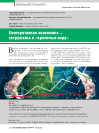
Cooperative Economy – Down the Rabbit Hole

DOI: 10.33917/es-2.200.2025.128-137

The authors explain the basic functioning mechanisms of the previously presented model of “cooperative economy”, its applicability and competitiveness in comparison with current economic models.

References: 

1. Federal’nyy zakon ot 19 iyunya 1992 g. N 3085-1 “O potrebitel’skoy kooperatsii (potrebitel’skikh obshchestvakh, ikh soyuzakh) v Rossiyskoy Federatsii” [Federal Law of June 19, 1992 No. 3085-1 “On Consumer Cooperation (Consumer Societies, their Unions) in the Russian Federation”]. Konsul’tantPlyus, available at: https://www.consultant.ru/document/cons_doc_LAW_608/

2. D’yachenko K.P., D’yachenko V.P. Potrebitel’skaya kooperatsiya v gorodskoy sotsial’noy sfere, torgovle i proizvodstve [Consumer Cooperation in the Urban Social Sphere, Trade and Production]. Moscow, Izd-vo Parlamentskogo tsentra “Kooperatsiya i sotsial’nyy progress”, 2012.

3. Grazhdanskiy kodeks Rossiyskoy Federatsii [Civil Code of the Russian Federation]. Konsul’tantPlyus, available at: https://www.consultant.ru/document/cons_doc_LAW_5142/

4. Zverev A.G. Zapiski ministra [Notes of the Minister]. Moscow, Politizdat, 1973, 270 p.

5. Smurov I.I., Davletbaev R.Kh. Kooperativnaya (moral’naya) ekonomika [Cooperative (Moral) Economy]. Ekonomicheskie strategii, 2023, no 6(192), pp. 120–133, DOI: https://doi.org/10.33917/es-6.192.2023.120-133

Path to a Dream and a Lot of Music

DOI: 10.33917/es-1.199.2025.110-111

The novel “Reconstruction” by journalist and musician Boris Igorevich Lifanovsky plunges into realit y, which, according to the author, “should remain in the past.”

Value Foundations of the Methodology for Compatibility of Society Paradigms

DOI: 10.33917/es-1.199.2025.102-109

The purpose of the study is to form the value foundations of the methodology for compatibility of the society paradigms and society subsystems. Mutually complementary types of value theories and dual understanding of values are analyzed. The article explores the common values of the society paradigms, including sustainable development, social justice; inclusiveness, equality and human rights protection. Necessary composition of aspects of the value foundations for methodology of compatibility of society paradigms is formed and a structural scheme of paradigms compatibility of society spheres is compiled.

References: 

1. Morozov V.A. Metodologiya sovmestimosti paradigm obshchestva: filosofsko-psikhologicheskie i sistemotekhnicheskie osnovaniya [Methodology of compatibility for society paradigms: philosophical-psychological and system-technical foundations]. Menedzhment i biznes-administrirovanie. Moscow, ID “Ekonomicheskaya gazeta”, 2024, no 2, pp. 209–217.

2. D’yui Dzh. Obshchestvo i ego problem [Society and its problems]. Per. s angl. I.I. Myurberg, A.B. Tolstova, E.N. Kosilovoy. Moscow, Ideya-Press, 2002, 160 p.

3. Sheler M. Resentiment v strukture moraley [Resentment in the morals structure]. Per. s nem. A.N. Malinkina. Saint Petersburg, Nauka, 1999, 282 p.

4. Vindel’band V. Istoriya filosofii [History of philosophy]. Per. s nem. A.I. Vvedenskogo. Moscow, KANON-press, 1998, 548 p.

5. Stepin V.S. Teoreticheskoe znanie: struktura, istoricheskaya evolyutsiya [Theoretical knowledge: structure, historical evolution]. Moscow, Progress-Traditsiya, 2000, 743 p.

6. Salas S.D. Moral’ XXI veka [Morality of the 21st century]. Moscow, Kodeks, 2013, 483 p.

7. Riker P. Konflikt interpretatsiy: ocherki o germenevtike [Conflict of Interpretations: Essays on Hermeneutics]. Moscow, Akademicheskiy proekt, 2008, 695 p.

8. Lebedeva N.M., Tatarko A.N. Tsennosti kul’tury i razvitie obshchestva [Cultural values and development of societ y]. Moscow, ID GVShE, 2007, 528 p.

9. Anopchenko T.Yu., Savon D.Yu. Ustoychivoe razvitie: opyt, problemy, perspektivy [Sustainable development: experience, challenges, prospects]. Moscow, Institut ustoychivogo razvitiya Obshchestvennoy palaty Rossiyskoy Federatsii, Tsentr ekologicheskoy politiki Rossii, 2011, p. 120.

10. Morozov V.A. Dukhovnaya ekonomika i sovmestimost’ obshchestva. Teoriya sovmestimosti [Spiritual economy and compatibility of society. Compatibility theory]. Moscow, Dashkov i K°, 2021, 576 p.

Mental Sovereignty

DOI: 10.33917/es-1.199.2025.96-101

Over the past three centuries, economic liberalism has emerged as a global cultural norm that permeates international institutions and business practices. Global turbulence has coincided with degradation of the idea of liberalism; corporate leaders feel the need for change, but don’t associate the transformation goals with exhaustion of the liberal model.

References:

1. Vtulkina N., Firsov A. Khrupkaya, trevozhnaya, nelineynaya, nepostizhimaya [Fragile, Disturbing, Non-linear, Incomprehensible]. Forbes, 2022, 5 sentyabrya, available at: https://www.forbes.ru/forbeslife/476185-vse-v-bani-pocemu-tak-nazyvaetsa-novaa-trevoznaa-epoha-i-kak-v-nej-zit

2. Bashnin A.V., Ozols O.K. Kto upravlyaet IT krupnykh industrial’nykh kompaniy? [Who Manages the IT of Large Industrial Companies?]. Ekonomicheskie strategii, 2024, no 3(195), pp. 60–67, DOI: https://doi.org/10.33917/es-3.195.2024.60-67

3. Belousov L.V. Biologicheskiy morfogenez [Biological Morphogenesis]. Moscow, URSS, 2023, 256 p.

4. Wonga M.L., Cleland C.E., Arend D.J., Bartlettd S., Cleaves H.J., Demarestc H., Prabhua A., Lunineg J.I., Hazen R.M. On the roles of function and selection in evolving systems. PNAS, 2023, vol. 120, no 43, e2310223120.

5. Sharma A., Czégel D., Lachmann M., Kempes C.P., Walker S.I., Cronin L. Assembly theory explains and quantifies selection and evolution. Nature, vol. 622, October 12, 2023.

6. Budanov V.G. Metodologiya sinergetiki v postneklassicheskoy nauke i v obrazovanii [Synergetics Methodology in Post-nonclassical Science and Education]. Moscow, LKI, 2009, 240 p.

Knowledge Management in the Context of Spiral Dynamics

DOI: 10.33917/es-6.198.2024.104-111

Nowadays, the «knowledge management» concept is often used, since today an employee is, first of all, an intellectual worker. However, an allowance is rarely made for the organizational environment in which managers and executives manage

knowledge and due to which this management can be modified. The purpose of the present work is to explain the «knowledge management» term from the point of view of the spiral dynamics concept. The results of the analysis have revealed that interpretation of the «knowledge management» concept becomes more complicated as the level of spiral dynamics increases, and it also begins to acquire features of its previous levels. These assumptions are intended to help managers and executives adapt their skills in intellectual worker management based on the level of spiral dynamics at which their organization is.

References:

1. Sukharev O.S. Tekhnologicheskiy suverenitet Rossii: formirovanie na baze razvitiya sektora “ekonomika znaniy” [Technological Sovereignty of Russia: Formation based on the Development of the “Knowledge Economy” Sector]. Vestnik Instituta ekonomiki Rossiyskoy akademii nauk, 2024, no 1, pp. 47–64, DOI: https://doi.org/DOI: 10.52180/2073-6487_2024_1_47_64

2. Gurtskoy L.D., Zudin A.B., Vvedenskiy A.I. Upravlenie zdorov’em sotrudnikov v usloviyakh tsifrovizatsii [Employee Health Management in the Context of Digitalization]. Problemy sotsial’noy gigieny, zdravookhraneniya i istorii meditsiny, 2022, vol. 30, no 6, pp. 1313–1317, DOI: 10.32687/0869-866X-2022-30-6-1313-1317

3. Mintsberg G. 2004. Struktura v kulake: sozdanie effektivnoy organizatsii [Structure in a Fist: Creating an Effective Organization]. Per. s angl. pod red. Yu.N. Kapturevskogo. Saint Petersburg, Piter, 2004, 512 p.

4. SDi Foundation [Website]. Spiral Dynamics Foundation, 2024, available at: https://sdifoundation.com

5. Bek D., Larsen T., Solonin S., Vildzhoen R. Spiral’naya dinamika na praktike. Model’ razvitiya lichnosti, organizatsii i chelovechestva [Spiral Dynamics in Practice: A Model of Personal, Organizational and Human Development]. Moscow, Al’pina Pablisher, 2018.

6. Butters Albion M. A brief history of Spiral Dynamics. Approaching Religion, vol. 5, no 2, pp. 67–78.

7. Graves C.W. With comments by E.C. World Future Society. Human Nature Prepares for a Momentous Leap. The Futurist, 1974, pp. 72–87.

8. Bek D., Kovan K. Spiral’naya dinamika. Upravlyaya tsennostyami, liderstvom i izmeneniya v XXI veke [Spiral Dynamics: Managing Values, Leadership, and Change in the 21st Century]. BestBusinessBooks. Open World Publishing House, 2010, 424 p.

9. Lalu F. Otkryvaya organizatsii budushchego [Discovering the Organizations of the Future]. Moscow, Mann, Ivanov i Ferber, 2016.

10. Kleyner G.B. Spiral’naya dinamika, sistemnye tsikly i novye organizatsionnye modeli: perlamutrovye predpriyatiya [Spiral Dynamics, Systemic Cycles and New Organizational Models: Pearlescent Enterprises]. Rossiyskiy zhurnal menedzhmenta, 2020, vol. 18, no 4, pp. 471–496, available at: https://doi.org/10.21638/spbu18.2020.401