The "Economic Strategies" journal

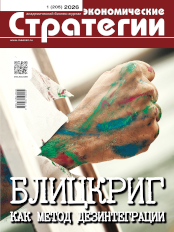
#1. 2026. Blitzkrieg as Disintegration Method


Monetary Policy of Russia and the Republic of Belarus: Current Trends and Challenges
DOI: 10.33917/es-1.205.2026.46-53

The author examines peculiarities of the monetary policy of the Bank of Russia and the National Bank of the Republic of Belarus in the context of modern challenges.

References:

1. Konstitutsiya Rossiyskoy Federatsii (prinyata vsenarodnym golosovaniem 12 dekabrya 1993 g. s izmeneniyami, odobrennymi v khode obshcherossiyskogo golosovaniya 1 iyulya 2020 g.) [Constitution of the Russian Federation (adopted by popular vote on December 12, 1993, with amendments approved during the all-Russian vote on July 1, 2020)]. Dostup iz SPS “Konsul’tant Plyus”.

2. Federal’nyy zakon ot 10 iyulya 2002 g. N 86-FZ “O Tsentral’nom banke Rossiyskoy Federatsii (Banke Rossii)” [Federal Law of July 10, 2002 No. 86-FZ “On the Central Bank of the Russian Federation (Bank of Russia)”]. Rossiyskaya gazeta, 2002, no 127.

3. Postanovlenie Konstitutsionnogo suda RF ot 3 iyulya 2001 g. N 10-P [Resolution of the Constitutional Court of the Russian Federation of July 3, 2001 No. 10-P]. Vestnik Konstitutsionnogo suda RF, 2001, no 6.

4. Postanovlenie Prezidiuma VAS RF ot 19 aprelya 2002 g. N 5697/01 [Resolution of the Presidium of the Supreme Arbitration Court of the Russian Federation of April 19, 2002 No. 5697/01]. Vestnik VAS RF, 2002, no 8.

5. Postanovlenie Prezidiuma Verkhovnogo suda RF ot 7 avgusta 2002 g. N 100pv-02 [Resolution of the Presidium of the Supreme Court of the Russian Federation of August 7, 2002 No. 100пв-02]. Byulleten’ Verkhovnogo suda RF, 2003, no 2.

6. Osnovnye napravleniya edinoy gosudarstvennoy denezhno-kreditnoy politiki na 2025 god i period 2026 i 2027 godov (utv. Bankom Rossii) [Main Directions of the Unified State Monetary Policy for 2025 and the Period 2026 and 2027 (approved by the Bank of Russia)]. Dostup iz SPS “Konsul’tant Plyus”.

7. Dzhonson S., Kvak D. 13 Bankov, kotorye pravyat mirom [13 Banks That Rule the World]. Moscow, Kar’era Press, 2013, 384 p.

8. MVF nazval targetirovanie inflyatsii i gibkiy obmennyy kurs odnimi iz klyuchevykh predposylok dlya povysheniya potentsiala rosta rossiyskoy ekonomiki: Informatsiya Banka Rossii ot 24 maya 2019 g. [IMF Identified Inflation Targeting and a Flexible Exchange Rate as Key Prerequisites for Increasing the Growth Potential of the Russian Economy: Information from the Bank of Russia Dated May 24, 2019]. Dostup iz SPS “Konsul’tant Plyus”.

9. Missiya MVF zayavila o vazhnosti sokhraneniya v Rossii prochnoy makroekonomicheskoy osnovy: Informatsionnoe soobshchenie Banka Rossii ot 21 noyabrya 2019 g. [IMF Mission Stated the Importance of Maintaining a Strong Macroeconomic Framework in Russia: Information Statement of the Bank of Russia Dated November 21, 2019]. Dostup iz SPS “Konsul’tant Plyus”.

10. Mery Banka Rossii sposobstvuyut vosstanovleniyu rossiyskoy ekonomiki — MVF: Informatsionnoe soobshchenie Banka Rossii ot 24 noyabrya 2020 g. [Bank of Russia’s Measures Contribute to the Recovery of the Russian Economy — IMF: Information Statement of the Bank of Russia Dated November 24, 2020]. Dostup iz SPS “Konsul’tant Plyus”.
Current Look at the Creation of AIIB and NDB in the Context of the Modern Economy

DOI: 10.33917/es-1.205.2026.54-61

The article examines key factors that led to the creation in the mid-2010s of two major international financial institutions as alternatives to the Bretton Woods institutions – the Asian Infrastructure Investment Bank and the New Development Bank. Based on analysis of macroeconomic indicators (gross domestic product growth, share of world trade, gold and foreign exchange reserves), imbalance between the growing economic role of the BRICS countries (especially China) and their limited influence in traditional international financial institutions is demonstrated. It is emphasized that AIIB and NDB have become a response to inability of the existing global governance system to reflect new economic realities.

References:

1. Ageev A.I. Sdvigaya kontinenty: Slovo glavnogo redaktora [Shifting Continents: The Editor-in-Chief’s Word]. Ekonomicheskie strategii, 2024, no 5, p. 5.

2. Khellener E. Krizis statusa-kvo: global’noe finansovoe upravleniya posle krizisa 2008 g. [The Status Quo Crisis: Global Financial Governance After the 2008 Meltdown]. N.Y., Oksford Yuniversiti Press, 2014.

3. Stubbs R., Ueyd R. Global’noe ekonomicheskoe upravlenie: vyzovy i perspektivy [Global Economic Governance: Challenges and Prospects]. Global Policy, 2021, vol. 12, no 3.

4. Aziatskiy bank razvitiya. Strategiya-2020 [Asian Development Bank. Strategy’2020], available at: https://www.adb.org/sites/default/files/institutionaldocument/32121/strategy2020-print.pdf

5. Aziatskiy bank razvitiya. Strategiya-2030 [Asian Development Bank. Strategy’2030], available at: https://www.adb.org/sites/default/files/institutionaldocument/435391/strategy-2030-main-document.pdf

Digital Trace in Exhausting the Liberal Model

DOI: 10.33917/es-1.205.2026.62-67

The liberal economic model, long considered the social norm, is losing its sustainability under the influence of digital technologies. Growing data connectivity and decentralization processes are creating nonlinear system dynamics that defy classical reductionist frameworks. Leaders face a dilemma: accept the exhaustion of the liberal economic model or forgo the conveniences of digitalization. This article is the first in a series devoted to the transition to a post-liberal economy.

References:

1. Deneen P.J. Why Liberalism Failed. New Haven and London: Yale University Press, 2018, 248 p.

2. Deneen P.J. Regime change. Toward a postliberal future. Sentinel, 2023. 288 p.

3. Ionin L.G. Sotsiologiya kul’tury [Sociology of Culture]. Ucheb. posobie dlya vuzov. Moscow, ID GU VShE, 2004.

4. Bashnin A.V., Ozols O.K. Kto upravlyaet IT krupnykh industrial’nykh kompaniy? [Who Manages the IT of Large Industrial Companies?]. Ekonomicheskie strategii, 2024, no 3(195), pp. 60–67, DOI: https://doi.org/10.33917/es-3.195.2024.60-67

Methodological Problems of Assessing the Standard and Quality of Life in the Context of Harmonizing Socio-Economic Development

DOI: 10.33917/es-1.205.2026.68-75

At the current stage of socio-economic development, it is becoming increasingly evident that assessing the quality and standard of living plays a key role in the process of forming public policy aimed at improving the population well-being. At the same time, the multitude of existing methodological approaches to such assessment, differing both in the composition of indicators applied and in the methods of their aggregation, indicates the absence of universal standards and generally accepted system of indicators.

References:

1. Otchety OON (Human Development Reports) [UN Reports (Human Development Reports)]. UN, available at: https://hdr.undp.org

2. Better Life Index. Organization for Economic Cooperation and Development, available at: https://www.oecdbetterlifeindex.org

3. Rosstat [Website], available at: https://rosstat.gov.ru

4. Andreeva O.N. Uroven’ i kachestvo zhizni: soderzhanie ponyatiy i ikh sostavlyayushchie [Standard and Quality of Life: the Content of Concepts and their Components]. Regionovedcheskie issledovaniya, 2020, no 4(23), pp. 68–77.

5. Izmaylova A.S., Shershneva O.I. Pokazateli urovnya zhizni naseleniya Rossii [Standard of Living Indicators of the Population of Russia]. Tendentsii razvitiya nauki i obrazovaniya, 2021, no 50-4, pp. 73–75.

6. Tukhuzheva L.A. Kachestvo i uroven’ zhizni naseleniya [Quality and Standard of Living of the Population]. Voprosy nauki i obrazovaniya, 2020, no 29(41), pp. 52–54.

7. Belyaeva L.A. Kachestvo zhizni v sub”ektivnykh otsenkakh naseleniya: Rossiya v evropeyskom kontekste [Quality of Life in Subjective Assessments of the Population: Russia in the European Context]. Vestnik Rossiyskogo universiteta druzhby narodov, 2020, vol. 18, no 4, pp. 680–694.

8. Zagoruyko A.Yu. Uroven’ i kachestvo zhizni naseleniya kak osnovnoy kriteriy ustoychivogo sotsial’no-ekonomicheskogo razvitiya obshchestva [Standard and Quality of Life of the Population as the Main Criterion for Sustainable Socio-Economic Development of Society]. Izd-vo Kurganskoy GSKhA, 2017, 89 p.

9. Petrenko P.V. Mnogofaktornye modeli otsenki blagosostoyaniya: opyt mezhdunarodnykh issledovaniy [Multifactor Models of Welfare Assessment: Experience of International Research]. Ekonomicheskie nauki, 2019, no 12, pp. 12–20.

10. Shumilin E.V. Metodologicheskie problemy formirovaniya integral’nykh indeksov urovnya zhizni v RF [Methodological Problems of Forming Integral Indices of the Standard of Living in the Russian Federation]. Voprosy statistiki, 2022, no 2, pp. 45–59.

From Webinars to Acceleration: How Rosatom has Learned to Cultivate Strong Social Projects

DOI: 10.33917/es-1.205.2026.76-83

The article analyzes the history and results of Rosatom State Corporation’s overcoming the crisis of quantitative growth and grant applications for social projects despite their insufficiently high initial quality. The authors prove that classic webinars don’t solve this problem. They only create the illusion of learning, but don’t change the structure of applicants’ actions.

The relevance of the present material lies in demonstrating a new management approach. Rosatom has transformed a competition from a passive selection procedure into a tool for “cultivating” urban communities. In 2024–2025 the State Corporation abandoned the training approach in favour of accelerated support.

The new model included a step-by-step process of project refinement under expert guidance. Public case studies and workshops were held. Participants didn’t just listen to lectures; they immediately applied the knowledge to their applications.

Effectiveness of this approach was confirmed by results of the “80 Good Deeds” competition (2025). 487 teams from 32 nuclear cities participated in the contest. The main outcome was not only the grant support for applicants, but also harmonization of the project culture across the territories. Participants acquired sustainable competencies, enabling them to effectively develop social initiatives in the future.

Growth is Possible Despite Sanctions

DOI: 10.33917/es-1.205.2026.84-93

The author discusses the priority areas for development of the agro-industrial complex of the Saratov region in the context of foreign economic restrictions at the example of the Volga Federal District (VFD). Based on the analysis of statistical data and assessment methods, the possibility to provide equal conditions for agricultural production in the Volga Federal District is substantiated. The paper presents an assessment of the effectiveness of the region’s participation in government program activities. Particular attention is paid to the role of state support and co-financing mechanisms as ways to increase sustainability of the regional agro-industrial complex (AIC). It is noted that even under the pressure of sanctions, it is possible to increase exports, introduce innovative technologies and strengthen the region’s food security.

References:

1. Agropromyshlennyy kompleks Saratovskoy oblasti [Agro-industrial Complex of the Saratov Region]. Sel’khozproizvoditeli, available at: https://selhozproizvoditeli.ru/news/selskoe-hozyaystvo-saratovskoy-oblasti

2. Marushchak I.I. Innovatsionnaya aktivnost’ rossiyskikh predpriyatiy: problemy, puti resheniya [Innovative Activity of Russian Enterprises: Problems and Solutions]. Ekonomicheskie strategii, 2023, vol. 25, no 2(188), pp. 56–63, DOI: https://doi.org/10.33917/es-2.188.2023.56-63

3. FGBU “Tsentr Agroanalitiki” [Website], available at: https://www.rusprofile.ru/id/7792082

4. Zelenkina E.V., Pavlenko I.V. Otsenka ob”emov sel’khozproizvodstva i sredstv gosudarstvennoy podderzhki na razvitie sel’skogo khozyaystva po regionam Privolzhskogo federal’nogo okruga v 2022 g.: Problemy i perspektivy razvitiya ekonomiki i upravleniya v sovremennykh usloviyakh: Sb. nauch. statey [Assessment of Agricultural Production Volumes and State Support Funds for Agricultural Development in the Regions of the Volga Federal District in 2022: Problems and Prospects for Economic and Management Development in Modern Conditions: Collection of Scientific Articles]. Moscow, Nauchnye tekhnologii, 2024, pp. 371–380.

5. Saratovstat [Website], available at: https://www.rusprofile.ru/id/523815

6. Ministerstvo sel’skogo khozyaystva Saratovskoy oblasti [Website], available at: https://www.minagro.saratov.gov.ru

7. Zelenkina E.V., Pavlenko I.V., Lukashevichus G.A. Metod obespecheniya innovatsionnogo razvitiya infrastruktury agroproizvodstvennogo rynka [Method for Ensuring Innovative Development of the Infrastructure of the Agricultural Market]. Nauchnoe obozrenie. Seriya 1: Ekonomika i pravo, 2018, no 3–4, pp. 84–95.

Development of the City of Sevastopol in 2014-2021: Historical and Economic Aspects

DOI: 10.33917/es-1.205.2026.94-99

All the key military and political events in Russian history, that occurred in the 18th–20th centuries, changed the development trajectory and opened new phases in the economic development of Sevastopol. In the city’s recent economic history annexation of Crimea to the Russian Federation in 2014 stands out as such significant historical event. The purpose of the present article is to study the stages of economic development of the city of Sevastopol in 2014–2021 in the context of reintegration of Crimea into the Russian Federation. The paper proposes to subdivide the recent period of economic history of the city of Sevastopol into two stages: Stage I — reintegration and the period of active infrastructure construction (2014–2018); Stage II — the period of economic growth (2018–2021). Moreover, year 2018 marked a significant milestone in the economic development of the Republic of Crimea and the city of Sevastopol, as several key infrastructure projects were completed this year: the Balaklava and Tavricheskaya Thermal Power Plants, the Crimean Bridge, as well as reconstruction completion of the Simferopol Airport Complex.

References:

1. Baranov A.G., Garmashova E.P., Lopatina T.A., Punga D.V. Khozyaystvennaya zhizn’ goroda Sevastopolya na rubezhe XVIII–XIX vekov [Economic Life of the City of Sevastopol at the Turn of the XVIII–XIX Centuries]. Ekonomicheskaya politika, 2024, vol. 19, no 5, pp. 186–211, DOI: 10.18288/1994-5124-2024-5-186-211

2. Baranov A.G., Garmashova E.P., Lopatina T.A., Punga D.V. Regional’nye osobennosti, zakonomernosti i opyt khozyaystvennoy zhizni goroda Sevastopolya vo vtoroy polovine XIX — nachale XX veka [Regional Features, Patterns and Experience of the Economic Life of the City of Sevastopol in the Second Half of the Nineteenth and Early Twentieth Centuries]. Gumanitarnye nauki. Vestnik Finansovogo universiteta, 2024, vol. 14. № 5. S. 134–162. DOI: 10.26794/2226-7867-2024-14-5-134-162

3. Baranov A.G., Garmashova E.P., Lopatina T.A., Punga D.V. Ekonomika Sevastopolya v 1920-e gody: ot politiki “voennogo kommunizma” k NEPu [Economy of Sevastopol in the 1920s: from the Policy of “War Communism” to the New Economic Policy]. Voprosy teoreticheskoy ekonomiki, 2025, no 1(26), pp. 167–184, DOI: 10.52342/2587-7666VTE-2025-1-167-184

4. Baranov A.G., Garmashova E.P., Dmitrieva V.V., et al. Organizatsionno-ekonomicheskiy mekhanizm poslevoennogo vosstanovleniya goroda Sevastopol’ (1944–1954 gg.) [The Organizational and Economic Mechanism of the Post-war Reconstruction of the City of Sevastopol (1944–1954)]. Moskovskiy ekonomicheskiy zhurnal, 2022, vol. 7, no 5, DOI: 10.55186/2413046X-2022-7-5-2815.

5. Danil’chenko S.L. Krymskiy poluostrov v 1918–1991 godakh: istoricheskie predposylki reintegratsii Kryma i Sevastopolya v Rossiyskuyu Federatsiyu [The Crimean Peninsula in 1918–1991: Historical Prerequisites for the Reintegration of Crimea and Sevastopol into the Russian Federation]. Nauchnyy al’manakh, 2023, no 10-3(108), pp. 64–94, EDN: NFRHFN

Civilizational Values as an Object of Interdisciplinary Analysis. Part II

DOI: 10.33917/es-1.205.2026.108-115

The article presents results of the Interdisciplinary Scientific Seminar «Mathematical Methods for Analyzing Complex Systems», which is held at the Faculty of Global Processes of M.V. Lomonosov Moscow State University and in the Sevastopol Branch of Moscow State University. The authors have managed to identify Russian civilization by constructing its value matrix through the method of paired comparisons (Saati method). The elements being compared were traditional Russian spiritual and moral values, listed in Decree № 809 of the President of the Russian Federation dated November 9, 2022.

References:

[1–16] See in no. 6/2025, p. 112–113.

17. Sovet OON po pravam cheloveka prinyal rezolyutsiyu, posvyashchennuyu voprosu traditsionnykh tsennostey [The UN Human Rights Council Adopted a Resolution on the Issue of Traditional Values]. Otdel vneshnikh tserkovnykh svyazey Moskovskogo patriarkhata. Razdel “Novosti”, available at: https://mospat.ru/ru/news/55822/

18. Ukaz Prezidenta Rossiyskoy Federatsii ot 12 maya 2009 g. N 537 “O Strategii natsional’noy bezopasnosti Rossiyskoy Federatsii do 2020 goda” [Decree of the President of the Russian Federation of May 12, 2009 No. 537 “On the National Security Strategy of the Russian Federation until 2020”]. Ofitsial’nyy sayt Prezidenta RF, available at: http://www.kremlin.ru/acts/bank/29277

19. Ukaz Prezidenta Rossiyskoy Federatsii ot 31 dekabrya 2015 g. N 683 “O Strategii natsional’noy bezopasnosti Rossiyskoy Federatsii” [Decree of the President of the Russian Federation of December 31, 2015 No. 683 “On the National Security Strategy of the Russian Federation”]. Ofitsial’nyy sayt Prezidenta RF, available at: http://www.kremlin.ru/acts/bank/40391

20. Ukaz Prezidenta Rossiyskoy Federatsii ot 2 iyulya 2021 g. N 400 “O Strategii natsional’noy bezopasnosti Rossiyskoy Federatsii” [Decree of the President of the Russian Federation of July 2, 2021 No. 400 “On the National Security Strategy of the Russian Federation”]. Ofitsial’nyy sayt Prezidenta RF, available at: http://www.kremlin.ru/acts/bank/47046

21. Ukaz Prezidenta Rossiyskoy Federatsii ot 9 noyabrya 2022 g. N 809 “Ob utverzhdenii Osnov gosudarstvennoy politiki po sokhraneniyu i ukrepleniyu traditsionnykh rossiyskikh dukhovno-nravstvennykh tsennostey”, paragraph 4 [Decree of the President of the Russian Federation of November 9, 2022 No. 809 “On Approval of the Fundamentals of State Policy for the Preservation and Strengthening of Traditional Russian Spiritual and Moral Values”, paragraph 4]. Ofitsial’noe opublikovanie pravovykh aktov, available at: http://publication.pravo.gov.ru/Document/View/0001202211090019/

22. Kontseptsiya vneshney politiki Rossiyskoy Federatsii (utv. Prezidentom Rossiyskoy Federatsii 31 marta 2023 g.) [Concept of Foreign Policy of the Russian Federation (approved by the President of the Russian Federation on March 31, 2023)]. MID Rossii, available at: https://www.mid.ru/ru/detail-materialpage/1860586/

From Prehistory to History, From Homo Sapiens to Homo Harmonicus

When you read such quasi-scientific works as “The End of History” (by F. Fukuyama) and the like, you inevitably come to the conclusion: they are written by ignorant people. History hasn’t yet occurred. Everything that was, that is and that will be – is just a prehistory, because it involves “anthropogenic” laws of development invented by imperfect man, which are contrary to natural ones. The true history will come when the world begins to follow natural laws, basing social construction on them [1-3].

References:

1. Golubev V.S. Osnovy garmonologii [Basics of Harmonology]. M.: Lenand, 2023.

2. Golubev V.S. Ocherki sotsioprirodnoy garmonii [Essays on Socio-Natural Harmony]. Moscow, Lenand, 2024.

3. Golubev V.S. Osnovy ekosotsiogumanizma [Fundamentals of Ecosociohumanism]. Moscow, INRFRA-M, 2022.

4. Golubev V.S. Na puti k garmosfere [On the Way to the Harmospher]. Ekonomicheskie strategii, 2024, no 4(196), pp. 108–113, DOI: https://doi.org/10.33917/es-4.196.2024.108-113

5. Bogomolov O.T., Vodolazov G.G., Glaz’ev S.Yu. Novoe integral’noe obshchestvo [New Integral Society]. Moscow, Lenand, 2016.

6. Golubev V.S., Kurakov A.L., Timiryasova A.V. Chelovekovedenie: Uchebno-metodich. posobie [Human Studies: A Textbook and Methodological Manual]. Moscow, IAEP; Kazan’: Poznanie, 2014.