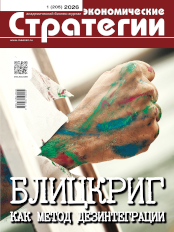
The "Economic Strategies" journal

#1. 2026. Blitzkrieg as Disintegration Method


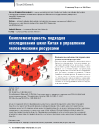
Complementarity of Research Approaches to Studying Chinese Schools in Human Resources Management

DOI: 10.33917/es-1.205.2026.24-31

The aim of the present study is to form the value foundations for methodology of the paradigms compatibility of society and its subsystems. Complementary types of value theories and dual understanding of values are analyzed. The article explores the common values of social paradigms, including sustainable development, social justice, inclusiveness, equality and the human rights protection. The influence of various values on functioning of the society development paradigms is studied. Necessary set of aspects of the value foundations for a methodology of the social paradigms compatibility is developed and structural framework for compatibility of paradigms across social spheres is constructed.

References:

1. Fuko M. Arkheologiya znaniya [Archeology of Knowledge]. Saint Petersburg, Gumanitarnaya akademiya, 2024, 416 p.

2. Perelomov L.S. Konfutsiy “Lun’ Yuy” [Confucius’s Analects]. Moscow, Vostochnaya literatura, 2001, 180 p.

3. Guan’-tszy. Drevnekitayskaya filosofiya [Ancient Chinese Philosophy]. Sobr. tekstov: V 2 t., vol. 2, Moscow, Mysl’, 1973, 384 p.

4. Ma Czin’czjun’. Trudovye resursy v sovremennom Kitae: razvitie i racional’noe upravlenie: dis. … kand. sociol. nauk [Labor Resources in Modern China: Development and Rational Management: diss. … Cand. of Sociological Sciences]. VAK RF 22.00.08, 2004. 169 s.

5. Laotszy. Obresti sebya v Dao [Finding Yourself in Dao]. Sost., avt. predisl., perevod, komment. I.I. Semenenko. Moscow, Respublika, 1999, 445 p.

6. Khan’ Fey-tszy. Kniga zakona i poryadka. Sovety razumnomu pravitelyu [The Book of Law and Order: Advice to a Wise Ruler]. Per. A.I. Ivanov; Red. D.O. Khvostova. Moscow, Tsentrpoligraf, 2019, 287 p.

7. Khegi D. Iskusstvo voyny v illyustratsiyakh. Klassicheskiy traktat Sun’-tszy v diagrammakh i grafikakh [The Art of War Illustrated: Sun Tzu’s Classic Treatise in Diagrams and Graphs]. Moscow, Mann, Ivanov i Ferber, 2015, 264 p.

8. Gusserl’ E. Idei k chistoy fenomenologii i fenomenologicheskoy filosofii. Kniga tret’ya. Fenomenologiya i osnovy nauk [Ideas Toward a Pure Phenomenology and Phenomenological Philosophy. Book Three. Phenomenology and the Foundations of Science]. Kaliningrad, BFU imeni I. Kanta, 2024, 231 p.

9. Khaydeger M. Osnovnye problemy fenomenologii [The Main Problems of Phenomenology]. Saint Petersburg, Vysshaya religiozno-filosofskaya shkola, 2001, 456 p.

10. Polan’i K. Velikaya transformatsiya: proshloe, nastoyashchee i budushchee [The Great Transformation: Past, Present, and Future]. Moscow, GU VShE, 2006, 321 p.

11. Merlo-Ponti M. Fenomenologiya vospriyatiya [Phenomenology of Perception]. Moscow, Bukinist, 1996, 606 p.

12. Vinogradov A.V. Kitayskaya model’ modernizatsii. Poiski novoy identichnosti [The Chinese Model of Modernization: The Search for a New Identity]. Moscow, Pamyatniki istoricheskoy lichnosti, 2005, 334 p.
Ways of Improving Russia’s Competitiveness in the Global Economy

DOI: 10.33917/es-1.205.2026.32-37

The article dwells on the problem of increasing competitiveness of the Russian economy against the backdrop of deteriorating relations between Russia and Western countries. The author analyzes the share of domestic production in various economic sectors. Proposals for increasing competitiveness of Russian goods through innovation are also provided.

References:

1. Afanas’eva O.G. Povyshenie konkurentosposobnosti — vazhneyshiy faktor obespecheniya ustoychivogo razvitiya molochnogo skotovodstva v sel’skokhozyaystvennykh organizatsiyakh: Monografiya [Improving Competitiveness is the Most Important Factor in Ensuring Sustainable Development of Dairy Farming in Agricultural Organizations: Monograph]. Moscow, INFRA, 2019, p. 118.

2. Top-menedzhery nazvali glavnye prepyatstviya dlya biznesa v Rossii [Top Managers Named the Main Obstacles to Business in Russia]. RBK, 2023, 7 dekabrya, available at: https://www.rbc.ru/economics/07/12/2023/6570223a9a7947cb95b143b5?ysclid=mdhsb47o73526509239

3. Mezhdunarodnyy institut upravlencheskogo razvitiya IMD [Website]. IMD, available at: https://www.imd.org/centers/wcc/world-competitiveness

4. Skobeleva O.A., Kutyashova E.V., Chirkova N.A. Konkurentosposobnost’ Rossii v mezhdunarodnom biznese [Russia’s Competitiveness in International Business]. Vestnik Udmurtskogo universiteta. Seriya: Ekonomika i pravo, 2022, no 2, available at: https://cyberleninka.ru/article/n/konkurentosposobnost-rossiiv-mezhdunarodnom-biznese

5. RBK [Website], available at: https://www.rbc.ru/economics/07/12/2023/6570223a9a7947cb95b143b5?ysclid=mdhsb47o73526509239

6. Vsemirnaya organizatsiya intellektual’noy sobstvennosti [Website], available at: https://www.wipo.int/web-publications/global-innovation-index-2024/en/

7. The Global Economy.com [Website], available at: https://www.theglobaleconomy.com/russia/gii_index/

8. PAO “Gazprom” [Website], available at: https://www.gazprom.ru/about/production/reserves/?ysclid=m4vogoulz1217508270

9. Tsentral’nyy bank Rossiyskoy Federatsii [Website], available at: https://cbr.ru/statistics/macro_itm/external_sector/pb/p_balance/

10. Zhurnal Tin’koff [Website], available at: https://journal.tinkoff.ru/list/7-glavnykh-stran-partnerov-rossii/?ysclid=m4vq179k6q641770003

Strategization of the Currency Policy and the Ruble’s Ultra-Short-Term Volatility

DOI: 10.33917/es-1.205.2026.38-45

The paradigm shift in international relations has caused significant changes in financial markets. The proposed author’s methodology for economic-mathematical modeling of the ruble exchange rate based on international flows makes it possible to include capital flows in the modeling orbit at a formal-logical level in an explicit form, taking into account their short-term volatility. Conducted during various crisis periods — formally based on results of mathematical modeling — analysis and assessment of short-term effects of the ruble exchange rate dynamics show the presence of preconditions for producing shortterm volatility in the national currency exchange rate under conditions of unfavorable geo-economic environment and a freefloating exchange rate regime. Based on the above, it is concluded that the Bank of Russia needs to make more serious efforts to implement a stabilization exchange rate policy, which is one of the key components of macroeconomic management.

References:

1. Glaz’ev S.Yu. Problemy i perspektivy rossiyskogo finansovogo rynka v usloviyakh strukturnykh izmeneniy mirovoy ekonomiki [Problems and Prospects of the Russian Financial Market in the Context of Structural Changes in the World Economy]. Finansy: teoriya i praktika, 2020, no 24(3), pp. 6–29, available at: https://cyberleninka.ru/article/n/problemy-i-perspektivy-rossiyskogo finansovogo-rynka-v-usloviyah-strukturnyh-izmeneniy-mirovoy-ekonomiki

2. Ishkhanov A., Linkevich E.F. Mezhdunarodnye valyutno-kreditnye i finansovye otnosheniya [International Monetary, Credit and Financial Relations]. Krasnodar, 2022, 149 p.

3. Ageev A.I., Loginov E.L. Izmenenie strategii operirovaniya dollarom: zapusk SShA novogo kreditno-investitsionnogo tsikla vo vzaimosvyazi s valyutnymi voynami [Changing the Strategy of Dollar Handling: US Launch of New Credit-Investment Cycle in Association with the Currency Wars]. Ekonomicheskie strategii, 2015, no 3(129), pp. 20–35.

4. Pechalova M.Yu. Transformatsiya rossiyskoy valyutnoy politiki na fone obostreniya geopoliticheskoy napryazhennosti [Transformation of the Russian Monetary Policy Against the Background of Aggravation of Geopolitical Tensions]. Ekonomika. Nalogi. Pravo, 2023, no 16(1), pp. 48–57.

5. Chernov V.A. Uregulirovanie krizisa mezhdunarodnykh finansov instrumentami monetarnoy politiki [Settlement of the Crisis of International Finance by Monetary Policy Instruments]. Innovatsionnaya ekonomika i obshchestvo, 2023, no 3(41), pp. 48–64.

6. Kulikov N.I., Kulikova M.A., Parkhomenko V.L. Slabyy rubl’ kak odno iz glavnykh prepyatstviy dlya razvitiya i rosta rossiyskoy ekonomiki [Weak Ruble as a Main Obstacle to the Russian Economy’s Development and Growth]. Finansy i kredit, 2024, no 30(5), pp. 988–1016, DOI: https://doi.org/10.24891/fc.30.5.988

7. Eremin V.V. Obespechennost’ denezhnoy massy zolotovalyutnymi rezervami kak operezhayushchiy indikator kursa rublya [Provision of the Money Supply with Gold and Foreign Exchange Reserves as a Leading Indicator of the Ruble Exchange Rate]. Finansy: teoriya i praktika, 2023, no 27(3), pp. 43–55.

Monetary Policy of Russia and the Republic of Belarus: Current Trends and Challenges

DOI: 10.33917/es-1.205.2026.46-53

The author examines peculiarities of the monetary policy of the Bank of Russia and the National Bank of the Republic of Belarus in the context of modern challenges.

References:

1. Konstitutsiya Rossiyskoy Federatsii (prinyata vsenarodnym golosovaniem 12 dekabrya 1993 g. s izmeneniyami, odobrennymi v khode obshcherossiyskogo golosovaniya 1 iyulya 2020 g.) [Constitution of the Russian Federation (adopted by popular vote on December 12, 1993, with amendments approved during the all-Russian vote on July 1, 2020)]. Dostup iz SPS “Konsul’tant Plyus”.

2. Federal’nyy zakon ot 10 iyulya 2002 g. N 86-FZ “O Tsentral’nom banke Rossiyskoy Federatsii (Banke Rossii)” [Federal Law of July 10, 2002 No. 86-FZ “On the Central Bank of the Russian Federation (Bank of Russia)”]. Rossiyskaya gazeta, 2002, no 127.

3. Postanovlenie Konstitutsionnogo suda RF ot 3 iyulya 2001 g. N 10-P [Resolution of the Constitutional Court of the Russian Federation of July 3, 2001 No. 10-P]. Vestnik Konstitutsionnogo suda RF, 2001, no 6.

4. Postanovlenie Prezidiuma VAS RF ot 19 aprelya 2002 g. N 5697/01 [Resolution of the Presidium of the Supreme Arbitration Court of the Russian Federation of April 19, 2002 No. 5697/01]. Vestnik VAS RF, 2002, no 8.

5. Postanovlenie Prezidiuma Verkhovnogo suda RF ot 7 avgusta 2002 g. N 100pv-02 [Resolution of the Presidium of the Supreme Court of the Russian Federation of August 7, 2002 No. 100пв-02]. Byulleten’ Verkhovnogo suda RF, 2003, no 2.

6. Osnovnye napravleniya edinoy gosudarstvennoy denezhno-kreditnoy politiki na 2025 god i period 2026 i 2027 godov (utv. Bankom Rossii) [Main Directions of the Unified State Monetary Policy for 2025 and the Period 2026 and 2027 (approved by the Bank of Russia)]. Dostup iz SPS “Konsul’tant Plyus”.

7. Dzhonson S., Kvak D. 13 Bankov, kotorye pravyat mirom [13 Banks That Rule the World]. Moscow, Kar’era Press, 2013, 384 p.

8. MVF nazval targetirovanie inflyatsii i gibkiy obmennyy kurs odnimi iz klyuchevykh predposylok dlya povysheniya potentsiala rosta rossiyskoy ekonomiki: Informatsiya Banka Rossii ot 24 maya 2019 g. [IMF Identified Inflation Targeting and a Flexible Exchange Rate as Key Prerequisites for Increasing the Growth Potential of the Russian Economy: Information from the Bank of Russia Dated May 24, 2019]. Dostup iz SPS “Konsul’tant Plyus”.

9. Missiya MVF zayavila o vazhnosti sokhraneniya v Rossii prochnoy makroekonomicheskoy osnovy: Informatsionnoe soobshchenie Banka Rossii ot 21 noyabrya 2019 g. [IMF Mission Stated the Importance of Maintaining a Strong Macroeconomic Framework in Russia: Information Statement of the Bank of Russia Dated November 21, 2019]. Dostup iz SPS “Konsul’tant Plyus”.

10. Mery Banka Rossii sposobstvuyut vosstanovleniyu rossiyskoy ekonomiki — MVF: Informatsionnoe soobshchenie Banka Rossii ot 24 noyabrya 2020 g. [Bank of Russia’s Measures Contribute to the Recovery of the Russian Economy — IMF: Information Statement of the Bank of Russia Dated November 24, 2020]. Dostup iz SPS “Konsul’tant Plyus”.

Current Look at the Creation of AIIB and NDB in the Context of the Modern Economy

DOI: 10.33917/es-1.205.2026.54-61

The article examines key factors that led to the creation in the mid-2010s of two major international financial institutions as alternatives to the Bretton Woods institutions – the Asian Infrastructure Investment Bank and the New Development Bank. Based on analysis of macroeconomic indicators (gross domestic product growth, share of world trade, gold and foreign exchange reserves), imbalance between the growing economic role of the BRICS countries (especially China) and their limited influence in traditional international financial institutions is demonstrated. It is emphasized that AIIB and NDB have become a response to inability of the existing global governance system to reflect new economic realities.

References:

1. Ageev A.I. Sdvigaya kontinenty: Slovo glavnogo redaktora [Shifting Continents: The Editor-in-Chief’s Word]. Ekonomicheskie strategii, 2024, no 5, p. 5.

2. Khellener E. Krizis statusa-kvo: global’noe finansovoe upravleniya posle krizisa 2008 g. [The Status Quo Crisis: Global Financial Governance After the 2008 Meltdown]. N.Y., Oksford Yuniversiti Press, 2014.

3. Stubbs R., Ueyd R. Global’noe ekonomicheskoe upravlenie: vyzovy i perspektivy [Global Economic Governance: Challenges and Prospects]. Global Policy, 2021, vol. 12, no 3.

4. Aziatskiy bank razvitiya. Strategiya-2020 [Asian Development Bank. Strategy’2020], available at: https://www.adb.org/sites/default/files/institutionaldocument/32121/strategy2020-print.pdf

5. Aziatskiy bank razvitiya. Strategiya-2030 [Asian Development Bank. Strategy’2030], available at: https://www.adb.org/sites/default/files/institutionaldocument/435391/strategy-2030-main-document.pdf

Digital Trace in Exhausting the Liberal Model

DOI: 10.33917/es-1.205.2026.62-67

The liberal economic model, long considered the social norm, is losing its sustainability under the influence of digital technologies. Growing data connectivity and decentralization processes are creating nonlinear system dynamics that defy classical reductionist frameworks. Leaders face a dilemma: accept the exhaustion of the liberal economic model or forgo the conveniences of digitalization. This article is the first in a series devoted to the transition to a post-liberal economy.

References:

1. Deneen P.J. Why Liberalism Failed. New Haven and London: Yale University Press, 2018, 248 p.

2. Deneen P.J. Regime change. Toward a postliberal future. Sentinel, 2023. 288 p.

3. Ionin L.G. Sotsiologiya kul’tury [Sociology of Culture]. Ucheb. posobie dlya vuzov. Moscow, ID GU VShE, 2004.

4. Bashnin A.V., Ozols O.K. Kto upravlyaet IT krupnykh industrial’nykh kompaniy? [Who Manages the IT of Large Industrial Companies?]. Ekonomicheskie strategii, 2024, no 3(195), pp. 60–67, DOI: https://doi.org/10.33917/es-3.195.2024.60-67

Methodological Problems of Assessing the Standard and Quality of Life in the Context of Harmonizing Socio-Economic Development

DOI: 10.33917/es-1.205.2026.68-75

At the current stage of socio-economic development, it is becoming increasingly evident that assessing the quality and standard of living plays a key role in the process of forming public policy aimed at improving the population well-being. At the same time, the multitude of existing methodological approaches to such assessment, differing both in the composition of indicators applied and in the methods of their aggregation, indicates the absence of universal standards and generally accepted system of indicators.

References:

1. Otchety OON (Human Development Reports) [UN Reports (Human Development Reports)]. UN, available at: https://hdr.undp.org

2. Better Life Index. Organization for Economic Cooperation and Development, available at: https://www.oecdbetterlifeindex.org

3. Rosstat [Website], available at: https://rosstat.gov.ru

4. Andreeva O.N. Uroven’ i kachestvo zhizni: soderzhanie ponyatiy i ikh sostavlyayushchie [Standard and Quality of Life: the Content of Concepts and their Components]. Regionovedcheskie issledovaniya, 2020, no 4(23), pp. 68–77.

5. Izmaylova A.S., Shershneva O.I. Pokazateli urovnya zhizni naseleniya Rossii [Standard of Living Indicators of the Population of Russia]. Tendentsii razvitiya nauki i obrazovaniya, 2021, no 50-4, pp. 73–75.

6. Tukhuzheva L.A. Kachestvo i uroven’ zhizni naseleniya [Quality and Standard of Living of the Population]. Voprosy nauki i obrazovaniya, 2020, no 29(41), pp. 52–54.

7. Belyaeva L.A. Kachestvo zhizni v sub”ektivnykh otsenkakh naseleniya: Rossiya v evropeyskom kontekste [Quality of Life in Subjective Assessments of the Population: Russia in the European Context]. Vestnik Rossiyskogo universiteta druzhby narodov, 2020, vol. 18, no 4, pp. 680–694.

8. Zagoruyko A.Yu. Uroven’ i kachestvo zhizni naseleniya kak osnovnoy kriteriy ustoychivogo sotsial’no-ekonomicheskogo razvitiya obshchestva [Standard and Quality of Life of the Population as the Main Criterion for Sustainable Socio-Economic Development of Society]. Izd-vo Kurganskoy GSKhA, 2017, 89 p.

9. Petrenko P.V. Mnogofaktornye modeli otsenki blagosostoyaniya: opyt mezhdunarodnykh issledovaniy [Multifactor Models of Welfare Assessment: Experience of International Research]. Ekonomicheskie nauki, 2019, no 12, pp. 12–20.

10. Shumilin E.V. Metodologicheskie problemy formirovaniya integral’nykh indeksov urovnya zhizni v RF [Methodological Problems of Forming Integral Indices of the Standard of Living in the Russian Federation]. Voprosy statistiki, 2022, no 2, pp. 45–59.

From Webinars to Acceleration: How Rosatom has Learned to Cultivate Strong Social Projects

DOI: 10.33917/es-1.205.2026.76-83

The article analyzes the history and results of Rosatom State Corporation’s overcoming the crisis of quantitative growth and grant applications for social projects despite their insufficiently high initial quality. The authors prove that classic webinars don’t solve this problem. They only create the illusion of learning, but don’t change the structure of applicants’ actions.

The relevance of the present material lies in demonstrating a new management approach. Rosatom has transformed a competition from a passive selection procedure into a tool for “cultivating” urban communities. In 2024–2025 the State Corporation abandoned the training approach in favour of accelerated support.

The new model included a step-by-step process of project refinement under expert guidance. Public case studies and workshops were held. Participants didn’t just listen to lectures; they immediately applied the knowledge to their applications.

Effectiveness of this approach was confirmed by results of the “80 Good Deeds” competition (2025). 487 teams from 32 nuclear cities participated in the contest. The main outcome was not only the grant support for applicants, but also harmonization of the project culture across the territories. Participants acquired sustainable competencies, enabling them to effectively develop social initiatives in the future.