The "Economic Strategies" journal

2022


Conflicts of state interests: from theory to analytical examples of economic practice
DOI: 10.33917/mic-2.103.2022.39-48

The state is a specific economic entity. With all the variety of tasks performed on behalf of the state in the actions performed with state funds and property, the legitimate interest of the state at the general epistemological level is not defined in any way. The article focuses on the need for universal approaches to develop criteria for assessing the violated state interest from the position of an expert economist who evaluates the effectiveness of managerial decisions.

References:

1. Civil Code of the Russian Federation (Part One) dated November 30, 1994 No. 51-FZ. URL: http://www.consultant.ru/document/cons_doc_LAW_5142/

2. Criminal Code of the Russian Federation. URL: http://www.consultant.ru/document/cons_doc_law_10699/

3. On the Government of the Russian Federation: Federal Constitutional Law of December 17, 1997 (as amended on December 3, 2012). URL: http://www.consultant.ru/document/cons_doc_LAW_17107//

4. On the protection of the rights and legitimate interests of investors in the securities market: Federal Law No. 46-FZ of March 5, 1999. URL: http://www.consultant.ru/document/cons_doc_LAW_22219/

5. On the protection of consumer rights: Federal Law of February 7, 1992 No. 2300-1. URL: http://www.consultant.ru/document/cons_doc_LAW_305/.

6. On the contract system in the field of procurement of goods, works, services to meet state and municipal needs: Federal Law No. 44-FZ of April 5, 2013. URL: http://www.consultant.ru/document/Cons_doc_LAW_144624//

7. On the privatization of state and municipal property: Federal Law No. 178-FZ of December 21, 2001 (as amended on April 1, 2019). URL: http://www.consultant.ru/document/cons_doc_LAW_35155/

8. On Joint Stock Companies: Federal Law No. 208-FZ of December 26, 1995 (as amended on April 15, 2019). URL: http://www.consultant.ru/document/cons_doc_LAW_8743/

9. National Security Strategy of the Russian Federation until 2020 (approved by Decree of the President of the Russian Federation of May 12, 2009 No. 537). URL: http://www.consultant.ru/document/cons_doc_LAW_191669/942772dce30cfa36b671bcf19ca928e4d698a928/

10. Economic security strategy of the Russian Federation for the period up to 2030 (approved by Decree of the President of the Russian Federation of May 13, 2017 No. 208. URL: http://www.consultant.ru/document/cons_doc_LAW_216629/1d8dcf5824d5241136fa09b9e9c672ac5d325365/

11. Vitruk N.V. System of personal rights. The rights of the individual in a socialist society. M.: Science, 1981. 272 p. (In Russ.).

12. Gambarov Y.S. the Course of civil law. Vol. 1: the General Part. SPb., 1911. 793 p. (In Russ.).

13. Gribanov V.P. Interest in civil law. Sovetskoe gosudarstvo i pravo = Soviet state and law. 1967;(1):49-56.

14. Ioffe O.S. the Relationship on Soviet civil law. L.: Leningrad University Press, 1949. 144 p. (In Russ.).

15. Kovyazina N.M. Interest and subjective right: the ratio of legal categories. Zakon i pravo = Law and right. 2018;(09):60-66. (In Russ.). doi: 10.24411/2073–3313–2018–10141
Monetary policy in Russia: negative cumulative effect in the framework of the neoclassical model and its overcoming

DOI: 10.33917/mic-2.103.2022.5-38

Monetary policy is the most important instrument of economic growth policy, but the influence of any instrument may weaken or strengthen over time. We will designate this state as the cumulative effect of monetary policy. The purpose of the study is to determine the cumulative effect of monetary policy, with the identification of the effectiveness of its measures in ensuring the growth of the Russian economy. The methodology of the study consists of monetary theory, structural analysis of the money supply, the principle of «goals-tools» of economic policy and correlation and regression analysis, which allow to identify the presence of the cumulative effect of monetary policy, to determine its impact on relevant macroeconomic goals: GDP growth and inflation.

The result of the study is the application of the introduced indicators of the sensitivity of macro-policy goals to monetary policy instruments, representing a picture of the weakening of the influence of monetary policy on the growth of the Russian economy. The increasing monetization was accompanied, in particular, by a decrease in the growth rate of the Russian economy, the unfolding of a recession, the consequences of which affect the dynamics of economic development, while maintaining a tight monetary policy option – with an increase in the key interest rate. The structural analysis of the money supply for the M2 aggregate made it possible to identify those components that, with an increase, slow down growth and reduce inflation, as well as to determine the closeness of the relationship of the interest rate with the changing components of the money supply. The assessment of the cumulative effect of monetary policy on two goals of macroeconomic development – growth and inflation, and two monetary policy instruments – the M2 money supply and the key interest rate, confirmed the existence of a negative cumulative effect of the policy for the growth goal and a positive cumulative effect on the inflation rate. For two purposes at once, the positive cumulative effect of monetary policy is confirmed only for the period 2016-2018 in the interval 2001-2020. Thus, monetary policy, firstly, ensured the containment of inflation out of connection with growth, and secondly, provided different cumulative effects for different purposes – due to the different sensitivity of the target to the instruments.

The prospect of the study is seen in the creation of some kind of aggregated indicator that would allow taking into account the overall impact on the dynamics of the entire set of monetary policy measures, and not separately by goals and instruments, as presented in this study.

References:


1.       Glazyev S.Yu. A leap into the future. Russia in new technological and world economic structures. Moscow: Knizhny Mir, 2018. 768 p. (In Russ.).

2.      Glazyev S.Yu. Lessons of the next Russian revolution: the collapse of a liberal utopia and a chance for an «economic miracle». Moscow: Publishing House «Ekonomicheskaya Gazeta», 2011. 576 p. (In Russ.).

An Innovation That has No Analogues in the World

DOI: https://doi.org/10.33917/es-2.182.2022.128-137

Today, the problems of preventive and rehabilitative medicine have become acute, which require close attention and determine the development of a new direction in restoring health. One of the fundamental solutions for the complete restoration of the balance of the body, all its parameters, functions of its organs and systems is the use of a corrector in the form of natural microorganisms bacillus subtilis, which form the basis of Vitafield products

Источники:

1. Complementary, Alternative, or Integrative Health: What’s In a Name? National Center for Complementary and Integrative Health, available at: https://www.nccih.nih.gov/health/complementary-alternative-or-integrative-health-whats-in-a-name.

2. Integrated medicine. National Library of Medicine, available at: https://www.ncbi.nlm.nih.gov/pmc/articles/PMC1119398/

3. Integrative Medicine vs. Functional Medicine: Is There a Difference? Between the Bridges Healing Center, available at: https://www.bridgeshealingcenters.com/integrative-medicine-vs-functional-medicine/

4. The Difference Between Functional Medicine and Integrative Medicine. Patronus Medical Blog, available at: https://www.patronusmedical.com/blog/functional-medicine-vs-integrative-medicine.

5. Gaivoronskii I.V., Nichinporuk G.I., Gaivoronskii A.I. Anatomiya i fiziologiya cheloveka [Human Anatomy and Physiology]. Moscow, Akademiya, 2011.

6. Tatarinov V.G. Uchebnik anatomii i fiziologii cheloveka [Textbook of Human Anatomy and Physiology]. Moscow, Medgiz, 1954.

7. Prives M.G., Lysenkov N.K., Bushkovich V.I. Anatomiya cheloveka [Human Anatomy]. Moscow, Meditsina, 1985.

8. Organs and Systems of the Human Organism. Medicine. LibreTexts, available at: https://med.libretexts.org/Bookshelves/Anatomy_and_Physiology/Book%3A_

Human_Anatomy_and_Physiology_Preparatory_Course_(Liachovitzky)/05%3A_Higher_Levels_of_Complexity-_Organs_and_Systems/5.01%3A_Organs_and_Systems_of_the_Human_Organism.

9. Aganbegyan A.G. Kak dolgo zhit’ i ostavat’sya zdorovym [How Long to Live and Stay Healthy]. Vserossiiskii ekonomicheskii zhurnal EKO, 2011, no 10, pp. 5–12

Stories of Socialism and Communism in pre-Marx Times

DOI: https://doi.org/10.33917/es-2.182.2022.116-121

Socialism and communism are presented today as unviable social formations. The article analyzes the real experience of successful social construction — “Paraguayan socialism” (XVII — the middle of the XIX century) and the economy of the Old Believers in Russia (from the XVII century to the mid-40s of the XIX century) — which is of great importance for the whole world and for modern Russia

Источники:

1. Sotsializm kak yavlenie mirovoi istorii [Socialism as a Phenomenon of World History]. Sait I.R. Shafarevichaб available at: http://shafarevich.voskres.ru/a13.htm.

2. Paragvaiskii eksperiment. Chast’ pervaya [Paraguayan Experiment. Part One]. VikiChtenie, available at: https://pub.wikireading.ru/195846.

3. Iezuitskie reduktsii [Jesuit Reductions]. Vikipediya, available at: https://ru.wikipedia.org/wiki/Iezuitskie_reduktsii.

4. Zueva M.V. “Gosudarstvo” iezuitov v Paragvae [“State” of the Jesuits in Paraguay]. Mir indeitsev, available at: https://www.indiansworld.org/Articles/gosudarstvo-iezuitov-v-paragvae.html#.Yd7eklDP2pp.

5. Pyzhikov A.V. Grani russkogo raskola [Facets of the Russian split]. Moscow, Drevlekhranilishche, 2013.

6. Trudovaya etika staroobryadchestva i modernizatsiya Rossii v XIX i XX vekakh [The Work Ethic of the Old Believers and the Modernization of Russia in the 19th and 20th Centuries]. Russkii mir, available at: http://www.russ.ru/pole/Trudovaya-etika-staroobryadchestva-i-modernizaciya-Rossii-v-XIX-i-HH-vv.

7. Katasonov V.Yu. Ekonomika Stalina [Stalin’s Economy]. Moscow, Institut russkoi tsivilizatsii, 2016.

1925–1935: Locar “Legal Mechanism for ‘Pushing’ Germany to the East”. The Oil Factor

DOI: https://doi.org/10.33917/es-2.182.2022.108-115

The article examines the factor of oil, when some influential politicians and big businessmen, primarily in Great Britain, tried to use for their far-reaching goals the factual absence of the Weimar Republic’s own oil fields. Monopolization of oil supplies in the context of the implementation of the “legal mechanism for ‘pushing’ Germany to the East” made it possible to a certain extent to manage the foreign policy activity of the Hitlerite regime

Источники:

1. Morozov S.V. Pol’sko-chekhoslovatskie otnosheniya. 1933–1939. Chto skryvalos’ za “politikoi ravnoudalennosti” ministra Yu. Beka [Polish-Czechoslovak Relations. 1933–1939. What was Hidden Behind the “Policy of Equidistance” of Minister Yu. Beck]. Moscow, MGU im. M.V. Lomonosova, 2004, 528 p.

2. Morozov S.V. K voprosu o sekretnom pol’sko-germanskom dogovore 1934 g. [On the Issue of the Secret Polish-German Treaty of 1934]. Slavyanovedenie, 2005, no 5, pp. 35–53.

3. Morozov S.V. Iz dovoennogo dos’e [From the Pre-war Dossier]. Mezhdunarodnaya zhizn’, 2007, no 1–2, pp. 194–213.

4. Morozov S.V. K voprosu o sozdanii v 1925 g. pravovogo mekhanizma “podtalkivaniya” Germanii na Vostok [On the Question of Creating in 1925 a Legal Mechanism for “Pushing” Germany to the East]. Vestnik Tomskogo gosudarstvennogo universiteta, 2016, no 412, November, pp. 84–88, available at: http://journals.tsu.ru/vestnik/&journal_page=archive&id=1482.

5. Martirosyan A.B. Za kulisami myunkhenskogo sgovora. Kto privel voinu v SSSR [Behind the Scenes of the Munich  Collusion. Who Brought the War to the USSR]. Moscow, Veche, 2008, 608 p.

6. Versal’skii mirnyi dogovor [Versailles Peace Treaty]. Moscow, Litizdat NKID, 1925, 227 p.

7. Agenturnoe soobshchenie v INO OGPU pri SNK SSSR o peregovorakh kantslera Germanii Frantsa fon Papena v Parizhe o formirovanii zapadnoi voennoi koalitsii protiv SSSR [Intelligence Report to the INO OGPU Under the USSR Council of People’s Commissars About Negotiations of Eру German Chancellor Franz von Papen in Paris on Formation of the Western Military Coalition Against the USSR]. Prezidentskaya biblioteka imeni B.N. El’tsina, available at: https://www.prlib.ru/catalog/52995?page=3

8. Dokumenty vneshnei politiki SSSR [Documents of the USSR Foreign Policy]. T. XVI. Moscow, Gospolitizdat, 1970, 920 p.

9. Teichova A. An Economic Background to Munich. L., Cambridge University Press, 1974, 422 p.

10. Colvin J. Vansittart in Office. An historical Survey of the Origins of the Second World War based on the papers of Sir Robert Vansittart, Permanent Under-Secretary of State for Foreign Affairs, 1930–1938. L.: V Gollancz, 1965. 360 p.

11. Ickes H.L. The Secret Diaries of Harold L. Ickes. Vol. 1. 1933–1936. N. Y., Simon & Schuster, 1953, 738 p.

12. Mackinder H.J. The Geographical Pivot of History. Geographical Journal, 1904, vol. 23, N 4, pp. 421–437.

13. Mackinder H.J. Democratic Ideals and Reality: a study in the politics of reconstruction. L., Constable and Company, 1919, 286 p.

2021: Stagflation or Technological Sovereignty — No Other Choice!

DOI: https://doi.org/10.33917/es-2.182.2022.86-91

Changing of a conjuncture index of “Economic strategy” (CIES) for 2021 is considered. The contribution of indicators of supply and demand in CIES is estimated. The analysis of industrial production is carried out

Источники:

1. Informatsiya o sotsial’no-ekonomicheskom polozhenii Rossii v yanvare 2022 g.: Doklad [Information on the Socio-Economic Situation in Russia in January 2022: Report]. Federal’naya sluzhba gosudarstvennoi statistiki, available at: https://rosstat.gov.ru/storage/mediabank/osn-01-2022.pdf.

2. Sotsial’no-ekonomicheskoe polozhenie Rossii v yanvare — dekabre 2021 g. [Socio-Economic Situation in Russia in January — December 2021]. Federal’naya sluzhba gosudarstvennoi statistiki, available at:  https://rosstat.gov.ru/storage/mediabank/osn-12-2021.pdf.

3. Informatsiya o soveshchanii u Prezidenta RF o merakh sotsial’no-ekonomicheskoi podderzhki sub”ektov Rossiiskoi Federatsii 15 marta 2022 g. v rezhime videokonferentsii [Information About the Meeting with the President of the Russian Federation on Measures of Socio-Economic Support for the Constituent Entities of the Russian Federation on March 15, 2022 Via Videoconference]. Ofitsial’nyi sait Prezidenta RF, available at: http://kremlin.ru/events/president/news/67996.

4. Frenkel’ A.A., Tikhomirov B.I., Surkov A.A. 2021: itogi devyati mesyatsev — upushchennye vozmozhnosti uskoreniya sotsial’no-ekonomicheskogo razvitiya [2021: the Results of Nine Months — Lost Opportunities Accelerating Socio-Economic Development]. Ekonomicheskie strategii, 2021, no 6, pp. 76–81,

DOI: https://doi.org/10.33917/es-6.180.2021.76-81.

5. Ukaz Prezidenta RF ot 8 noyabrya 2021 g. N 633 “Ob utverzhdenii Osnov gosudarstvennoi politiki v sfere strategicheskogo planirovaniya v Rossiiskoi Federatsii” [Decree of the President of the Russian Federation of November 8, 2021 No. 633 “On Approval of the Fundamentals of State Policy in the Sphere of Strategic Planning in the Russian Federation”]. Ofitsial’nyi sait Prezidenta RF, available at: http://kremlin.ru/acts/bank/47244.

6. Rasporyazhenie Pravitel’stva RF ot 6 oktyabrya 2021 g. N 2816-r “Ob utverzhdenii perechnya initsiativ sotsial’no-ekonomicheskogo razvitiya RF do 2030 goda” [Decree of the Government of the Russian Federation of October 6, 2021 No. 2816-r “On Approval of the Initiatives List for the Socio-Economic Development of the Russian Federation Until 2030”]. Ofitsial’nyi sait Pravitel’stva RF, available at: http://government.ru/news/43451/

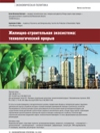
Housing and Construction Ecosystem: Technological Breakthrough

DOI: https://doi.org/10.33917/es-2.182.2022.72-85

Based on methodological analysis and extensive empirical data involved, the article proposes an original approach to developing initial positions for the concept of forming housing and construction ecosystems. The main criteria for evaluating feasibility of using a new organizational form for implementing the plans to achieve strategic socio-economic goals, facing the country, and realizing a long-term development strategy for the construction industry as well as for housing and communal services are considered. It is proposed to choose technological engineering as a core of the construction ecosystem. The article formulates a number of practical recommendations

Источники:


1. My govorim o programme razvitiya Sibirskogo regiona na desyatiletiya [We are Talking About the Development Program of the Siberian Region for Decades]. RBK, 2021, September, 6, available at: https://www.rbc.ru/newspaper/2021/09/06/6131fab69a79471a71a0b412.

2. Grishkin I.I. Ponyatie informatsii [The Notion of Information]. Moscow, Nauka, 1973, p. 12.

3. Vanisova E. Transformatsiya nauki v element marketinga ne bezobidna [Transformation of Science into an Element of Marketing is not Harmless]. NG-nauka, 2021, September, 22.

4. Chto takoe ekosistema [What is Ecosystem]. Profil’, 2021, no 48–49, December, 20, p. 48.

5. Tsutsumi S. Puti peremen [Pathways of Change]. Moscow, Progress, 1982, p. 97.

6. Proraby perekroiki [Foremen of Redrawing]. Kommersant”, 2021, December, 16, available at: https://www.kommersant.ru/doc/5130609.

7. Mysli-NeMysli [Thoughts-NonThoughts]. Telegram, 2021, December, 9, available at: https://telegram.me/mislinemisli/9912.

8. Esli ty ne umeesh’ byt’ developerom, to stanovis’ podryadchikom [If You Can’t Be a Developer, then Become a Contractor]. Kommersant”, 2022, January, 12, available at: https://www.kommersant.ru/doc/5157145?query=Shcherbina.

9. Putin: stroitel’nyi kompleks stanet lokomotivom rosta pri vosstanovlenii ekonomiki [Putin: the Construction Complex will Become a Locomotive of Growth in the Economy Recovery]. TASS, 2020, April, 16, available at: https://tass.ru/ekonomika/8261871.

10. Borisov D. Drugogo kachestva stroika [Construction of a Different Quality]. Vedomosti, 2022, January, 26, available at: https://www.vedomosti.ru/opinion/articles/2022/01/25/906386-drugogo-kachestva.

11. Shokhina E. Renovatsiya s shirokim radiusom porazheniya [Renovation with a Wide Radius of Damage]. Vedomosti, 2020, September, 21, available at: https://www.vedomosti.ru/economics/articles/2020/09/21/840703-renovatsiya-shirokim.

12. Shokhina E. Rossiiskoi ekonomike ne khvataet slozhnosti [Russian Economy Lacks Complexity]. Vedomosti, 2020, September, 29, available at: https://www.vedomosti.ru/economics/articles/2020/09/29/841465-rossiiskoi-ekonomike.

13. Korolev N. AT Consulting obluchat investitsiyami [AT Consulting will be Irradiated with Investments]. Kommersant”, 2021, December, 20, available at:

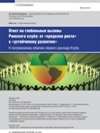
Responding to the Global Challenges of the Club of Rome: from “Limits to Growth” to “Sustainable Development”. To the Half-Century Anniversary of the First Report to the Club

DOI: https://doi.org/10.33917/es-2.182.2022.52-65

The famous first report to the Club of Rome “The Limits то Growth” not only revealed strategic negative tendencies in the relationship of modern civilization with the natural environment, but also proposed a theoretical direction for overcoming them — “dynamic global equilibrium” (“zero growth”). The modern strategy of sustainable development is considered as a constructive response of civilization to the challenges of the realities of the “limits of growth” on the way of its advancement into the foreseeable future

Источники:


1. Мeadows Donnella H., Randers Jorgen, Meadows Dennis L., William W. Behrens. The Limits to Growth: A Report for the Club of Rome’s Project on the Predicament of Mankind. Universe Books, 1972, 211 p.

2. Forrester Dzh. Mirovaya dinamika [World Dynamics]. Moscow, Nauka, 1978, 167 p.

3. Pechchei A. Zapiski Rimskogo kluba [Notes of the Club of Rome]. Moscow, 2019, 240 p.

4. Mankind at the Turning Point. The Сlub of Rome, 1974.

5. Medouz D.Kh., Medouz D.L., Randers I. Za predelami rosta: Predotvratit’ global’nuyu katastrofu. Obespechit’ ustoichivoe budushchee [Beyond Growth: Averting a Global Catastrophe. Ensure a Sustainable Future]. Moscow, Progress, Pangeya, 1994, 303 p.

6. Medouz D.Kh., Randers I., Medouz D. Predely rosta: 30 let spustya [Limits to Growth: 30 Years Later]. Moscow, Binom, Laboratoriya znanii, 2013, 357 p.

7. Nauke predstoit reshat’ problemy, a ne otkryvat’ novye gorizonty [Science has to Solve Problems, Not Open New Horizons]. Gazeta.gu, 2011, May, 2, available at: https://www.gazeta.ru/science/2012/05/02_a_4569465.shtml.

8. Dubovskii S.V. Putevoditel’ po global’nomu modelirovaniyu [Global Modeling Guide]. Obshchestvennye nauki i sovremennost’, 1998, no 3, pp. 161–171.

9. Egorov V.A., Kallistov Yu.N., Mitrofanov V.B., Piontkovskii A.A. Matematicheskie metody global’nogo razvitiya [Mathematical Methods of Global Development]. Leningrad, Gidrometeoizdat, 1980, 192 p.

10. Efimov G.B., Efimova M.V., Egorov V.A. Pervye raboty po global’nomu modelirovaniyu v IPM i voprosy ekologii idei i nravov obshchestva [First Works on Global Modeling at IPM and Ecology of Ideas and Morals of Society]. Preprinty IPM im. M.V. Keldysha, 2019, no 45, 26 p.

11. Hawrylyshyn B. Road maps to the future — towards more effective societies. The Сlub of Rome, 1980.

12. Dubovskii S.V. Global’noe modelirovanie: Voprosy teorii i praktiki [Global Modeling: Issues of Theory and Practice]. Vek globalizatsii, 2010, no 2.

13. Gelovani V.A., Britkov V.B., Dubovskii S.V. SSSR i Rossiya v global’noi sisteme (1985–2030): Rezul’taty global’nogo modelirovaniya [USSR and Russia in the Global System (1985–2030): Results of Global Modeling]. Moscow, URSS, 2017, 320 p.

14. Medouz D., et al. Predely rosta [Limits to Growth]. Moscow, Izd-vo MGU, 1991, 208 p.

15. Chelovek i sreda ego obitaniya [Man and His Environment]. Voprosy filosofii, 1973, no 1–3.

The Economic Attack on Russia and the Policy of Counteraction

DOI: https://doi.org/10.33917/es-2.182.2022.40-47

The purpose of the study is to show the patterns of the deployment of an economic attack on Russia. The research methodology is a comparative and retrospective analysis, elements of a structural approach. In the course of the analysis, a result was obtained that boils down to the fact that the current model of the world economy with a high level of integration and dependence of the economy poses a threat to the national security of the country. Economic warfare is carried out through damaging sanctions. Good conditions for it were created by the liberal economic policy pursued in Russia, which held back growth. Moreover, such outcomes are typical not only for economic activity, but also for the functioning of science and education — “invisible” sanctions, which creates a long-term perspective of dependent and driven development. It is necessary to ensure control over the distribution of property owners in the domestic market, planning procedures that are reduced to the establishment of thresholds in the field of imports, exports in various areas of activity, as well as the admission of foreign resources and institutional rules to the domestic market. With the implementation of such an institutional policy, sanctions would cause much less damage or their negative effect would be absent. Today, it is necessary to resist the economic attack by maximizing the withdrawal of assets from the dollar denomination, pursuing an anti-devaluation policy, cutting off the banking system from the speculative depreciation game, and intensifying efforts to replace imports in each industry. It is required to close the contours of production to the domestic market with the re-profiling of production, practicing the seizure of foreign property as a response to similar external actions. Such actions require a systematic state policy in all areas of coordination of industries and activities.

Источники:


1. Glaz’ev S.Yu. Bitva za lide rstvo v XXI veke. Rossiya, SShA, Kitai. Sem’ variantov blizhaishego budushchego [The Battle for Leadership in the XXI Century. Russia, USA, China. Seven Options for the Near Future]. Moscow, Knizhnyi mir, 2017, 352 p.

2. L’vov D.S. Ekonomika razvitiya [Development Economics]. Moscow, Ekzamen, 2002, 512 p.

3. Sukharev O.S. “Izvrashchennyi monetarism” budet diktovat’ ekonomicheskuyu strategiyu razvitiya Rossii? [“Perverted Monetarism” will Dictate the Economic Development Strategy of Russia?]. Investitsii v Rossii, 2017, no 6, pp. 27–35.

4. Krugman P. Depressii — eto nechto inoe [Depression is Something Else]. Ekonomika dlya lyuboznatel’nykh: o chem razmyshlyayut nobelevskie laureaty. Moscow, Izd-vo instituta Gaidara, 2017, pp. 26–27.

5. Sukharev O.S. Ekonomicheskie sanktsii: problema otsenki ushcherba [Economic Sanctions: the Problem of Damage Assessment]. Ekonomika i predprinimatel’stvo, 2017, no 8-4, vol. 11, pp. 80–87.

6. Anchishkin A.I. Prognozirovanie tempov i faktorov ekonomicheskogo rosta [Forecasting Rates and Factors of Economic Growth]. Moscow, Maks-Press, 2003, 300 p.

Antimonopoly Regulation: Priorities in Changing World

DOI: https://doi.org/10.33917/es.2.182.2022.32-38

The article focuses on changes in global markets induced by digitalization of economy that caused new challenges to antimonopoly regulation. In this context, the author considers digital platforms and use of algorithmic pricing by economic entities. The author proposes to delineate between different types of platforms and their classification in platforms — exchanges or trade spots and multisided markets and to assess the impact of both types on competition. The article also considers the use of digital algorithms by entities as a factor of concerted conduct and implicit collusion among the market participants. In this context, the author attempts to assess the influence of humans and algorithms on sustainability of implicit collusion.

Both problems are considered in the context of global scale of entities. It limits possibilities of law enforcement against their monopolistic conduct by national competition authorities, as well as national sovereignty when faced with global corporations. In conclusion, the author stresses the necessity of search of new means of countering monopolization in digital markets

Источники:

1. ICN 2021, available at: https://icn2021budapest.hu/site/#

2. Ageev A.I. Kartina mira [Picture of the World]. Ekonomicheskie strategii, 2019, no 4, p. 5, available at: /wp-content/mag_archive/2019_04/ES2019-04-Slovo.pdf.

3. Howard A. Shelansky. Information, Innovation and Competition Policy for Internet. University of Pennsylvania Law Review, 2013, N 161, pp. 1699–1701.

4. Competition Policy. European Commission. Case AT.39740 Google Search (Shopping), available at: https://ec.europa.eu/competition/elojade/isef/case_details.cfm?proc_code=1_39740.

5. Monopolies Commission: Digital change requires legal adjustments regarding price algorithms, the media sector and the supply of medicines. Monopolkommission, available at: https://perma.cc/QW5S-UB8Z.

6. Transcript of FTC Hearings Session No. 7: Competition and Consumer Protection in the 21st Century — Day 2. U.S. FED. TRADE COMM’N 19-84 (Nov. 14, 2018), available at: https://www.ftc.gov/system/files/documents/public_events/1418693/ftc_hearings_session_7_transcript_day_2_11-14-18_0.pdf.

7. Kai-uwe K hn & Steve Tadelis, Algorithm Collusion. CRESSE, 2017, available at:  http://www.cresse.info/uploadfiles/2017_sps5_pr2.pdf.