Prospects and Risks of Using the Central Bank Digital Currency. Consequences for the Monetary System
DOI: 10.33917/es-3.201.2025.92-97

The article explores digital money characteristics of both central bank and private sector in both advanced and emerging market economies. Newly emerging forms of the private sector electronic money (digital coins, or so-called cryptoassets), such as Bitcoin, have drawn much attention because the underlying distributed ledger technology used therein enables decentralized verification while maintaining cash-like functions.

Meanwhile, some central banks have explored potential application of the distributed ledger technology and issuing their own digital coins for general public or financial institutions – so-called the central bank digital currency initiatives. Over the past 12 months, central bank digital currencies (CBDCs) have transformed from a distant concept into the core of the global economic policy agenda. Debates on CBDC have progressed towards adopting CBDC and its implications for the financial system. Such innovations evidently have serious consequences for the monetary system at both national and global levels.

References:

1. Central bank digital currencies: system design and interoperability. BIS, available at: https://www.bis.org/publ/othp42_system_design.pdf

2. Gross J., Schiller J. A model for central bank digital currencies: Do CBDCs disrupt the financial sector? SSRN Electronic Journal, 2020.

3. Schilling L. Risks Involved with CBDCs: On Cash, Privacy, and Information Centralization, 2019, available at: https://papers.ssrn.com/sol3/papers. cfm?abstract_id=3479035

4. Tercero-Lucas D. Central Bank Digital Currencies and Financial Stability in a Modern Monetary System, 2022.

5. Davoodalhosseini S. Central Bank Digital Currency and Monetary Policy. Journal of Economic Dynamics and Control, 2021, 142, 104150. 10.1016/j. jedc.2021.104150

6. Náñez A., Jorge-Vázquez J., Forradellas R. Central Banks Digital Currency: Detection of Optimal Countries for the Implementation of a CBDC and the Implication for Payment Industry Open Innovation. Journal of Open Innovation Technology Market and Complexity, 2021. 7. 10.3390/joitmc7010072

7. Fernandez-Villaverde J., Sanches D., Schilling L., Uhlig H. Central bank digital currency: Central banking for all? Review of Economic Dynamics, 2020, 41. 10.1016/j.red.2020.12.004

8. Andolfatto D. Assessing the Impact of Central Bank Digital Currency on Private Banks. The Economic Journal, 2020, 131. 10.1093/ej/ueaa073

9. Auer R., Cornelli G., Frost J. Rise of the Central Bank Digital Currencies: Drivers, Approaches and Technologies. SSRN Electronic Journal, 2020, 10.2139/ ssrn.3724070

10. Bindseil U. Tiered CBDC and the Financial System. SSRN Electronic Journal, 2020, 10.2139/ssrn.3513422
Financial sovereignty of Russia as an object of knowledge, the basis of which is money and the mechanism of its circulation

DOI: 10.33917/mic-6.113.2023.95-104

In the modern conditions of globalization of economic and other relations, new challenges and threats are emerging in the world. Against this background, specific threats to the financial sovereignty of Russia have become widespread, due to the economic and legal properties of modern «paper» money and their separation from the objective material basis from the equivalent commodity, which results in the absence of a standard measure of value. This problem is very acute in not only economics and finance, but also in law, in particular, in the field of criminal law when qualifying criminal acts of an economic orientation and other areas of economic and legal relations.

References: 

1. The Constitution of the Russian Federation (adopted by popular vote on 12.12.1993 with amendments approved during the all-Russian vote on 07.01.2020). SPS «ConsultantPlus».

2. Federal Law «On the Central Bank of the Russian Federation (Bank of Russia)» dated 07.10.2002 No. 86-FZ, art.4, p.18.2. SPS «ConsultantPlus».

3. Federal Law No. 173-FZ dated 12/10/2003 (as amended on 11.04.2014) «On Currency Regulation and Currency Control» (with amendments. and an additional introduction. effective from 01.01.2015) / Collection of legislation of the Russian Federation, 15.12.2003, N 50, art. 4859.

4. Federal Law No. 390-FZ dated December 28, 2010 «On Security». SPS «ConsultantPlus».

5. Decree of the President of the Russian Federation dated 07.02.2021 No. 400 «On the National Security Strategy of the Russian Federation». URL: http://www.pravo.gov.ru

6. Decree of the President of the Russian Federation dated 05.13.2017 No. 208 «On the Strategy of Economic security of the Russian Federation for the period up to 2030» // Official Internet portal of legal information. URL: http://www.pravo.gov.ru; NW RF. 2016. No. 1 (Part II). / http://pravo.gov.ru

7. Articles of Agreement / International Monetary Fund. URL: http://www.imf.org/external/pubs/ft/aa/rus/index.pdf

8. Anishchenko V.N., Khabibulin A.G., Anishchenko E.V. Investigation of economic crimes. Theoretical and methodological foundations of economic and legal analysis of financial activity: Book. M.: YURAIT, 2018. (In Russ.).

9. Anishchenko E.V. Security of Russia in the context of socio-economic reforms // Financial analytics (scientific, practical and information-analytical collection). 2014, April, No.14(200). (In Russ.).

10. Anishchenko A.V. Russia in the system of global risks // Bulletin of the Academy of Economic Security of the Ministry of Internal Affairs of Russia. 2011;6:103-105. (In Russ.).

11. Molchanov A.V. Anishchenko V.N. et al. Financial security of the country: problems and prospects // Economic security of the financial system: Collection of scientific papers. / Ed. Honored Economist of Russia, Doctor of Economics, Professor A.V. Molchanov. M.: AEB of the Ministry of Internal Affairs of Russia, 2007.

12. Rose K.B. Mechanisms and limits of US influence in the IMF: Analytical review (Series: Socio-economic problems of Western countries). Moscow: INION RAS. The Center of scientific information. research. global. and regional. problems. Otd. Zap. Europe and America. Ed. Semeko G.V., 2013. 98 p. ISBN 978-5-248-00703-5 / https://cyberleninka.ru/

D.S. Chernavsky Model. Part 1. Adam Smith

DOI: 10.33917/es-2.188.2023.98-107

This article considers the system of views of D.S. Chernavsky on the economics of Adam Smith. It turns out that the famous English economist was a convinced statesman. In his famous work “On the Nature and Causes of the Wealth of Nations” he substantiates the need for price regulation, limiting interest rates and also considers transnational corporations the greatest evil in the economy (he calls them “large joint-stock companies”). A. Smith convincingly proves that money is a tool for generating income, but not the income of society itself.

The appendix to the article presents a mathematical model of the loan capital functioning, developed by the author under the guidance of D.S. Chernavsky.

References:

1. Shcherbakov A.V. Mifologiya Adama Smita (o chem na samom dele kniga “Issledovanie o prirode i prichinakh bogatstva narodov”) [Mythology of Adam Smith (what “An Inquiry into the Nature and Causes of the Wealth of Nations” is Actually about)]. Moscow, Grifon, 2016, 64 p.

2. Smit A. Issledovanie o prirode i prichinakh bogatstva narodov [An Inquiry into the Nature and Causes of the Wealth of Nations]. Moscow, Eksmo, 2007.

3. Marks K., Engel’s F. Manifest Kommunisticheskoi partii: Sochineniya [The “Manifesto of the Communist Party”: Essays]. Vol. 4. Moscow, Gosudarstvennoe izdatel’stvo politicheskoi literatury, 1955, 616 p.

4. Chernavskii D.S., Shcherbakov A.V. Mir bez dollara i FRS [World without the Dollar and the Fed]. Institut sotsial’no-ekonomicheskogo prognozirovaniya im. D.I. Mendeleeva, available at: http://mendeleev-center.ru/articles/article-0006.html.

5. Polnyi spisok vsekh voennykh prestuplenii SShA [Complete list of all US war Crimes]. Oko planet, 2011, 16 iyunya, available at: http://oko-planet.su/politik/politiklist/71678-polnyy-spisok-vseh-voennyh-prestupleniy-soedinennyh-shtatov-ameriki.html.

6. Sorok protsentov mirovogo bogatstva kontroliruyut 147 transnatsional’nykh korporatsii [Forty Percent of the World’s Wealth is Controlled by 147 Multinational Corporations]. Gumanitarnyi portal, 2011, 24 oktyabrya, available at: https://gtmarket.ru/news/corporate/2011/10/24/3685.

When the Possibility of Joint Action Come True

DOI: 10.33917/es-1.167.2020.92-99

The issues of simplifying settlement operations have been and are still facing the participants of both domestic national and international markets. With a certain approach to their use, money can become a special commodity or may take the form of algorithms that apply cloud technologies, the level of volatility of which does not always meet the expectations. The present article outlines views on the possibility of resolving these issues through creating within the economic integration association of a common accounting unit in a digital format that is linked to one of the most liquid types of energy

Elite

#9. Preserving humanness
Elite

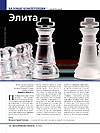
The power of elite and its interests affect every person. In the era of globalization it is imperceptible. Influence is unnoticeable, but exists and indirect methodology works well. Then we have to make a question about the possibilities. When the situation is confused, multy-subject and contaminated by information background, to talk about interests and benefits means to condemn oneself to unraveling the Gordian knot. It is much easier to understand the opportunities. Let us throw away doubts – any opportunities will be necessarily used by elite. So what is the elite?