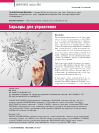
Barriers to Management

DOI: 10.33917/es-6.204.2025.6-15

Despite the diversity of scientific disciplines dealing with management issues, practice very often shows examples of ineffective management. The article identifies and briefly discusses seventeen key barriers to successful management — from complexity issues to implications of the 1990s. These barriers are conditionally divided into three areas related to systemic, instrumental and social aspects of management. At the end of the article the author provides dependence graphs of the barriers to management and an expert assessment of the possibilities to eliminate these barriers.

References:

1. Eshbi U.R. Vvedenie v kibernetiku [Introduction to Cybernetics]. Per. s angl. 4-e izd. Moscow, URSS, 2009, 432 p.

2. Ansoff I. Novaya korporativnaya strategiya [New Corporate Strategy]. Per. s angl. Saint Petersburg, Piter Kom, 1999, 414 p.

3. Ekonomicheskaya strategiya firmy [Economic Strategy of the Firm]. Pod red. A.P. Gradova. 2-e izd. Saint Petersburg, Spets.Lit, 2000, 588 p.

4. Knyazeva E.N., Kurdyumov S.P. Osnovaniya sinergetiki [Foundations of Synergetics]. Moscow, URSS, 2005, 240 p.

5. Solomatin A.N. Entropic Approach to Sustainable Development Issues: Thirteenth International Conference “Management of Large-Scale System Development” (MLSD). Moscow (September 2020). IEEE Conference Publications, IEEE Xplore Digital Library, pp. 1–5, available at: https://doi.org/10.1109/ MLSD49919.2020.9247737

6. Viner N. Kibernetika i obshchestvo [Cybernetics and Society]. Per. s angl. Moscow, AST, 2019, 285 p.

7. Solomatin A.N. Postroenie dopustimykh krupnomasshtabnykh sistem kak uslovie ikh upravlyaemosti i samoorganizatsii: Upravlenie razvitiem krupnomasshtabnykh sistem (MLSD’2010): Trudy Chetvertoy mezhdunarodnoy konferentsii [Construction of Admissible Large-Scale Systems as a Condition of Their Controllability and Self-Organization: Management of Large-Scale Systems Development (MLSD’2010): Proceedings of the Fourth International Conference]. Vol. 1. Moscow, IPU RAN, 2010, pp. 18–26.

8. Prangishvili I.V. Sistemnyy podkhod i obshchesistemnye zakonomernosti [Systems Approach and General System Regularities]. Moscow, SINTEG, 2000, 528 p.

9. Rumyantsev V.Yu., Shokhov A.S. Konveyer platformizatsii ekonomiki Rossii [The Conveyor Belt of Platformization of the Russian Economy], pp. 1–12, available at: https://spkurdyumov.ru/uploads/2025/04/konvejer-platformizacii-ekonomiki-rossii.pdf.

10. Oleskin A.V. Detsentralizovannaya setevaya organizatsiya nauchnogo soobshchestva: perspektivy i problemy [Decentralized Network Organization of the Scientific Community: Prospects and Challenges]. Moscow, URSS, LENAND, 2021, 142 p.

11. Zub A.T. Strategicheskiy menedzhment: teoriya i praktika [Strategic Management: Theory and Practice]. 4-e izd., dop. Moscow, Yurayt, 2014, 375 p.

12. Federal’nyy zakon ot 28 iyunya 2014 g. N 172-FZ “O strategicheskom planirovanii v Rossiyskoy Federatsii” [Federal Law of June 28, 2014 No. 172-FZ “On Strategic Planning in the Russian Federation”]. Konsul’tantPlyus, available at: https://www.consultant.ru/document/cons_doc_LAW_164841

Tectoeconomics is the Forerunner of All Social Production Economies

DOI: 10.33917/es-2.168.2020.40-49

Based on elaborated concept of reviving the culture of industrial consumption of resources, an attempt is made to prove the existence of tectoeconomics resulting from tectology — a universal organizational science. Tectoeconomics is understood as the art of conducting business as well as other creative activities based on selection and implementation of decisions to streamline the processes of creating and consuming material and spiritual goods. It is shown that the possibilities for socioeconomic growth should be sought in cultural origins. On the basis of perceptions on tectoeconomics, the author has identified one of the main structural and organizational shortcomings of domestic economy, which does not contain in the trade sphere a specific industrial branch in the form of a system of culture-forming service material centers, eliminating the own procurement production of finished products producers and contributing to intensive growth of the middle class. The article is commemorating the 100th anniversary of publishing the main work of the national thinker, encyclopedic scientist Alexander A. Bogdanov “Tectology. General organizational science”. In the Belarusian magazine OnAir No. 7 (104) 2018, was published an article by N.V. Kostyukovich “Two lives of Alexander Bogdanov”

New Economic Reality: Onthos and Gnosis (Philosophic Reminiscences)

#4. Monument up to the Sky
New Economic Reality: Onthos and Gnosis (Philosophic Reminiscences)

The paper presents an original interpretation of both economy at large and current economic reality, fraud with dramatic changes which may entail the transformation of economy into post-economy or technomy. The author views the economy as a value-driven phenomenon of active consciousness within which it is implemented accepting specific digital (monetary) expression. The author argues that at the basis of any economic organization lies the notion of ‘creating chaos’ which, thanks to consciousness as synergy attractor, constantly generates a certain economic order, chaosmos, overcoming initial chaos but not attaining sustainable order of cosmic character. The economy is chronically changeable either towards growth and development or towards decline and stagnation. Here the negentropy is combined with entropy, thus reflecting the apocalyptic nature of economy, where crisis is a natural anomaly. Overall economic self-organization, or self-governing, is necessarily coupled with assertive selective organization, or management (various forms of dirigizm). In general, the organization of economy is not only diversified, but also is much more large-scale than economy itself; it is bound to be supported by an external organization, mainly not economic one but institutional, legal, governmental, political, etc. Managerial ecology of economy implies taking into consideration the importance of economic self-governance through dirigizm; managing the economy is only possible on the basis of self-governnance combined with economic freedom. Massive introduction of computing and analytical devices in economic processes creates an opportunity not only for greater administrative efficiency in the economy but also for the replacement of economic organization proper (homo-socio-value type) with non-economic technotronic organization, and of the economy with technomy. Hence, there exist a probability of transgressive revolution in the economy and then in the society. Presently, world economy, undergoing overall qualitative and organizational crisis, is on the brink of transition from uni-centered global type to the poly-centered integrated one, which, in turn, will put an end to the dominance of the US dollar, the Wall Street, the USA and the West.

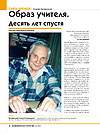
The Image of the Teacher. Ten Years Later

#8. Logic and ethic of fake
The Image of the Teacher. Ten Years Later

An outstanding specialist in applied mathematics, interdisciplinary research, philosophy and methodology of science, corresponding member of the Russian Academy of Sciences Sergei Pavlovich Kurdyumov used to say: “The future tenses the present and clarifies the past”. In addition, the next generations arrive and there is a desire to communicate them the results, hopes, dreams of the previous generations and, if possible, to protect them from already made mistakes. Just from this perspective now we would like to look at the scientific work of Sergei P. Kurdyumov, at the ideas put forward by him and being developed now by his scientific school.