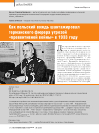
How the Polish Leader Blackmailed the German Fuhrer with the Threat of a «Preventive War» in 1933
Keywords:
,
,
DOI: 10.33917/es-2.206.2026.116-123
The article dwells on the problem of the so-called “preventive war”. Polish leader Marshal J. Pilsudski used the threat of this war to blackmail Chancellor A. Hitler in the spring and autumn of 1933. Behind-the-scenes Polish dictator needed this in order to avoid the looming possibility of changing Polish borders in favour of Germany on the basis of the Polish-German arbitration treaty of 1925, the instrument of which could have become the “Pact of Four” published in the spring of 1933. At the same time the “commandant” needed such a harsh measure as blackmail to include Warsaw in the Fuhrer’s “eastern” plans within the framework of the “legal mechanism for ‘pushing’ Germany to the East” in order to recreate the Greater Poland through division of the USSR, carried out jointly with Berlin and Tokyo.
References:
1. Arkhiv vneshney politiki RF [Archive of the Foreign Policy of the Russian Federation]. F. 138, Op. 14, P. 30, D. 12.
2. Dziennik Ustaw. 1926. # 114. Poz. 662. Internetowy system aktów prawnych, available at: http://isap.sejm.gov.pl/DetailsServlet?id=WDU19261140662
3. Sbornik dokumentov po mezhdunarodnoy politike i mezhdunarodnomu pravu. Vyp. V [Collection of Documents on International Politics and International Law. Vol. V.]. Moscow, 1933, 182 p.
4. Tabui Zh. 20 let diplomaticheskoy bor’by [20 Years of Diplomatic Struggle]. Moscow, 1960, 464 p.
5. Kamiński M.K., Zacharias M.J. Polityka zagraniczna Rzeczypospolitej Polskiej 1918–1939. W., 1998, 315 s.
6. Lipski J. Stosunki polsko-niemieckie w świetle aktów norymberskich. *Sprawy Międzynarodowe*, 1947, no 2–3, pp. 3–23.
7. Le Temps. 1933. 11 janvier.
8. Pułaski M. Stosunki dyplomatyczne polsko-czechosłowacko-niemieckie w latach 1933–1938. Poznań, 1967, 222 s.
9. Wojciechowski M. Stosunki polsko-niemieckie. 1933–1938. Poznań, 1965, 571 s.
10. Dokumenty vneshney politiki SSSR [USSR Foreign Policy Documents]. Vol. XVI. Moscow, 1970, 920 p.
11. Istoriya diplomatii [History of diplomacy]. Ed. V.P. Potemkin. Vol. 3. Moscow–Leningrad, 1945, 883 p.
12. Arkhiv vneshney politiki RF. F. “Referentura po Pol’she” [Archive of the Foreign Policy of the Russian Federation. “Reference for Poland”]. Op. 17, D. 28, P. 167-a.
13. Kozeński J. Czechosłowacja w polskiej polityce zagranicznej w latach 1932–1938 [Czechoslovakia in Polish Foreign Policy in the Years 1932–1938]. Poznań, 1964, 319 p.
14. Zgórniak M. Sytuacja międzynarodowa Polski na początku lat trzydziestych XX wieku [The International Situation of Poland in the Early 1930s]. *Przegląd Historyczny*, 1975, vol. LXVI, Zesz. 2, pp. 189–215.
15. Centralne Archiwum Wojskowe. Generalny Inspektorat Sił Zbrojnych [Central Military Archives. General Inspectorate of the Armed Forces]. Vol. 254.
16. Documents on German Foreign Policy,1918–1945. Ser. C, vol. III. Washington, 1959, 1157 p.
17. Diariusz i teki Jana Szembeka. Vol. I. Londyn, 1964, 590 p.
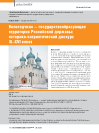
Vologda region — the state-forming territory of the Russian empire: historical and patriotic discourse of the IX-XVI centuries

Keywords:
,
,
,
,
,
,
,
,
DOI: 10.33917/es-1.205.2026.130-139
The issues of the history of the Vologda Region are considered in the context of the development of Russian statehood during the 9th –16th centuries. Attention is focused on the political, legal, historical and cultural contribution of the region to the formation and strengthening of the unified Russian state, historical factors of the development of the region as a sovereign, state-forming territory are identified.
References:
1. Zakharov S.D. Beloozero na nachal’nykh etapakh stanovleniya Drevnerusskogo gosudarstva: Severnaya Rus’ i problemy formirovaniya Drevnerusskogo gosudarstva: Sb. materialov Mezhdunarodnoy nauchnoy konferentsii (Vologda — Kirillov — Belozersk, 6–8 iyunya 2012 g.) [Beloozero in the Early Stages of the Formation of the Old Russian State: Northern Rus’ and the Problems of the Formation of the Old Russian State: Collection of Materials from the International Scientific Conference (Vologda — Kirillov — Belozersk, June 6–8, 2012)]. Vologda, Drevnosti Severa, 2012, 209 c.
2. Zakharov S.D. Beloozero: Rus’ v IX–XI vekakh: Arkheologicheskaya panorama [Beloozero: Rus’ in the 9th–11th Centuries]. In-t arkheologii RAN; Otv. red. N.A. Makarov. Moscow, Vologda, Drevnosti Severa, 2012, 496 p.
3. Zimin A.A. Vityaz’ na rasput’e: feodal’naya voyna v Rossii XV v. [Knight at the Crossroads: Feudal Warfare in 15th-Century Russia]. Moscow, Mysl’, 1991, 288 p.
4. Zimin A.A. Namestnicheskoe upravlenie v Russkom gosudarstve vtoroy poloviny XV — pervoy treti XVI v. [Viceroyalty in the Russian State in the Second Half of the 15th — First Third of the 16th Century]. Istoricheskie zapiski, Moscow, Nauka, 1974, vol. 94, pp. 271–301.
5. Belov N.V. Byla li opala knyazya S.I. Mikulinskogo v 1554–1558 godakh? K voprosu o sluzhebnom statuse dvinskogo namestnichestva i kazanskogo voevodstva v seredine XVI veka [Was Prince S.I. Mikulinsky in Disgrace in 1554–1558? On the Official Status of the Dvina Viceroyalty and Kazan Voivodeship in the Mid-16th Century]. Vestnik Vologodskogo gosudarstvennogo universiteta, Seriya: Istoricheskie i filologicheskie nauki, 2023, no 2(29), pp. 9–16.
6. Nosov N.E. Gubnaya reforma i tsentral’noe pravitel’stvo kontsa 30-kh — nachala 50-kh godov XVI v. [The Disastrous Reform and the Central Government of the Late 1530s — Early 1550s.]. Istoricheskie zapiski, 1956, vol. 56, pp. 206–234.
7. Nosov N.E. Zemskaya reforma na Russkom Severe XVI v. (Ob otmene kormleniy i vvedenii zemskikh uchrezhdeniy): Krest’yanstvo i klassovaya bor’ba v feodal’noy Rossii: Sb. statey pamyati Ivana Ivanovicha Smirnova [Zemstvo Reform in the Russian North in the 16th Century (On the Abolition of Feeding and the Introduction of Zemstvo Institutions): The Peasantry and Class Struggle in Feudal Russia: A Collection of Articles in Memory of Ivan Ivanovich Smirnov]. Leningrad, Nauka, 1967, pp. 131–156.
8. Volodikhin D.M. Polkovodtsy Moskovskogo tsarstva [Commanders of the Muscovite Kingdom]. Moscow, Molodaya gvardiya, 2020, 343 p.
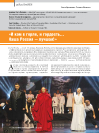
“A lump in my throat, and pride as well… Our Russia is the best!”
Predictions of Russian Classics
Between Sociology and Economics: Nikolai Kondratiev’s Scientific and Journalistic Work in 1914
Keywords:
,
,
,
,
,
DOI: 10.33917/es-6.204.2025.116-125
The article examines previously unknown journalistic and scientific works by Nikolai Kondratiev, a student at the Faculty of Law of St. Petersburg University, which he published soon after the beginning of the First World War in “Vechernee Zveno” newspaper and the “New Ideas in Economics” scientific journal. Already in 1914 in his student works he showed a clear interest in economic issues, and with his article “Basic Teachings on the Laws of Social Life Development,” concerning the laws of social life development, he declared himself as a serious scientist. Nikolai Kondratiev’s journalism is valuable in that namely in his articles he took the first steps toward developing his theory of large economic cycles, which later on became known as “Kondratiev cycles”. Over the years, this theory has gained recognition worldwide and became a significant contribution of the Russian scientist both to economic science and to understanding the laws of social development. His collaboration with “Vechernee Zveno” newspaper and his work in the editorial board of the “New Ideas in Economics” journal largely determined his choice in favour of economic science as a field of his future professional activity.
References:
1. Kondrat’ev N.D. Suzdal’skie pis’ma [Suzdal Letters]. Moscow, Ekonomika, 2004, 879 p.
2. Lomonosova M.V. Sotsiologicheskaya publitsistika v Rossii: stranitsy istorii i sovremennost’ [Sociological Journalism in Russia: Pages of History and Present]. Nasledie, 2015, no 1(6), pp. 104–119.
3. Lomonosova M.V. Neizvestnye stat’i Nikolaya Kondrat’eva 1914 goda na stranitsakh petrogradskoy gazety “Vechernee zveno” [Unknown Articles by Nikolai Kondratyev in 1914 on the Pages of the Petrograd Newspaper “Evening Link”]. Nasledie, 2024, no 1(24), pp. 150–154.
4. Kondrat’ev N.D. Voyna i vneshnyaya torgovlya Avstro-Germanii [War and Foreign Trade of Austria-Germany]. Vechernee zveno, 1914, no 24 (13 sentyabrya), p. 2.
5. Kondrat’ev N.D. Militarizm prezhde i teper’ [Militarism Then and Now]. Vechernee zveno, 1914, no 29 (18 sentyabrya), p. 3.
6. Kondrat’ev N.D. Rossiya i Yaponiya [Russia and Japan]. Vechernee zveno, 1914, no 32 (21 sentyabrya), p. 1.
7. Kondrat’ev N.D. Stat’i 1914 g. [Articles of 1914]. Nasledie, 2024, no 1(24), pp. 155–161.
8. Sombart W. Krieg und Kapitalismus. München und Leipzig: Duncker & Humblot, 1913.
9. Sorokin P.A. Dolgiy put’. Avtobiograficheskiy roman [A Long Way. Autobiographical Novel]. Syktyvkar, SZh Komi, MP “Shypas”, 1991, 304 p.
10. Kondrat’ev N.D. Razvitie khozyaystva Kineshemskogo zemstva Kostromskoy gubernii: sotsial’no-ekonomicheskiy i finansovyy ocherk [Development of the Economy of the Kineshemsky Zemstvo of the Kostroma Province: a Socio-Economic and Financial Essay]. Kineshma, Zemskaya tipografiya, 1915, 446 p.
11. Sukhikh V.V. Ekonomicheskie i politicheskie vzglyady N.D. Kondrat’eva v 1913–1915 gg. (po ego knige “Razvitie khozyaystva Kineshemskogo zemstva Kostromskoy gubernii”) [Kondratiev’s Economic and Political Views in 1913–1915 (According to His Book “The Development of the Economy of the Kineshma Zemstvo of the Kostroma Province”)]. AlterEconomics, 2022, vol. 19, no 1, pp. 40–50, DOI: https://doi.org/10.31063/AlterEconomics/2022.19-1.3
How the Eastern Pact Project Became a Small Collective Security System


Keywords:
,
,
,
,
DOI: 10.33917/es-5.203.2025.122-129
Based on archival primary sources, first of all – Soviet intelligence documents from the personal archive of I.V. Stalin, the article proves an important postulate. Behind the collapse of Paris and Moscow’s attempts to create a European system of collective security, known in foreign historiography as the “Eastern Pact,” among other things, was hidden the secret activities of Poland, Germany and Japan aimed at unleashing war against the USSR in 1935. To prevent the threat of war in May 1935 the Soviet leadership created a small collective security system, consisting of France, the USSR and Czechoslovakia – an international legal mechanism that prevented the outbreak of anti-Soviet intervention at the end of that year.
References:
1. Mackinder H.J. Democratic Ideals and Reality. A Study in the Politics of Reconstruction. London, Constable and Company Ltd, 1919, 273 p.
2. Dostoevskiy F.M. Polnoe sobranie sochineniy [Complete Set of Works]. Vol. XXVI. Leningrad, Nauka, 1984, 520 p.
3. Ovsyanyy I.D. Tayna, v kotoroy voyna rozhdalas’ [The Mystery in which the War was Born]. Moscow, 1971, 319 p.
4. Sipols V.Ya. Sovetskiy Soyuz v bor’be za mir i bezopasnost’. 1933–1939 [The Soviet Union in the Struggle for Peace and Security. 1933–1939]. Moscow, 1974, 427 p.
5. Istoriya diplomatii [History of Diplomacy]. Pod red. akad. V.P. Potemkina. Vol. III. Moscow, 1945, 884 p.
6. Rak K. Polska — niespełniony sojusznik Hitlera. Warszawa: Bellona, 2019. 500 s.
7. Jeziorny D. To Avoid Incurring All Uncertain and Ill-Defined Responsibilities. Poland and the Eastern Pact of Mutual Assistance (1934–1935). The International History Review, 2024, 1–17, Published Online: 2024-10-22, available at: https://doi.org/10.1080/07075332.2024.2418575
8. Dokumenty vneshney politiki SSSR [Documents of the USSR Foreign Policy]. Pred. komis. po izdaniyu diplomatich. dokumentov A.A. Gromyko. Vol. XVI. Moscow, Politizdat, 1970, 920 p.
9. Dokladnaya zapiska narkoma po inostrannym delam SSSR M.M. Litvinova I.V. Stalinu po voprosu o zaklyuchenii Vostochnogo pakta s prilozheniem proekta zayavleniya NKID SSSR ministru inostrannykh del Frantsii P. Lavalyu. 17.02.1935 [Report of the People’s Commissar for Foreign Affairs of the USSR M.M. Litvinov to I.V. Stalin on the Issue of Concluding the Eastern Pact with the Attachment of a Draft Statement of the People’s Commissariat of Foreign Affairs of the USSR to the Minister of Foreign Affairs of France P. Laval. 17.02.1935]. RGVA. F. 33987. Op. 3a. D. 760. L. 5–9.
10. Sistemnaya istoriya mezhdunarodnykh otnosheniy. 1918–2000 [Systemic History of International Relations. 1918–2000]. Vol. 2. Moscow, 2000, 243 p.
11. Myunkhenskoe soglashenie 1938 goda: istoriya i sovremennost’: Materialy mezhdunarodnoy nauchnoy konferentsii. Moskva, 15–16 oktyabrya 2008 g. [The Munich Agreement of 1938: History and Modernity: Proceedings of the International Scientific Conference. Moscow, October 15–16, 2008.]. IVI RAN. Moscow, 2009, 420 p.
Education is the Main Front in the Battle for Russia
DOI: 10.33917/es-5.203.2025.130-137
The article presents the social role of education in the modern world. The author investigates biblical Gnosis of «ground» education which opposes global “road”, pragmatic and narrowly traditional education. The author investigates Aristotelian paradigm of free education forming subjects who can not only use thoughts, but also be able to create them. The author investigates the holistic picture of education created by A.S. Pushkin. The poet singled out the Secret Gnosis through which the educational work of eternity is carried out. Its subjects, creators and products are geniuses and talents that create semantic matter for reason, consciousness, will and fantasy. There is Gnosis that oversees public education designed to educate, rear Russian citizens, nurture teachers, state, military and people’s figures. This folk gnosis should be based on comprehensive education since even the highest truth without education can become an instrument of crime. The modern world of Russia and mankind puts an ultimatum: the central and leading figure of social evolution should be the Teacher and not a politician, not a military, not a technocrat, not an administrator.
References:
1. Lenin V.I. O vospitanii i obrazovanii [About Upbringing and Education]. Moscow, Prosveshchenie, 1973.
2. Aristotel’. Soch. [Works]. V 4 t. T. 4. Moscow, Mysl’, 1984.
3. Pushkin A.S. Poln. sobr. soch. [Complete Works.]. V 10 t. T. 7. Leningrad, Nauka, Leningr. otd-nie, 1958.
4. Ermakov A. Pushkin v roli ministra obrazovaniya [Pushkin as Minister of Education]. Pravoslavie.Ru, 2011, 11 fevralya, available at: https://pravoslavie.ru/44697.html
5. Moiseev N.N. Trudy po voprosam sovremennogo obrazovaniya [Works on Issues of Modern Education]. Moscow, Akademiya MNEPU, 2012.
6. Shulevskiy N.B., Zotova E.S. Shkola i obrazovanie — memorial’naya ontologiya Rossii [School and Education are the Memorial Ontology of Russia.]. Filosofiya khozyaystva, 2022, no 4, pp. 55–63.