Prospects and Risks of Using the Central Bank Digital Currency. Consequences for the Monetary System

DOI: 10.33917/es-3.201.2025.92-97

The article explores digital money characteristics of both central bank and private sector in both advanced and emerging market economies. Newly emerging forms of the private sector electronic money (digital coins, or so-called cryptoassets), such as Bitcoin, have drawn much attention because the underlying distributed ledger technology used therein enables decentralized verification while maintaining cash-like functions.

Meanwhile, some central banks have explored potential application of the distributed ledger technology and issuing their own digital coins for general public or financial institutions – so-called the central bank digital currency initiatives. Over the past 12 months, central bank digital currencies (CBDCs) have transformed from a distant concept into the core of the global economic policy agenda. Debates on CBDC have progressed towards adopting CBDC and its implications for the financial system. Such innovations evidently have serious consequences for the monetary system at both national and global levels.

References:

1. Central bank digital currencies: system design and interoperability. BIS, available at: https://www.bis.org/publ/othp42_system_design.pdf

2. Gross J., Schiller J. A model for central bank digital currencies: Do CBDCs disrupt the financial sector? SSRN Electronic Journal, 2020.

3. Schilling L. Risks Involved with CBDCs: On Cash, Privacy, and Information Centralization, 2019, available at: https://papers.ssrn.com/sol3/papers. cfm?abstract_id=3479035

4. Tercero-Lucas D. Central Bank Digital Currencies and Financial Stability in a Modern Monetary System, 2022.

5. Davoodalhosseini S. Central Bank Digital Currency and Monetary Policy. Journal of Economic Dynamics and Control, 2021, 142, 104150. 10.1016/j. jedc.2021.104150

6. Náñez A., Jorge-Vázquez J., Forradellas R. Central Banks Digital Currency: Detection of Optimal Countries for the Implementation of a CBDC and the Implication for Payment Industry Open Innovation. Journal of Open Innovation Technology Market and Complexity, 2021. 7. 10.3390/joitmc7010072

7. Fernandez-Villaverde J., Sanches D., Schilling L., Uhlig H. Central bank digital currency: Central banking for all? Review of Economic Dynamics, 2020, 41. 10.1016/j.red.2020.12.004

8. Andolfatto D. Assessing the Impact of Central Bank Digital Currency on Private Banks. The Economic Journal, 2020, 131. 10.1093/ej/ueaa073

9. Auer R., Cornelli G., Frost J. Rise of the Central Bank Digital Currencies: Drivers, Approaches and Technologies. SSRN Electronic Journal, 2020, 10.2139/ ssrn.3724070

10. Bindseil U. Tiered CBDC and the Financial System. SSRN Electronic Journal, 2020, 10.2139/ssrn.3513422

Specifics of Using the World Capital Market by Developed and Developing Countries

DOI: 10.33917/es-1.199.2025.44-49

The purpose of the present study is to identif y the specifics of using the world capital market by developed and developing countries in modern conditions. It has been established that the interests of developed countries consist in shaping a controlled international financial market that will ensure long-term and low-volatility returns on assets without taking into account the interests of other entities in the global capital mark et. The interests of countries with developing economies are reduced to ensuring maximum return on assets in the shor t-term period, since in the long term they cannot compete with developed countries in the global financial mark et. Based on econometric calculations, it was made an assessment of the effects of growing investment returns in developed and developing countries due to the presence of competitive advantages in the global capital market. It is concluded that the global capital market is used by developed and developing countries in different ways — the former seek to ensure preservation of their privileges through exploiting global imbalances, the latter — to gain access to borrowed capital in order to stimulate their own economic development. Disproportions in the use and regulation of the global capital market lead to dependent position of developing economies, which is why they are striving to transform the global financial architecture to protect their own national interests.

References:

1. Vinokurov E.Yu., Grichik M.V. Novaya kontseptsiya mezhdunarodnykh rezervov: bezopasnost’, diversifikatsiya, neortodoksal’nye podkhody [New Concept of International Reserves: Security, Diversification, Unorthodox Approaches]. Voprosy ekonomiki, 2022, no 12, pp. 24–43.

2. Voskanyan M.A., Khurshudyan S.E. Kontsentratsiya kapitala v global’noy ekonomike kak faktor neravnomernogo raspredeleniya dokhodov [Concentration of Capital in the Global Economy as a Factor in Unequal Income Distribution]. Sovremennaya mirovaya ekonomika, 2023, vol. 1, no 2(2).

3. Golovnin M.Yu., Nikitina S.A. Sovremennye tendentsii dinamiki mezhdunarodnykh potokov kapitala [Current Trends in the Dynamics of International Capital Flows]. Mir novoy ekonomiki, 2018, no 12(4), pp. 46–56.

4. Kuznetsov A.V. Kontseptual’nye podkhody k formirovaniyu ustoychivoy mirovoy valyutno-finansovoy sistemy [Conceptual Approaches to Formation of a Sustainable Global Monetary and Financial System]. Finansy: teoriya i praktika, 2023, no 27(4), pp. 164–172.

5. Bulatov A. Kuda dvizhetsya mirovoy kapital [Where is the Global Capital Heading?]. Ekons, available at: https://econs.online/articles/opinions/kudadvizhetsya-mirovoy-kapital/

6. FDI income by counterpart area, BMD4. OECD, available at: https://www.oecd.org/

7. Country Composition of WEO Groups. IMF, available at: https://www.imf.org/en/Publications/WEO/weo-database/2023/April/groups-and-aggregates

8. Nesterov I.O. Rezervnye valyuty — istochnik nestabil’nosti mirovoy valyutnoy sistemy? [Reserve Currencies — a Source of Instability in the Global Monetary System?]. Vestnik Sankt-Peterburgskogo universiteta. Ekonomika, 2012, no 4, pp. 115–123.

Dogma of the Superiors Infallibility

DOI: https://doi.org/10.33917/es-5.185.2022.87-91

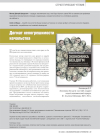
Review of the book by the famous Russian economist, sociologist and politician V.L. Inozemtsev “Economy without dogmas: how the US is creating a new economic order”, published in 2021 by Alpina-Publisher.