The "Economic Strategies" journal

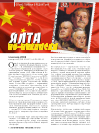
#4. 2025. Beijing-style Yalta


Electricity as an Independent Type of Fuel

DOI: 10.33917/es-4.202.2025.128-133

The world energy sector is in a phase of transformation. Current processes of reorganizing the world energy sector structure are usually called the fourth energy transition. Traditional concept of the fourth energy transition implies a gradual phaseout of fossil fuels and increasing the share of renewable energy in the global energy balance in order to reduce carbon emissions. The article proposes to revise the number of energy transitions and proposes electric energy as an independent type of fuel to serve as the basis for the current energy transition.

References:

1. Makharov A.A., Mitrova T.A., Kulagin V.A. (Eds.) Prognoz razvitiya energetiki mira i Rossii — 2019 [Forecast of Energy Development in the World and Russia 2019: Archived Copy from October 24, 2021]. Wayback Machine. INEI RAN. Moscow, Institute of Energy Research of the Russian Academy of Sciences (INEI RAN), Moscow School of Management Skolkovo, 2019, 210 p.

2. World Energy Outlook’2024 (IEA). Energy Institute, available at: https://www.energyinst.org/statistical-review

3. Il’kovskiy K.K., Il’kovskiy D.K. Solnechnyy svet protiv uglya [Sunlight Against Coal]. Ekonomicheskie strategii, 2020, no 3, pp. 134–141, DOI: 10.33917/es-3.169.2020.134-141

4. Zubakin V.A., Zhukov P.A. Ekonomicheskaya effektivnost’ elektrostantsiy na vozobnovlyaemykh istochnikakh energii na primere pokazatelya LCOE [Economic Efficiency of Renewable Energy Power Plants Using the LCOE Indicator as an Example]. Santekhnika. Otoplenie. Konditsionirovanie, 2024, no 10(274), pp. 72–75, EDN ENBUPX

5. Stoimost’ proizvodstva elektroenergii iz vozobnovlyaemykh istochnikov v 2024 g. [The Cost of Electricity Production from Renewable Sources in 2024]. RenEn, 2025, 23 iyulya, available at: https://renen.ru/stoimost-proizvodstva-elektroenergii-iz-vozobnovlyaemyh-istochnikov-v-2024-godu

6. 2024 Energy Institute Statistical Review of World Energy. Energy Institute, available at: https://www.energyinst.org/statistical-review

7. Department of Economic and Social Affairs. United Nations, available at: https://www.un.org/en/desa/world-population-projected-reach-98-billion-2050-and-112-billion-2100?ysclid=mdg7abr1rq298500462

Methodological Issues of Risk Assessment in Large Investment Projects. Part 1

DOI: 10.33917/es-4.202.2025.134-137

The article substantiates a working toolkit for assessing the risks of implementing alternative projects aimed at creation and production of supersonic passenger aircraft in Russia based on the SWOT analysis techniques. The authors propose a methodological approach to formalizing definition of the competition intensity between manufacturers, as well as the degree of suppliers’ and buyers’ influence on them (developing the conceptual provisions of M. Porter’s five forces of competition model) based on the Herfindahl-Hirschman index. Primary matrix is constructed. Contribution of each factor to the overall integral result is calculated using the modified method of analyzing the internal and external environment profiles, proposed by the authors. The main factors of the project’s effectiveness and threats to its successful completion are identified. Preliminary assessment of the potential need of Russian aviation companies for supersonic aircraft designed for passenger transportation in the Far Eastern Federal District is given.

References:

1. Vedmed’ I.Yu. Analiz kolichestvennykh metodov otsenki riskov investitsionnykh proektov: Sb. dokladov XI Mezhdunarodnoy konferentsii “Rossiyskie regiony v fokuse peremen”. Ekaterinburg, 17–19 noyabrya 2016 g. [Analysis of Quantitative Methods for Assessing Investment Project Risks: Collection of Papers from the XI International Conference “Russian Regions in the Focus of Change”. Ekaterinburg, November 17–19, 2016]. Ekaterinburg, Izd-vo UMTs UPI, 2016, part 1, pp. 52–61.

2. Koshechkin S.A. Metody kolichestvennogo analiza riskov investitsionnykh proektov [Methods of Quantitative Analysis of Investment Project Risks]. Planovik.Ru, available at: http://planovik.ru/invest/articles/3.htm

3. Trifonov Yu.V., Plekhanova A.F., Yurlov F.F. Vybor effektivnykh resheniy v ekonomike v usloviyakh neopredelennosti [Selecting Effective Solutions in Economics under Conditions of Uncertainty]. N. Novgorod, Izd-vo NNGU, 1998, 140 p.

4. Chetyrkin E.M. Finansovyy analiz proizvodstvennykh investitsiy [Financial Analysis of Production Investments]. Moscow, Delo, 1998, 256 p.

5. Damodaran A. Investitsionnaya otsenka [Investment Valuation]. Moscow, Al’pina Biznes Buks, 2008, 659 p.

6. Kurilova A.A., Polteva T.V. Uchet riska i neopredelennosti pri otsenke effektivnosti investitsionnykh proektov [Taking Into Account Risk and Uncertainty when Assessing the Effectiveness of Investment Projects]. Karel’skiy nauchnyy zhurnal, 2016, no 4(17), pp. 181–184.

7. Rukovodstvo po effektivnosti investitsiy [Investment Performance Guide]. Moscow, Interekspress, YuNIDO (UNIDO), 1998, 387 p.

8. Metodicheskie rekomendatsii po otsenke effektivnosti investitsionnykh proektov [Methodological Recommendations for Assessing the Effectiveness of Investment Projects]. Moscow, Ekonomika, 421 p.

9. Sinyavskiy N. Otsenka biznesa: gipotezy, instrumentariy, prakticheskie resheniya v razlichnykh sferakh deyatel’nosti [Business Valuation: Hypotheses, Tools, Practical Solutions in Various Fields of Activity]. Moscow, Finansy i statistika, 2008, 240 p.

Organizational Mechanisms for Solving Cognitive Paradigms in Technical Sphere, or How Can we Overtake DARPA?

DOI: 10.33917/es-4.202.2025.18-29

The crisis of organizational technologies in Russian science and technology, accumulated over the post-Soviet period, was clearly manifested in the SVO conditions. Unacceptably slow and unsystematic increase in the production of new high-tech defence products has raised the question of the cost at which we will be winning the future war with NATO or their European or Asian counterparts, imposed on us (si vis pacem, para bellum). It became clear that the key to future victory is in organizational solution of cognitive paradigms in the technical sphere.

References:

1. Ageev A.I. Rol’ sanktsiy, konfliktov i spetsoperatsiy: razmyshleniya o budushchem. Chast’ 2 [The Role of Sanctions, Conflicts and Special Operations: Reflections on the Future. Part 2]. Nauchnyy vestnik oboronno-promyshlennogo kompleksa Rossii, 2024, no 1, pp. 33–42.

2. Ageev A.I., Loginov E.L. Spetsial’naya voennaya operatsiya kak strategicheskaya tekhnologiya vybora budushchego Rossii i mira [Special Military Operation as a Strategic Technology for Choosing the Future of Russia and the World]. Ekonomicheskie strategii, 2023, vol. 25, no 5(191), pp. 6–21, DOI: https://doi.org/10.33917/es-5.191.2023.6-21

3. Ageev A.I., Loginov E.L. Strategicheskaya predopredelennost’ spetsial’nykh voennykh operatsiy v mirovoy supersisteme [Strategic Predetermination of Special Military Operations in the World Supersystem]. Ekonomicheskie strategii, 2023, vol. 25, no 4(190), pp. 6–19, DOI: https://doi.org/10.33917/es-4.190.2023.6-19

4. Ageev A.I., Loginov E.L. Metody mezhdunarodnoy nauchno-tekhnicheskoy razvedki po otkrytym istochnikam [Methods of International Scientific-technical Reconnaissance based on Open Sources]. Mikroekonomika, 2025, no 1, pp. 14–17, DOI: https://doi.org/10.33917/mic-1.120.2025.14-17

5. Makarov V.L., Ageev A.I., Zelenskiy V.A., Loginov E.L. Sistemnye osnovy resheniya upravlencheskikh zadach vzaimodeystviya fundamental’noy i prikladnoy nauki s proizvodstvennym sektorom kak osnovnoy faktor novoy industrializatsii Rossii [System Foundations of solving Managerial Problems of Interaction Between Fundamental and Applied science and Manufacturing sector as the Main Factor of Russia’s New Industrialization]. Ekonomicheskie strategii, 2013, vol. 15, no 2(110), pp. 108–117.

6. Ageev A.I., Bakhtizin A.R., Makarov V.L., Loginov E.L., Khabriev B.R. Ekonomicheskiy fundament pobedy: strategicheskiy prognoz ustoychivosti ekonomiki Rossii v usloviyakh sanktsionnykh atak [Economic Foundation of Victory: a Strategic Forecast for the Russian Economy Stability in the Face of Sanctions]. Ekonomicheskie strategii, 2023, vol. 25, no 3(189), pp. 6–15, DOI: https://doi.org/10.33917/es-3.189.2023.6-15

7. Ageev A.I., Loginov E.L. Opyt voenno-grazhdanskogo sliyaniya v SShA i Kitae: nuzhen novyy organizatsionno-strategicheskiy inzhiniring v rossiyskikh oboronnykh i grazhdanskikh otraslyakh [Experience of Military- civilian Merger in the USA and China: New Organizational and Strategic Engineering is Needed in the Russian Defence and Civilian Industries]. Mikroekonomika, 2024, no 4, pp. 5–17, DOI: https://doi.org/10.33917/mic-4.117.2024.5-17

Methodological Model for Studying the Spanish Political Mentality. Part 2

DOI: 10.33917/es-4.202.2025.38-49

Spanish political mentality is a historically determined, multidimensional and systemic result of a long multi-ethnic and transcivilizational process. To study it, a methodological concept of imprinting was used, which was firstly substantiated within the framework of the present study. The article formulates the concept of the imprinting-suggestion phenomenon, the basic structural elements of which are represented primarily by epochal political events, as well as great cultural figures and outstanding governors. Taking into account these invariant predictors, critical periods in the history of Spain that influenced the course of its political mentalization are discussed. Based on methodological potential of the imprinting concept, its root sources — romanization and christianization — are revealed. The article examines the evolution specifics of polymentality in Moorish Spain, emergence of Spanish Catholicism and significance of the Reconquista in forming the foundations of the Spanish mentality. These and other key moments in the history of the Kingdom of Spain from this perspective are still awaiting their researchers. The final section provides an analytical review of the philosophical and theological principles of the Spanish political mentality.

References:

[1-32] See in No. 3/2025. p. 21.

33. Simon G. Voyny Rima v Ispanii. 154–133 gg. do n.e. [Rome’s Wars in Spain. 154–133 BC]. Saint Petersburg, 2008.

34. Losev A.F., Chistyakova N.A., Boroday T.Yu., et al. Antichnost’ kak tip kul’tury [Antiquity as a Type of Culture]. Moscow, Nauka, 1988.

35. Rüpke J. (Edit.). A Companion to Roman Religion. Wiley-Blackwell, 2007.

36. Kyumon F. Vostochnye religii v rimskom yazychestve [Eastern Religions in Roman Paganism]. Saint Petersburg, Evraziya, 2002.

37. Shayd Dzh. Religiya rimlyan [Religion of the Romans]. Moscow, 2006, p. 32.

38. Dzhons A.Χ. Gibel’ antichnogo mira [The Death of the Ancient World]. Rostov n/D, Feniks, 1997.

39. Ortega-i-Gasset Kh. Izbrannye trudy [Selected Works]. 2-e izd. Moscow, Ves’ mir, 2000, pp. 330, 331.

40. Badian Е. Roman Imperialism of the Late Republic. Oxford, 1968, p. 5.

41. Yakovleva L.E. Problema natsional’noy identichnosti v ispanskoy filosofii XX veka [The Problem of National Identity in Spanish Philosophy of the Twentieth Century], available at: https://conf.esp-centr.sfedu.ru/materials/995/yakovleva.pdf

42. Klaude D. Istoriya vestgotov [Geschichte der Westgoten]. Saint Petersburg, Evraziya, 2003.

43. Dzhon F. Mak-Artur. Tolkovanie knig Novogo Zaveta. 1-e Poslanie k Timofeyu [Interpretation of the Books of the New Testament. 1st Epistle to Timothy]. Moscow, Slavyanskoe Evangel’skoe Obshchestvo, 2002, p. 9.

44. Deko A. Apostol Pavel [Apostle Paul]. Moscow, Molodaya gvardiya, 2005, p. 56.

45. Cardaillac L. Santiago apóstol: el santo de los dos mundos. El Colegio de Jalisco, 2002.

46. Berdyaev N.A. Dukh i real’nost’ [Spirit and Reality]. Moscow, AST, Astrel’, 2011, p. 10.